
Georgia homeowners insurance premiums rose 8.6% in 2025, well ahead of the 5.6% national average, and are now up nearly 40% cumulatively since 2021. The average Georgia policy runs roughly $2,640 a year on $350,000 in dwelling coverage, and analysts project another increase of about 10% across the state in 2026.
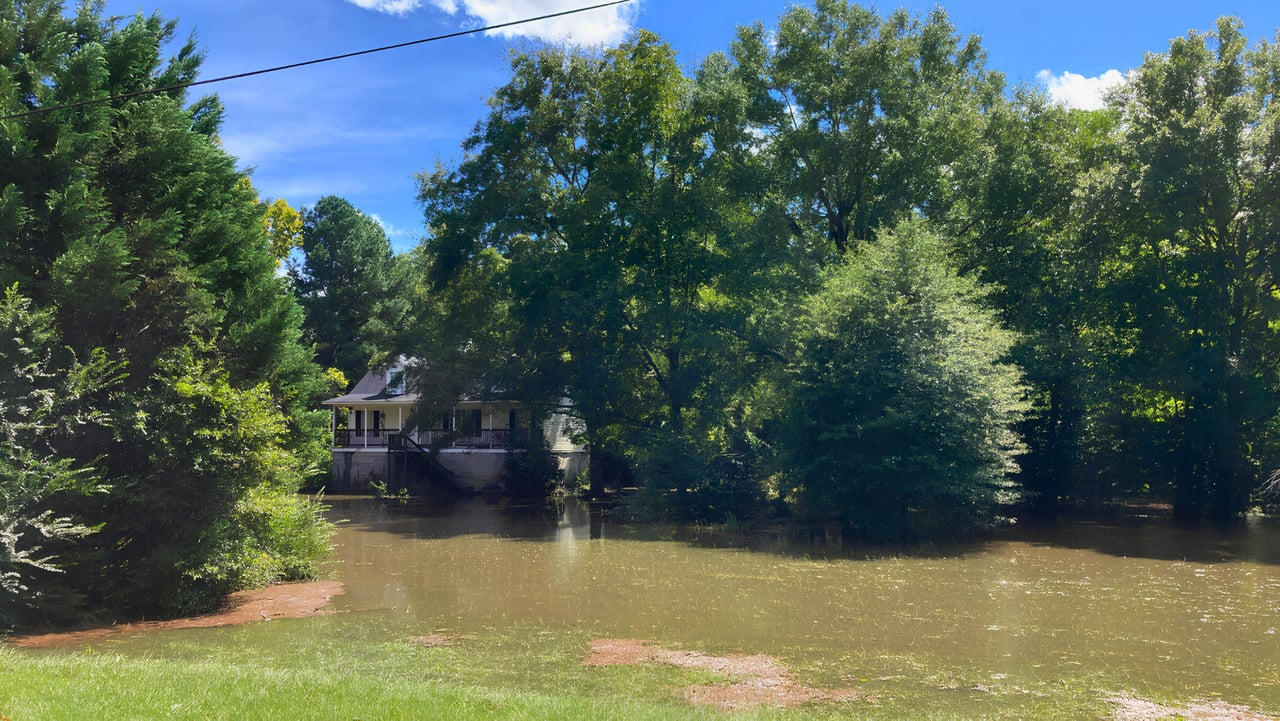
The driver in this part of the state is not what most people assume. Hurricane Helene pushed billions of dollars in losses well inland across south and central Georgia in 2024, striking carriers who had never priced that level of risk into markets like Middle Georgia. Rate filings responding to those losses are only now reaching homeowners at renewal, which is why the increases feel like they arrived without warning.
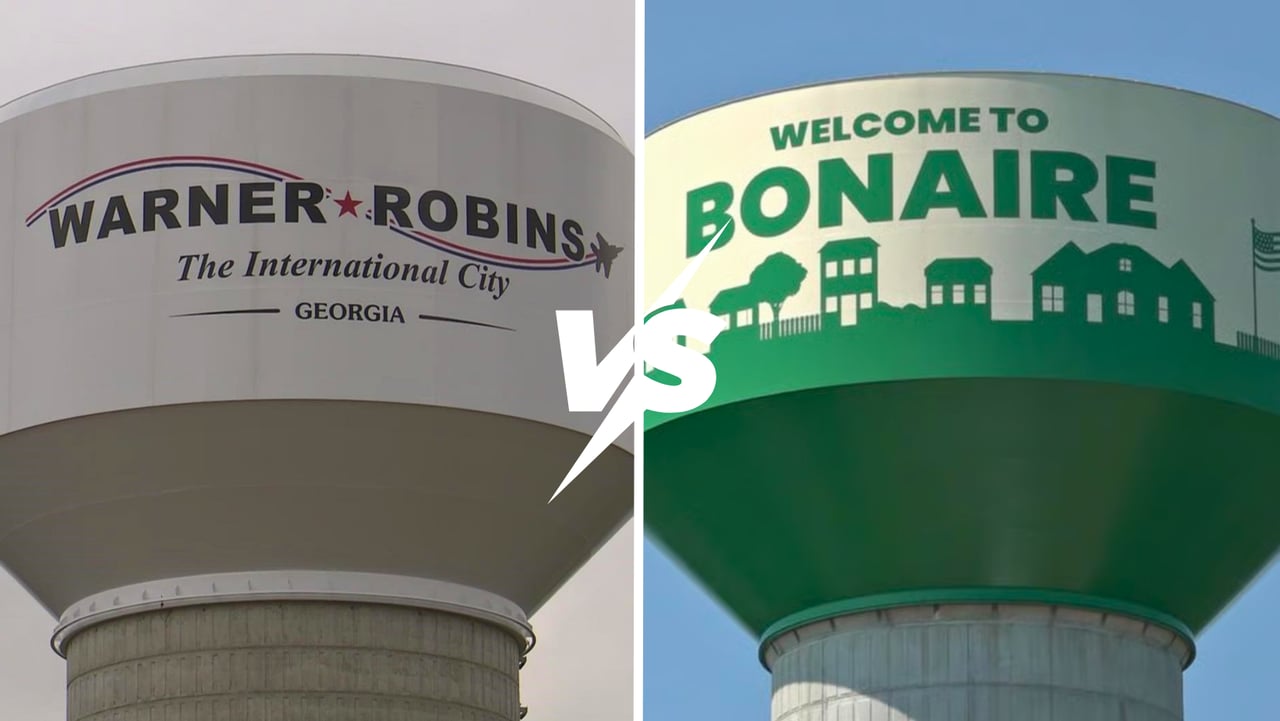
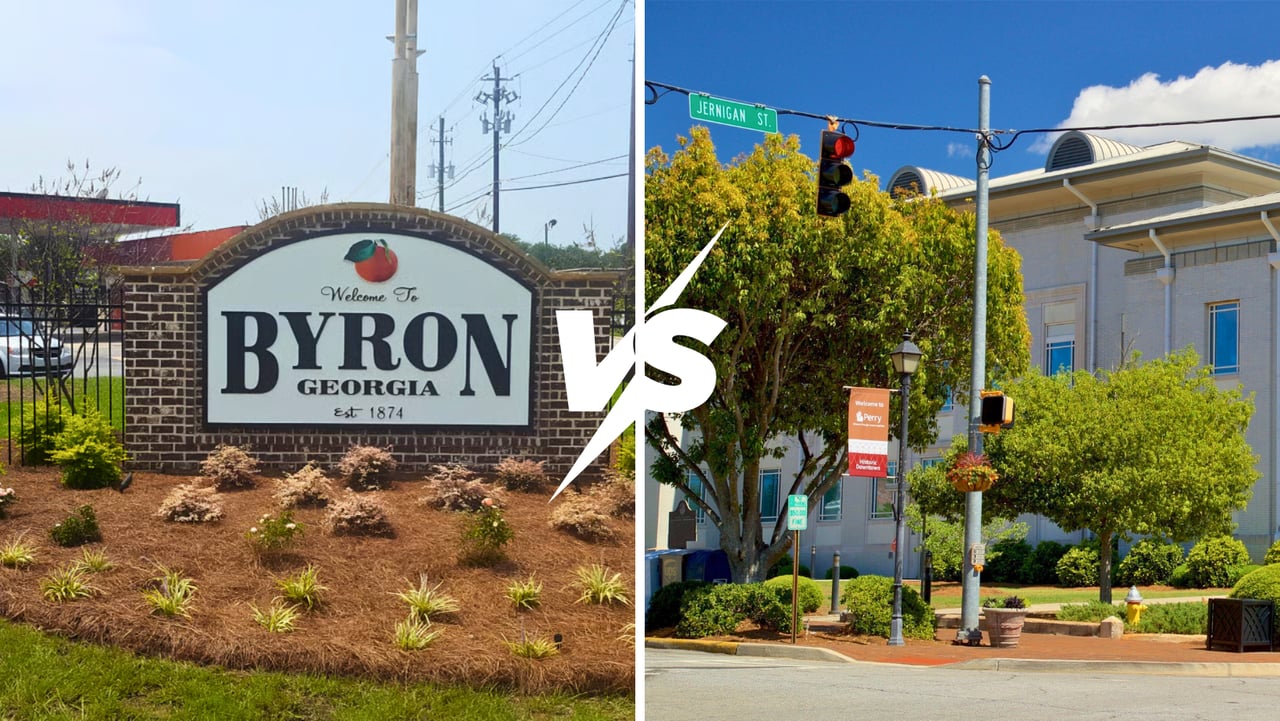
What has changed for buyers and sellers is that insurance is no longer a rounding error at the end of a transaction. It has become large enough to reshape a monthly payment and, in some cases, to unravel a deal at the closing table. The homeowners I talk with across Warner Robins, Perry, Bonaire, Kathleen, Byron, and Centerville are not surprised that their premium went up. They are surprised by how much, and by how differently the house next door is being treated.
How Much Have Georgia Homeowners Insurance Rates Actually Gone Up?
The direction matters as much as the number. Georgia premiums climbed 8.6% in 2025 while the national average rose 5.6%, meaning Georgia homeowners absorbed an increase roughly half again as steep as the country as a whole. Stacked on prior years, that brings the cumulative increase to nearly 40% since 2021. A household paying $1,900 a year at the start of that period is now paying meaningfully more for the same roof over the same heads.
| Georgia | National |
Premium increase, 2025 | 8.6% | 5.6% |
Cumulative increase since 2021 | Nearly 40% | Lower |
Average annual premium | About $2,640 on $350,000 dwelling coverage | About $2,370 for mortgage holders |
Projected direction, 2026 | Another increase of roughly 10% projected | Continued increases projected |
The national context sharpens the point. According to ICE Mortgage Monitor data, property insurance now consumes 9.6% of the average monthly mortgage payment nationally, when measured across principal, interest, taxes, and insurance. That is the highest share on record, up from less than 7.7% during the 2013 to 2020 period. Roughly one in every ten dollars a mortgaged homeowner sends out each month is now going to insurance.
This figure is a national average and should be read as such. Middle Georgia homeowners may sit above or below it depending on their property, their coverage, and their carrier.
Why Is Homeowners Insurance Rising Faster Than Everything Else?
Insurance is not simply rising. It is rising at a pace unlike any other component of the cost of owning a home. Over the past five years nationally, property insurance payments have surged roughly 70%, while principal rose about 23% and interest and property taxes each rose about 27%.
Mortgage payment component | Change over the past five years |
Property insurance | Up roughly 70% |
Property taxes | Up about 27% |
Interest | Up about 27% |
Principal | Up about 23% |
The Georgia-specific cause is Hurricane Helene. The 2024 storm delivered severe losses far inland, across counties that carriers had modeled as low-risk relative to the coast. When actual losses land well outside where a carrier priced its risk, loss ratios deteriorate and rate filings follow. Those filings move through the regulatory process and then reach individual homeowners at renewal, one policy at a time, which is exactly why the increase feels random and personal rather than systemic.
This is the part I find myself explaining most often, and it is worth being direct about. The premium jump landing in a Warner Robins mailbox this month is not a reaction to anything that homeowner did. It is a carrier repricing an entire region after being surprised by an inland storm. Understanding that does not lower the bill, but it does explain why shopping the policy is far more productive than arguing about it.
Why Do Two Similar Houses Have Completely Different Premiums?
A homeowners insurance premium is not a market rate. It is priced to a specific property and a specific owner profile, which is why two comparable homes on the same street in Bonaire or Kathleen can carry premiums that look nothing alike. The factors that move the number include the age and condition of the roof, the year the home was built, the claims history attached to that address, the deductible selected, and the coverage limits carried.
Georgia also permits credit-based insurance scoring, and the resulting spread is among the widest in the country. Homeowners with excellent credit average roughly $1,443 a year, while homeowners with poor credit average north of $5,000 on comparable coverage. That is not a modest adjustment. It is a multiple.
Carrier choice moves the number just as much. Quotes on the very same home routinely differ by more than 50% depending on which company is asked. There is no single correct price for insuring a house in Houston County, only the price a particular carrier has decided that particular risk is worth on a particular day.
Can My Roof Cost Me the Sale?
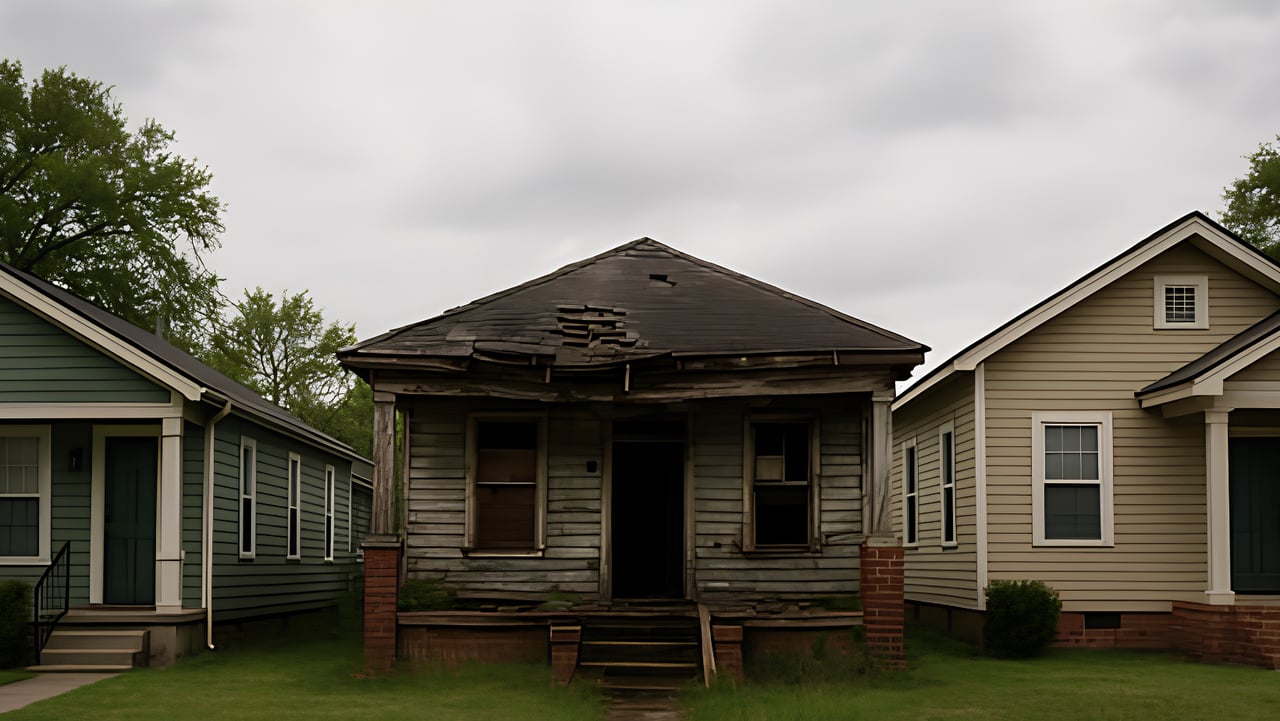
It can, and roof age is the most common reason. Carriers weigh roof age heavily, and on older housing stock the practical result is that a buyer may struggle to obtain affordable coverage on a home the seller has insured without difficulty for years. The seller's existing policy is not transferable and tells the buyer's carrier nothing. The buyer is underwritten fresh, against current pricing, on the same roof.
This matters across a large share of Warner Robins and Centerville inventory, where much of the housing stock predates the newer Kathleen and Bonaire subdivisions. A seller with a twenty-year-old roof and a clean claims history may be paying a premium that bears no relationship to what a buyer will be quoted in 2026.
My advice to sellers is straightforward. If your roof is aging and you intend to sell, find out what a buyer would actually be quoted before you list, not after you are under contract. That is a question for a licensed insurance agent, and it takes one phone call. Discovering the answer during due diligence, when the buyer's lender is already circling, is how a clean deal turns into a renegotiation or a termination.
When Should I Get an Insurance Quote If I'm Buying?
Early, and on the actual address. Not on a neighborhood, not on an estimate, and not at the closing table. Because premiums are priced per property, a quote on a comparable home tells a buyer very little about the home they are actually purchasing. The only number that matters is the one attached to that specific address.
Shopping more than one carrier is no longer generic advice. It is measurable behavior. ICE data shows policy switching reached an all-time high in 2025, with 11.4% of mortgage holders changing providers, up from 9.2% two years earlier, and switchers generally paid less than those who stayed put. Consumer advocates and Georgia's insurance commissioner have both pointed homeowners toward gathering multiple quotes for the same reason. When the spread on an identical home exceeds 50%, accepting the first number offered is simply leaving money on the table.
Here is where I land on this, having watched it play out. A surprise premium at the finish line is one of the more preventable ways a deal falls apart, and it is preventable with a phone call made weeks earlier. Build the real number into your budget while you are still choosing between houses, because insurance may legitimately be the deciding factor between two homes that look identical on paper. I am not the person who writes the policy, but making sure that number is in front of you before it can hurt you is very much my job.
Frequently Asked Questions
Q: How much did homeowners insurance go up in Georgia in 2025?
A: Georgia homeowners insurance premiums increased by 8.6% in 2025, compared with a national average increase of 5.6% over the same period. That places Georgia among the states absorbing above-average increases. Cumulatively, Georgia premiums are up nearly 40% since 2021. Homeowners across Houston County, including Warner Robins, Perry, Bonaire, and Kathleen, have generally seen these increases arrive at policy renewal rather than all at once.
Q: What is the average cost of homeowners insurance in Georgia?
A: The average Georgia homeowners insurance premium is approximately $2,640 per year based on $350,000 in dwelling coverage. This figure is a statewide average and conceals considerable variation, because premiums are priced to the individual property and owner profile rather than to a market rate. Actual premiums in Middle Georgia vary with roof age, year built, claims history on the address, deductible, coverage limits, and the carrier selected. Two comparable homes in the same Houston County neighborhood can carry substantially different premiums.
Q: Why is my homeowners insurance going up in Middle Georgia?
A: Hurricane Helene is a primary driver of current Georgia rate increases. The 2024 storm produced severe losses well inland across south and central Georgia, affecting insurers who had not priced that level of risk into markets outside the coastal zone. When losses substantially exceed what a carrier modeled for a region, loss ratios deteriorate and carriers file for rate increases. Those filings reach individual homeowners at renewal, which is why increases in Middle Georgia have arrived gradually and can feel disconnected from any change in the property itself.
Q: What percentage of a mortgage payment goes to homeowners insurance?
A: According to ICE Mortgage Monitor data, property insurance accounts for approximately 9.6% of the average monthly mortgage payment nationally, measured across principal, interest, taxes, and insurance. This is the highest share on record, up from less than 7.7% during the 2013 to 2020 period. This figure is a national average rather than a Middle Georgia measurement, and individual homeowners in Houston County may fall above or below it. In higher-risk markets elsewhere in the country, the share can reach 25% or more.
Q: Is homeowners insurance rising faster than other homeownership costs?
A: Yes, and by a wide margin. Nationally, property insurance payments have risen roughly 70% over the past five years, while principal has risen about 23% and interest and property taxes have each risen about 27%. This makes property insurance the fastest-growing component of the monthly mortgage payment for existing homeowners. For Houston County homeowners with fixed-rate mortgages, insurance and taxes represent the portions of the payment that can still increase after closing.
Q: Why do two houses on the same street have different insurance premiums?
A: Homeowners insurance is underwritten to the individual property and owner rather than priced at a market rate. Roof age, year of construction, the claims history attached to that specific address, the deductible selected, and coverage limits all influence the premium. Georgia additionally permits credit-based insurance scoring, which produces one of the widest premium spreads in the nation. As a result, two comparable homes in the same Warner Robins or Bonaire subdivision can carry premiums that differ substantially.
Q: Does credit score affect homeowners insurance rates in Georgia?
A: Yes. Georgia permits insurers to use credit-based insurance scoring when setting homeowners premiums, and the resulting gap is among the widest in the country. Homeowners with excellent credit average approximately $1,443 per year, while homeowners with poor credit average more than $5,000 annually on comparable coverage. This is a substantial multiple rather than a marginal adjustment. Homeowners with questions about how their credit profile affects a specific quote should direct them to a licensed insurance agent.
Q: How much do homeowners insurance quotes vary between carriers?
A: Quotes on the same home frequently differ by more than 50% between carriers. Each insurer applies its own underwriting model, its own view of regional risk, and its own appetite for particular property characteristics, which produces meaningfully different prices for identical risk. This is why gathering multiple quotes is consistently recommended by consumer advocacy organizations and by Georgia's insurance commissioner. For a home in Houston County, the first quote received should be treated as one data point rather than as the price.
Q: Is it worth switching homeowners insurance companies?
A: Data indicates it frequently is. Policy switching reached an all-time high in 2025, with 11.4% of mortgage holders changing providers, up from 9.2% two years earlier. ICE Mortgage Monitor analysis found that switchers generally paid meaningfully less than homeowners who remained with their existing carrier, suggesting that much of this movement is cost-driven and successful. Given that quotes on identical homes can differ by more than half, homeowners in Middle Georgia who have not shopped coverage in several years may be paying well above what the same risk would cost elsewhere.
Q: When should a homebuyer get an insurance quote?
A: A buyer should obtain a quote on the specific property address early in the search, well before the closing table. Because premiums are underwritten per property, a quote on a comparable home in the same neighborhood provides limited useful information about the home actually under consideration. Obtaining the real number early allows it to be built into the monthly payment calculation while the buyer is still comparing options. In Houston County, where the housing stock ranges from newer Kathleen and Bonaire construction to considerably older Warner Robins and Centerville homes, the premium difference between two similarly priced houses can be significant.
Q: Can homeowners insurance cause a home sale to fall through?
A: Yes. When a buyer discovers an unexpectedly high premium late in the transaction, the increased monthly payment can affect loan qualification or simply exceed what the buyer is willing to carry, and the transaction can collapse near closing. In some cases, coverage may be difficult to obtain at any reasonable price due to roof age or claims history on the address. This risk is largely preventable by obtaining a quote on the actual address early in the process rather than during the final days before closing.
Q: Does roof age affect homeowners insurance in Georgia?
A: Roof age is among the most heavily weighted factors in homeowners insurance underwriting. Older roofs can result in substantially higher premiums, coverage limited to actual cash value rather than replacement cost, or in some cases declination of coverage. This matters particularly in the older sections of Warner Robins and Centerville, where a seller's long-held policy may not reflect what a new buyer would be quoted on the same structure. Sellers with aging roofs are generally advised to determine what a buyer would face before listing.
Q: Are Georgia homeowners insurance rates expected to keep rising in 2026?
A: Current projections point to a further increase of roughly 10% across Georgia in 2026. Rate filings responding to Hurricane Helene's inland losses continue moving through the system and reaching homeowners at renewal on a rolling basis. Because insurance is priced to individual properties, statewide projections should be treated as directional rather than predictive for any specific home in Houston County. Homeowners seeking a figure for their own property should request a current quote from a licensed insurance agent.
This article is reviewed and updated quarterly. Insurance rates, filings, and market projections change frequently. Figures current as of July 2026. Sources include ICE Mortgage Monitor, ValuePenguin, MoneyGeek, Georgia Watch, and the R Street Institute.
About the Author
William Walton-Dean is a licensed REALTOR® with Walton Dean Realty, operating under Real Broker LLC, serving buyers and sellers across Houston County, Georgia, including Perry, Warner Robins, Bonaire, Kathleen, Byron, and the surrounding Middle Georgia housing market. Known for a data-driven, hyper-local approach and deep expertise in the military and PCS relocation market around Robins Air Force Base, he helps buyers and sellers at every price point make clear, confident decisions backed by real market insight.
📱 478-371-7069
Walton Dean Realty | Real Broker LLC
Buying or Selling in Houston County? Let's Talk.
Insurance has become a real line in the monthly payment, and it deserves to be part of the conversation while you are still choosing between houses rather than a surprise in the final week. Reach out and we will make sure the number is on the table early, whether you are listing a home in Warner Robins or comparing options across Perry, Bonaire, and Kathleen.
William Walton-Dean | Walton Dean Realty | 📱 478-371-7069 | 📧 [email protected]
"A More Strategic Approach to Real Estate"
Disclaimer: This article is provided for general informational purposes only and does not constitute financial, lending, legal, or tax advice. William Walton-Dean is a licensed real estate agent and is not a mortgage lender, loan servicer, attorney, credit counselor, or representative of the Department of Veterans Affairs. Eligibility for the VA Partial Claim Program, loan modifications, and all other loss-mitigation options is determined solely by your mortgage servicer and the Department of Veterans Affairs based on your individual circumstances. Program terms, caps, and deadlines described here reflect publicly available VA guidance as of July 2026 and are subject to change. Questions regarding your specific loan, interest rate, credit, or entitlement should be directed to your mortgage servicer, a VA-approved lender, or the VA Regional Loan Center at (877) 827-3702. Legal and tax questions should be directed to a licensed attorney or CPA. If you are facing foreclosure, contact your servicer's loss mitigation department promptly.