If you are buying your first investment property, one question matters more than almost anything else: will the numbers work without forcing you into a higher-risk market? In Byron, that is a fair question to ask. You want a place with realistic entry pricing, steady rental demand, and enough flexibility to make a smart first move. This guide will help you weigh Byron’s price point, rent potential, and market position so you can decide whether it fits your goals. Let’s dive in.
Why Byron Gets Investor Attention
Byron sits on I-75 at Exit 149 along Highway 49, which gives it strong regional access for a city of its size. It is positioned as a connector to Macon, Warner Robins, and Fort Valley, which matters if you are buying a rental for tenants who commute across Middle Georgia.
That location gives Byron a practical advantage. Instead of depending on one small local job base alone, it sits inside a wider employment corridor. For a first-time investor, that can make the market feel more stable and easier to understand.
Byron Home Prices Look Manageable
One of Byron’s biggest strengths is its moderate entry price compared with several nearby markets. Current pricing sources place the market in the high-$200,000s, with Zillow showing a typical home value of $266,095 as of May 31, 2026, Redfin showing a median sale price of $284,375, and Realtor.com showing a median list price of $296,920.
In practical terms, that suggests many first-time investors will be shopping in the mid-$200,000s to low-$300,000s. Your final number will still depend on condition, updates, lot size, and negotiation room, but Byron does not appear to require the same upfront budget as some nearby higher-priced suburbs.
Byron Rents Support the Case
The second part of the equation is rent. In Byron, the rent picture looks solid for a smaller market. Zillow reports an average rent of $1,700 with a range from $650 to $2,500, while Realtor.com reports a median rent of $1,825.
More importantly, the active examples point to a realistic target for common single-family rentals. Current examples include about $1,600 for a 3-bedroom home, around $1,850 for a 4-bedroom home, and some listings in the $1,900 to $2,100 range. That means many first-time investors should probably underwrite Byron rentals in the high-$1,000s to low-$2,000s, not the low-$1,000s.
What the Rough Yield Suggests
Using Realtor.com’s current median rent and median list price, Byron’s rough gross yield is about 7.4%. That is not the same thing as net cash flow, and it should never replace full underwriting, but it is a helpful starting point.
For a beginner, this matters because Byron appears to offer a better rent-to-price balance than several nearby alternatives. If your goal is to find a market where rent keeps pace with purchase price a little better, Byron deserves a close look.
Local Demand Drivers Matter
A rental market is only as healthy as the demand behind it. Byron benefits from being tied into a broader regional employment base rather than relying on one narrow demand stream.
Robins Air Force Base is a major factor in the wider area. According to Robins Air Force Base, it is Georgia’s largest single-site industrial complex and employs almost 22,000 civilians, contractors, and military members. The Houston County Development Authority places that count at 24,500 employees and also identifies other major employers across the region, including healthcare, education, food production, manufacturing, and aerospace-related companies.
Peach County adds another layer of support. The Georgia Department of Labor lists major employers in the county such as Blue Bird Body Company, Buc-Ees Georgia, Fort Valley State University, The Medical Center of Peach County, and Unified Defense. Blue Bird’s Fort Valley manufacturing operation alone employs more than 2,000 people.
For you as an investor, the takeaway is simple: Byron sits near a mix of military-adjacent, industrial, healthcare, education, logistics, and manufacturing employment. That kind of diversity can support long-term renter demand better than a market tied too closely to one employer type.
Byron Versus Nearby Markets
If you are comparing Byron to nearby options, the numbers are worth studying side by side.
Market | Median Listing Price | Median Rent | Days on Market | Market Type | Rough Gross Yield |
|---|---|---|---|---|---|
Byron | $296,920 | $1,825 | 54 | Balanced | 7.4% |
Warner Robins | $255,000 | $1,395 | 48 | Seller's | 6.6% |
Perry | $303,900 | $1,500 | 52 | Seller's | 5.9% |
Bonaire | $362,511 | $1,747 | 47 | Seller's | 5.8% |
Kathleen | $365,715 | $1,500 | 39 | Seller's | 4.9% |
On this set of numbers, Byron stands out for its rent-to-price balance. Warner Robins may offer a lower purchase price, but the lower rent level compresses gross yield. Perry, Bonaire, and Kathleen all come in at higher price points without clearly outperforming Byron on rent.
Another useful detail is market type. Realtor.com labels Byron as a balanced market, while the nearby Houston County markets above are labeled as seller’s markets. For a first-time investor, that may mean Byron offers a little more negotiating room and a less rushed buying environment.
What Makes Byron a Good First Investment Fit
Byron may be a strong fit if you want three things at once: a manageable entry point, practical rent potential, and regional commute access. That combination is often hard to find when you are trying to buy your first rental without overextending yourself.
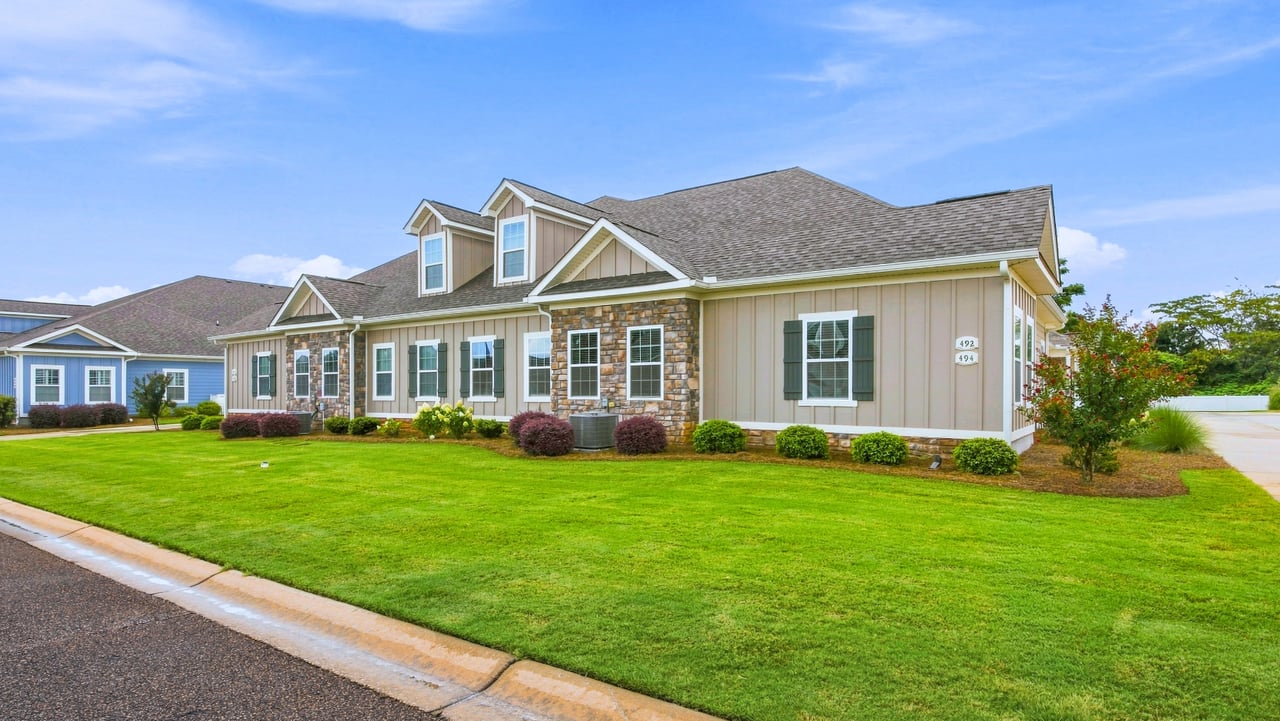
It can be especially appealing if you are focused on a buy-and-hold strategy. A single-family home in a commuter-friendly part of Byron may give you access to renters who work across Macon, Warner Robins, Fort Valley, and the surrounding employment corridor.
Where You Should Be Cautious
Byron is not perfect, and that matters just as much as its strengths. The rental market is not especially deep. Zillow shows 17 rentals in its data set, while Realtor.com shows 10 rentals, which tells you inventory is limited and data can vary by source.
That means property selection matters a lot. In a smaller rental market, a good house in a practical location may perform much differently than an average house with fewer updates or a weaker layout. For a first-time investor, that is a reminder to underwrite conservatively and avoid assuming every house will rent at the top of the market.
You should also remember that rough gross yield is only a first filter. It does not account for taxes, insurance, maintenance, vacancy, turnover, financing, or property management. A deal that looks strong on paper at first glance still needs disciplined analysis.
Questions to Ask Before You Buy in Byron
Before you move forward, ask yourself a few simple but important questions:
- Does the purchase price leave room for repairs, reserves, and closing costs?
- Is the expected rent based on realistic local comps, not best-case hopes?
- Would the home appeal to renters looking for access to I-75 and the broader Middle Georgia job base?
- Are you comfortable with a smaller market that may have fewer rental comps and fewer active listings?
- Does the property still make sense if rent comes in a little lower than expected or expenses run a little higher?
These are the kinds of questions that help you avoid buying based on excitement alone. Your first investment property should be a measured decision, not a rushed one.
So, Is Byron the Right Place?
For many first-time investors, Byron looks like a reasonable and competitive starting market. It offers a mid-to-high-$200,000 price center, rent potential that often lands in the high-$1,000s to low-$2,000s, and access to a broad employment corridor that supports rental demand.
It may be a better fit than some higher-priced nearby suburbs if your focus is yield and moderate entry cost. At the same time, it is not the market for buying blindly. Limited rental inventory and source-to-source rent differences mean you will want to evaluate each property carefully, with conservative assumptions and a clear plan.
If you want a structured, data-backed look at whether Byron fits your first investment strategy, William Walton-Dean can help you compare options and make a confident next move.
FAQs
Is Byron, Georgia, good for a first investment property?
- Byron can be a solid option for a first investment property if you want a moderate entry price, commuter access, and rent potential that compares well with nearby markets.
What is the typical home price for an investment property in Byron?
- Current market data places Byron’s price center in the high-$200,000s, with many likely opportunities falling in the mid-$200,000s to low-$300,000s depending on the property.
What rent can you expect from a Byron rental home?
- A realistic rent target for many single-family rentals in Byron appears to be in the high-$1,000s to low-$2,000s, based on current market examples.
How does Byron compare with Warner Robins or Perry for investors?
- Based on current median price and rent data, Byron shows a stronger rent-to-price balance than Warner Robins, Perry, Bonaire, and Kathleen in this comparison set.
What is the biggest risk of buying a rental in Byron?
- One of the biggest risks is assuming too much from a small rental market, since active rental inventory is limited and rent estimates can vary by source.