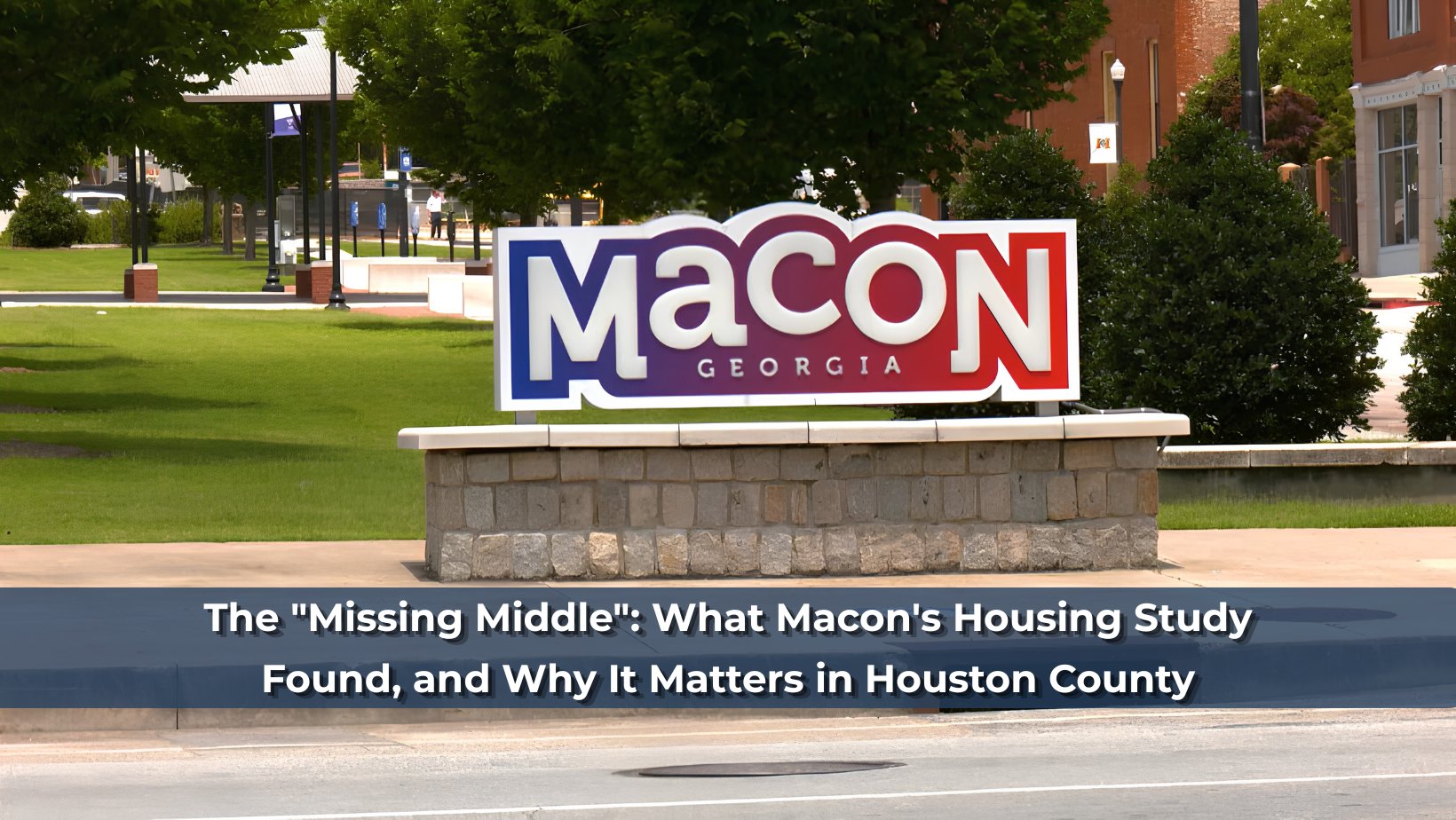
Macon-Bibb County recently completed a nine-month housing assessment conducted by consulting firm RKG Associates, and its central conclusion runs counter to the assumption most people bring to a housing conversation. The problem identified was not a shortage of homes. According to the executive director of Macon-Bibb Planning and Zoning, supply is not the issue; affordability is, and the gap between what residents earn and what available housing costs is widening.
The study projects Macon-Bibb could add roughly 32,800 residents and more than 11,500 households by 2050, and county leaders have said the report will serve as a foundation for future planning decisions ranging from neighborhood reinvestment and blight reduction to zoning and redevelopment. Alongside the affordability finding, the assessment identified growing demand for a specific category of housing: townhomes, cottages, accessory dwelling units, and small-lot homes, the types planners call the missing middle because they bridge older lower-cost housing and higher-end new development.
That finding is worth attention across the river in Houston County, because the housing type Macon's study flags as missing is precisely what has been going up in volume around Warner Robins, Kathleen, and Bonaire for the past several years. Understanding why that product exists, and who it actually serves, is useful whether you are buying into it or already own one.
What the Macon-Bibb Housing Study Actually Found
The headline finding is the one that surprises people. A nine-month assessment of a growing county's housing market concluded that the core challenge is not building enough units. It is that the units being built, and the ones already standing, are increasingly out of reach relative to local wages. Planning leadership framed it directly: the supply is not the issue, affordability is, and the mismatch between earnings and housing costs is projected to widen rather than narrow.
This distinction matters because it points toward a different solution than the one people typically assume. If the problem were purely supply, more construction of any kind would relieve it. If the problem is affordability, then what gets built matters as much as how much gets built, because adding inventory at price points the local workforce cannot reach does not close the gap. The study frames housing as tied to workforce retention and economic health rather than as a construction question alone.
Growth pressure gives the finding urgency. Projections of roughly 32,800 additional residents and more than 11,500 additional households by 2050 mean the mismatch is not static. It compounds unless the composition of new housing shifts.
What Is "Missing Middle" Housing?
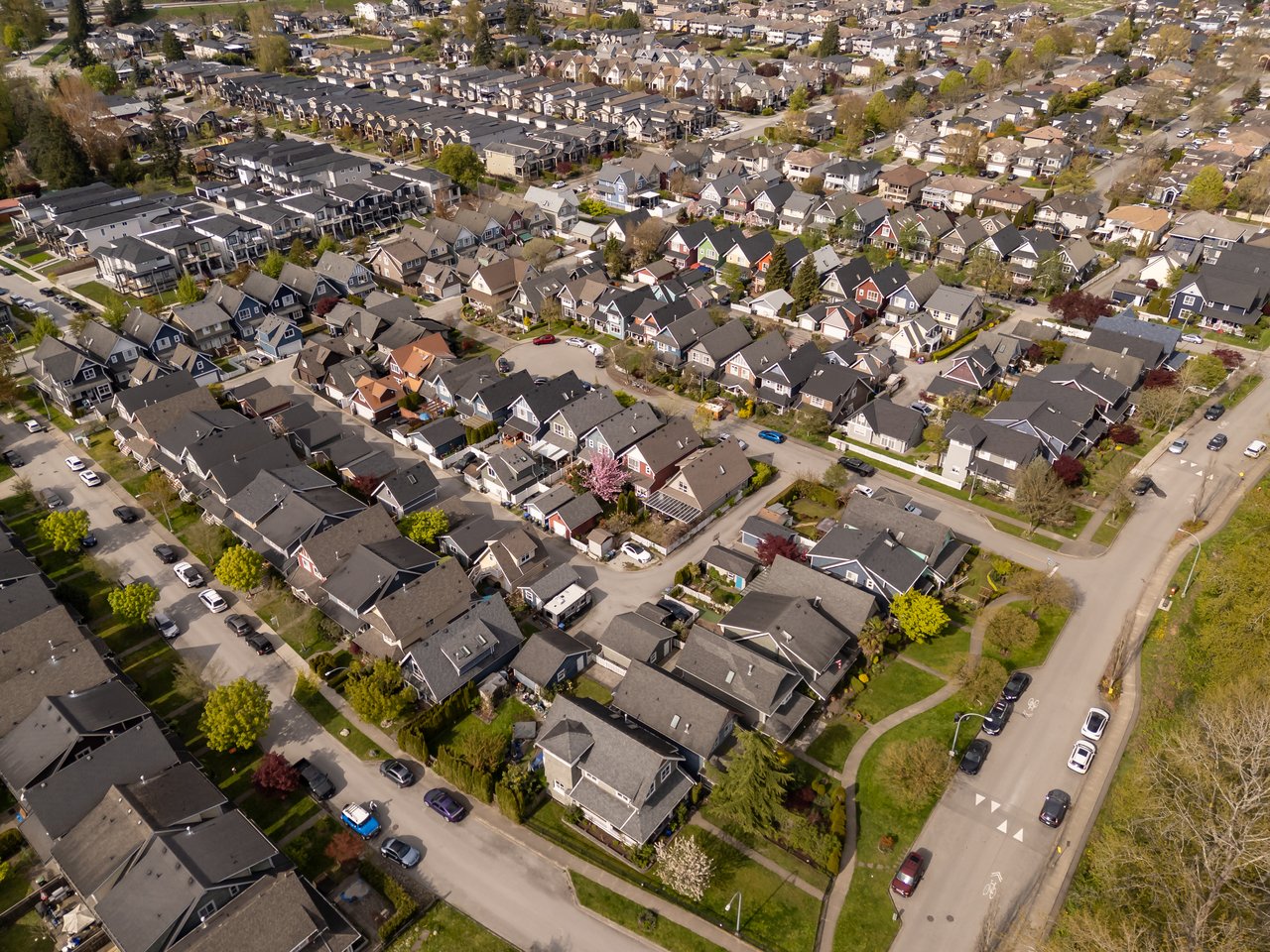
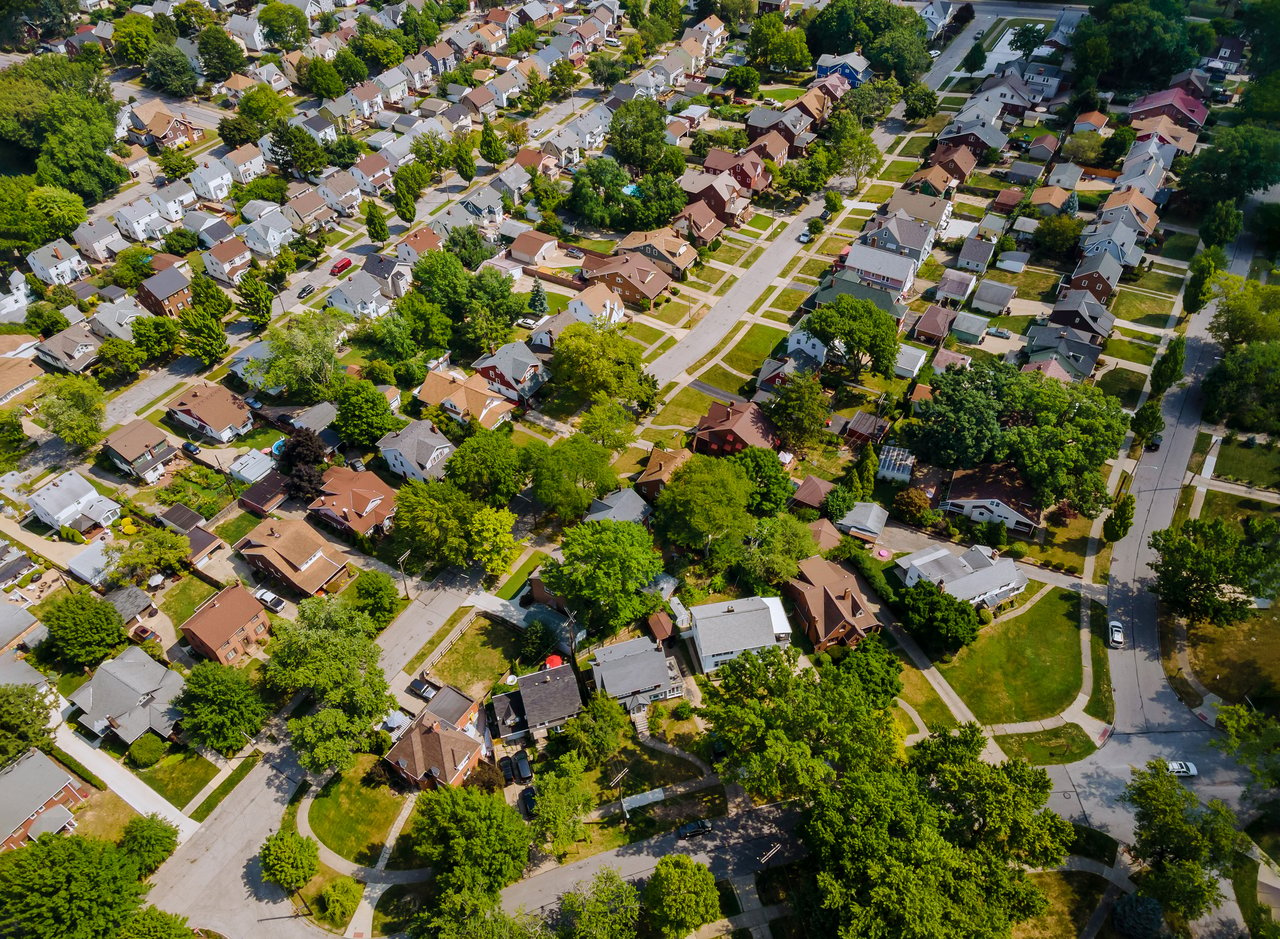
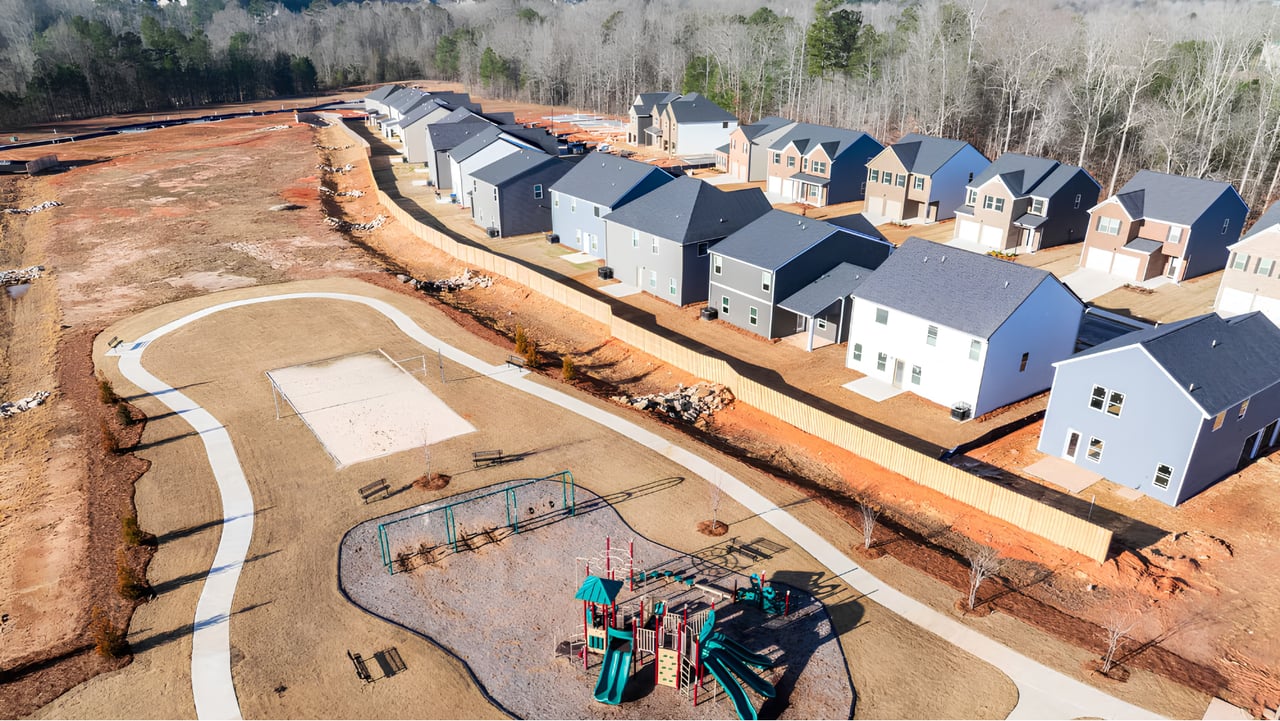
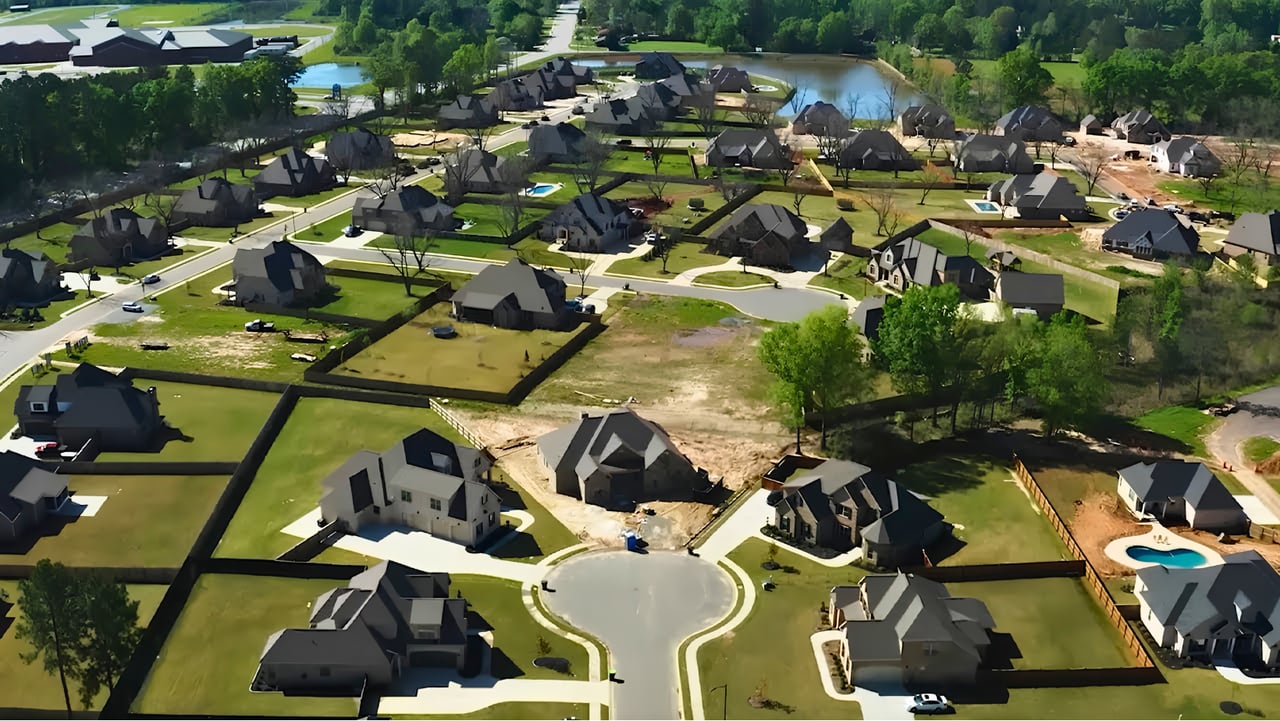
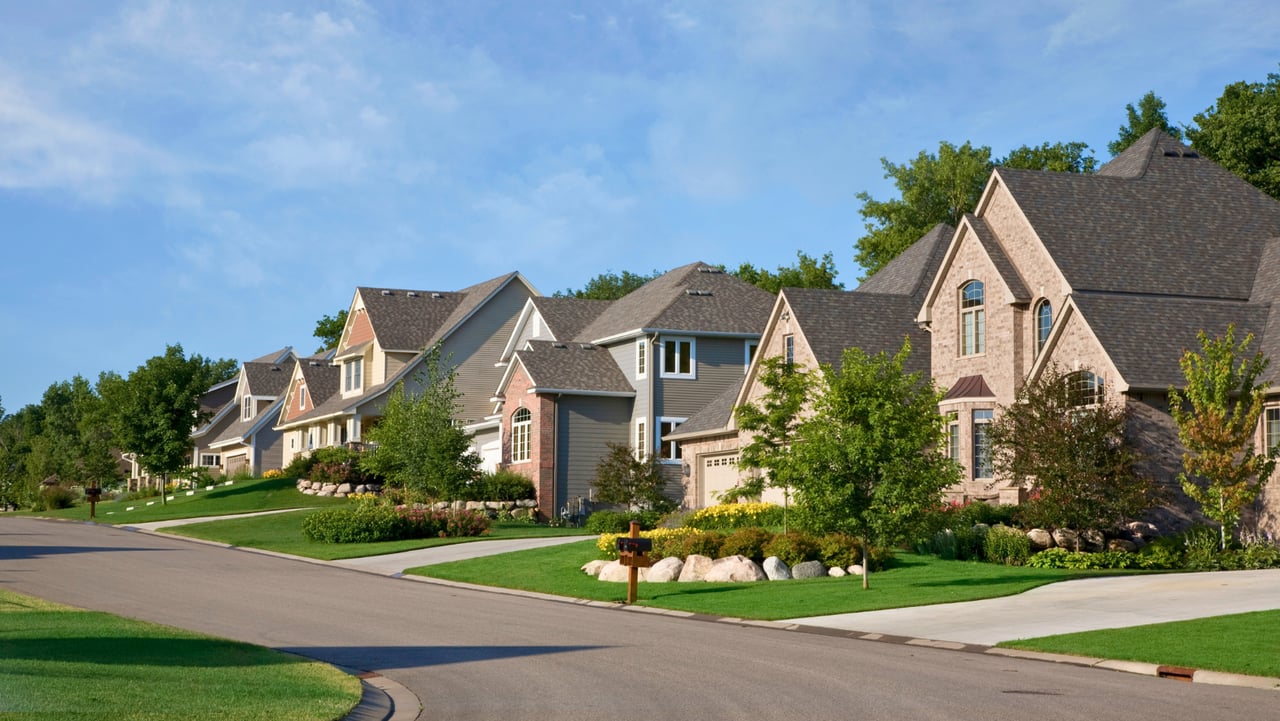
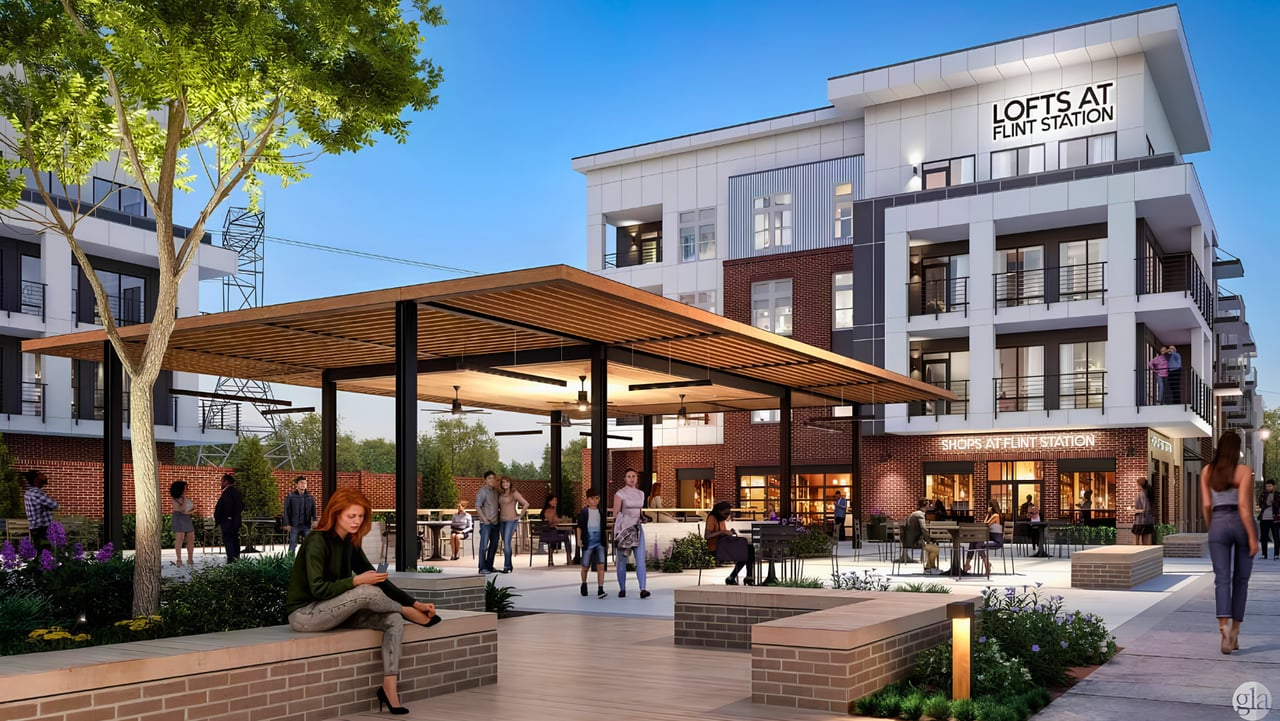
Missing middle housing describes the range of home types that sit between older, lower-cost housing stock and higher-end new construction. It is not subsidized housing and it is not luxury product. It is market-rate housing built at a scale and price point that a working household can reach, and it has been underbuilt in many American markets for decades in favor of large-lot single-family homes on one end and multifamily apartments on the other.
Housing type | What it looks like in Middle Georgia |
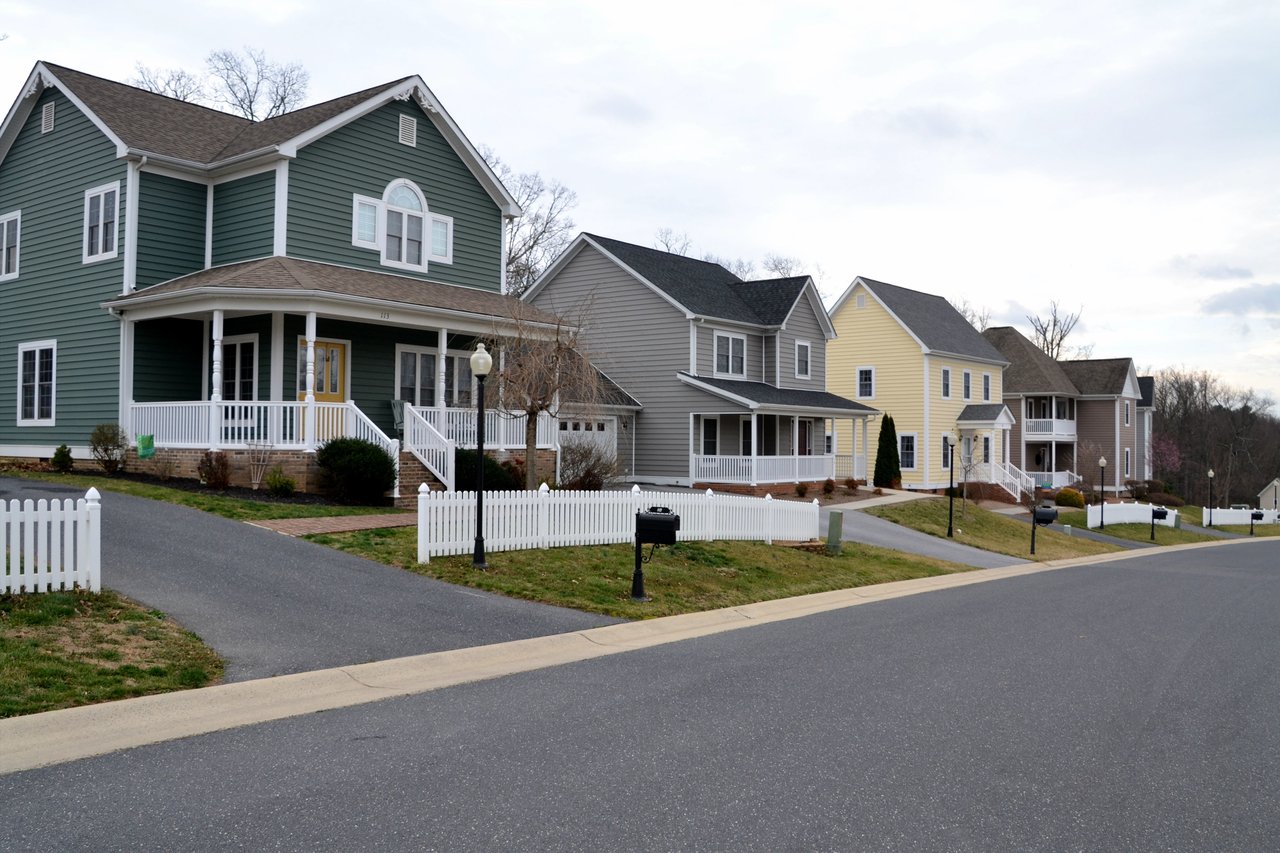
Townhomes | Attached homes sharing one or more walls, typically with small or shared outdoor space and often an HOA handling exterior maintenance |
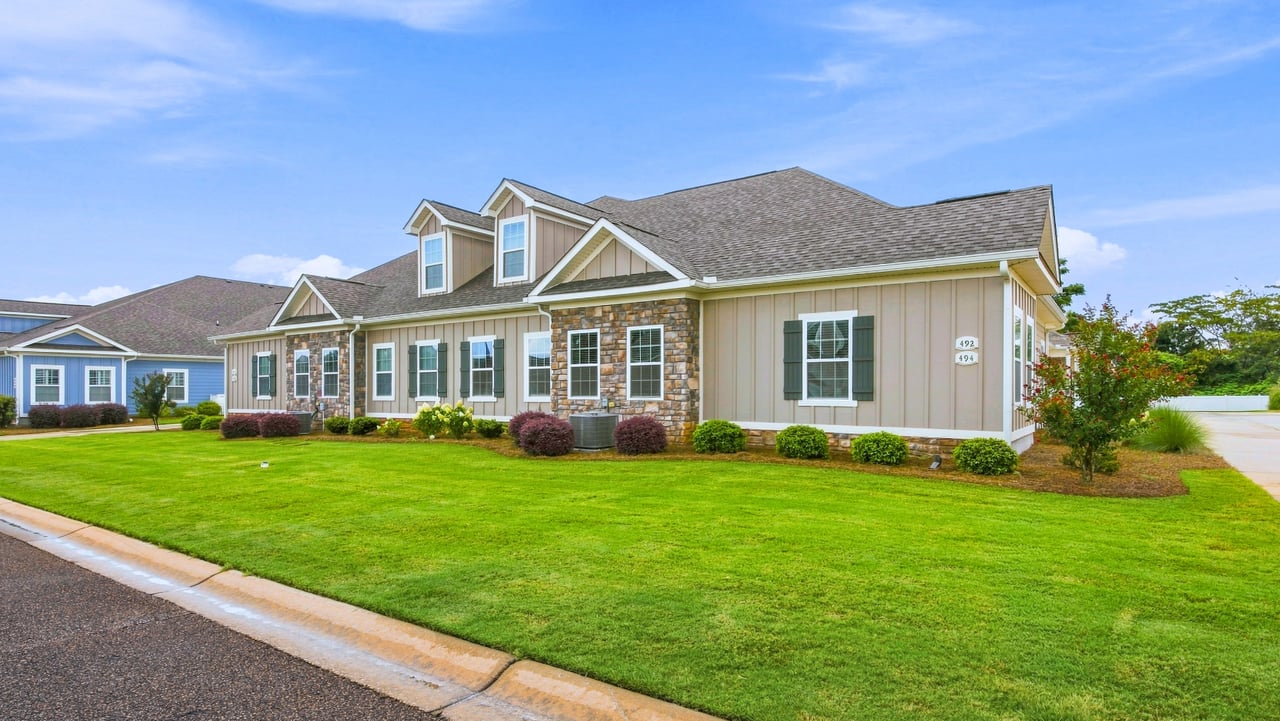
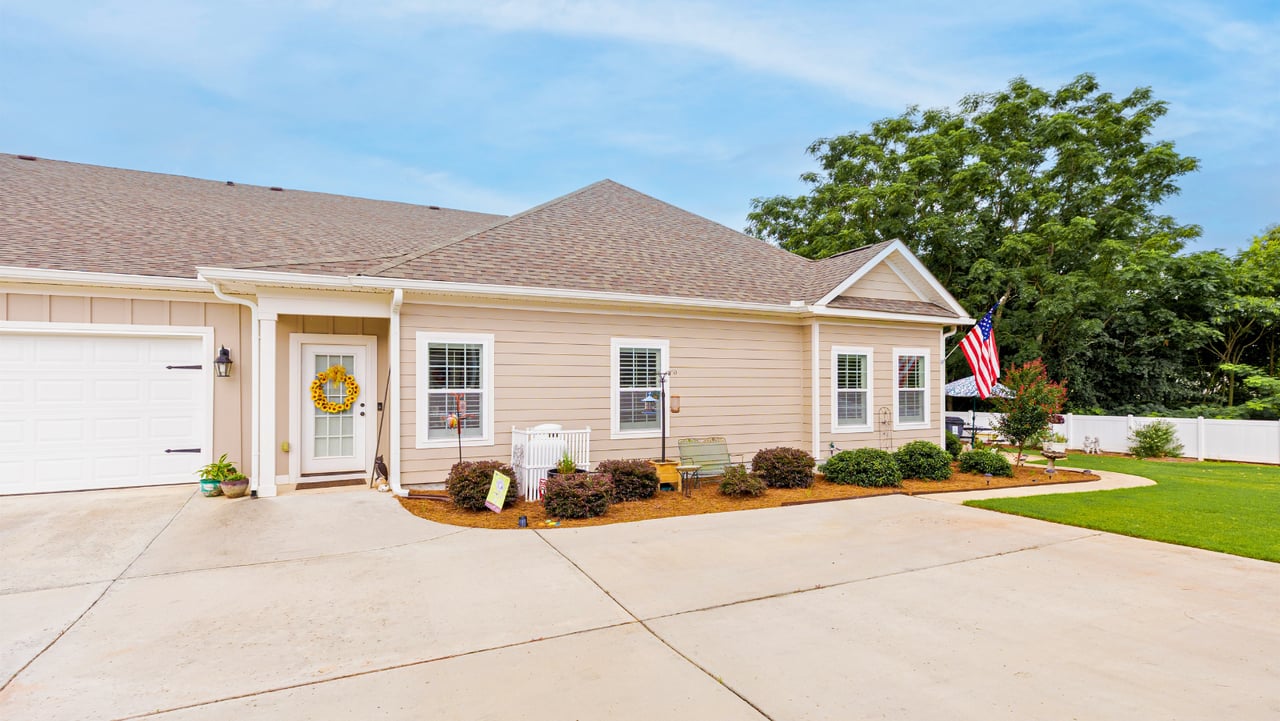
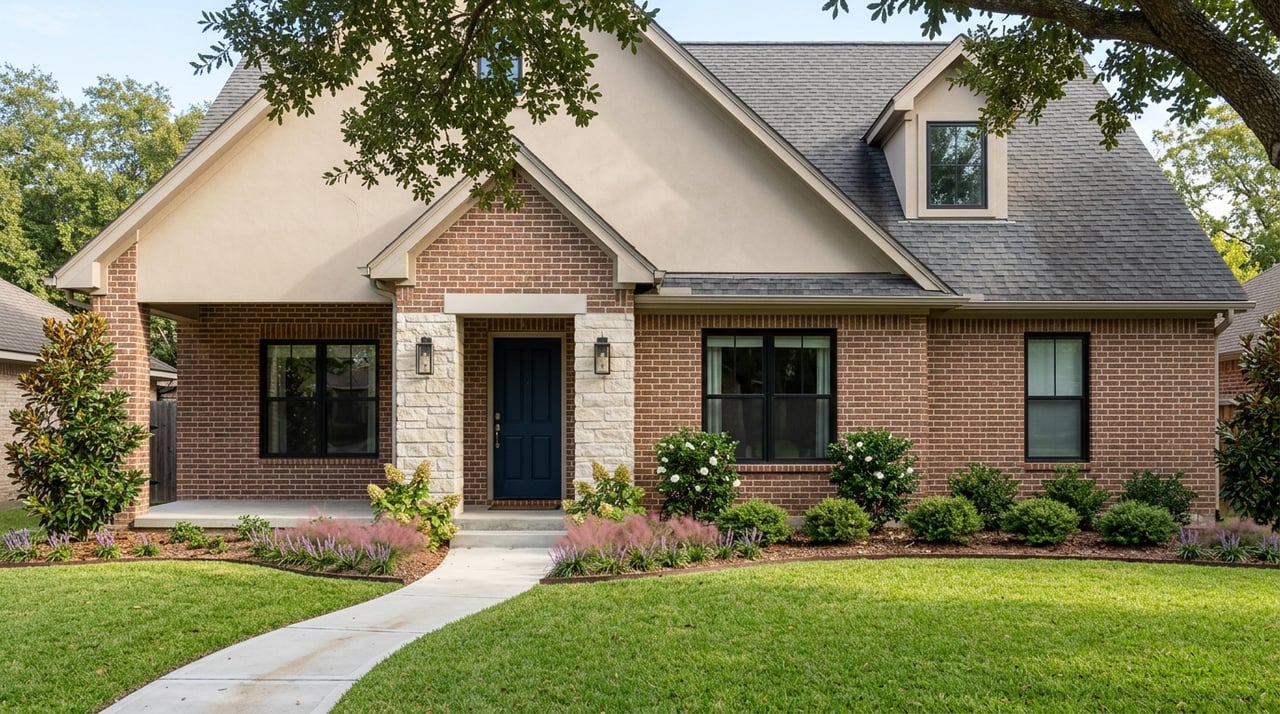
Cottages | Smaller single-family or attached homes, frequently grouped in a community with shared amenities, popular with right-sizers and buyers who want low upkeep |
Small-lot homes | Detached single-family homes on reduced lot sizes, delivering full ownership and privacy at a lower price than a large-lot equivalent |
Accessory dwelling units | Secondary units on an existing residential lot, such as a garage apartment or a small detached unit, subject to local zoning |
The common thread is efficiency. These homes deliver ownership, privacy, and usable square footage while reducing the two costs that push a home out of reach: land and exterior maintenance. A cottage community that handles the yard, or a townhome on a compact lot, achieves a lower price point without cutting the interior down to nothing. That is why the category matters to affordability in a way that simply building more of the same does not.
Why This Matters in Houston County Specifically
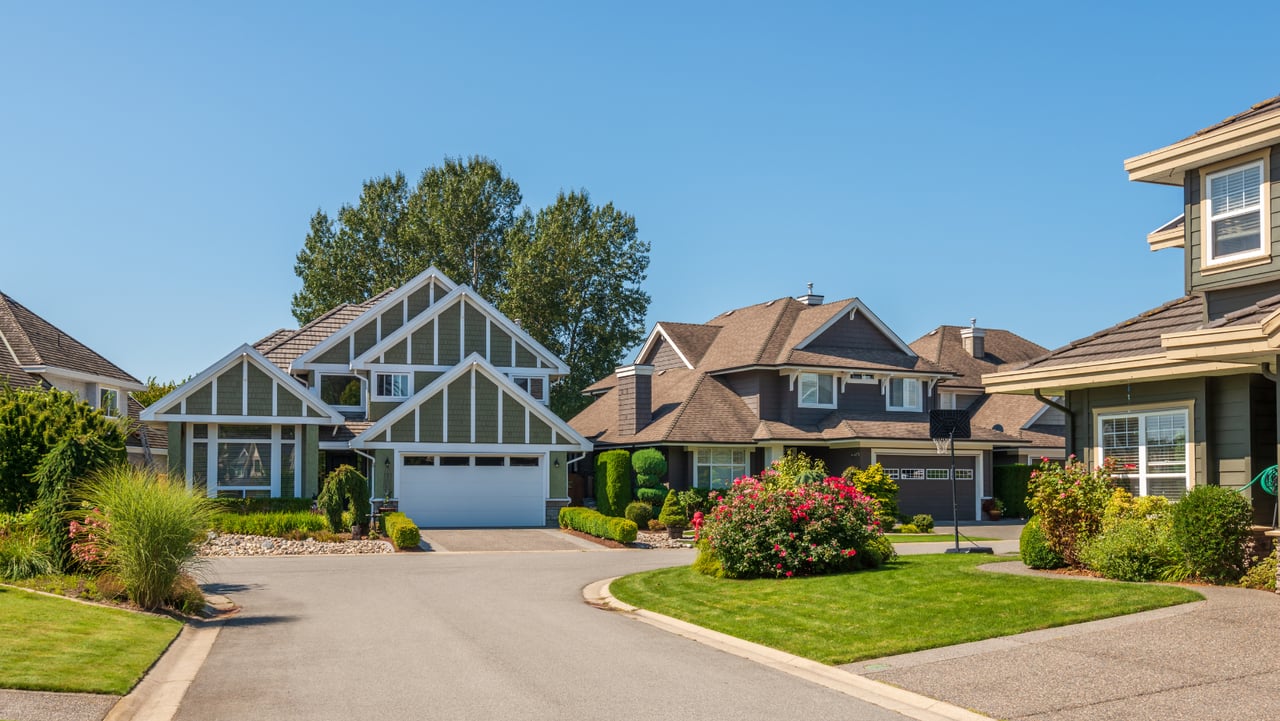
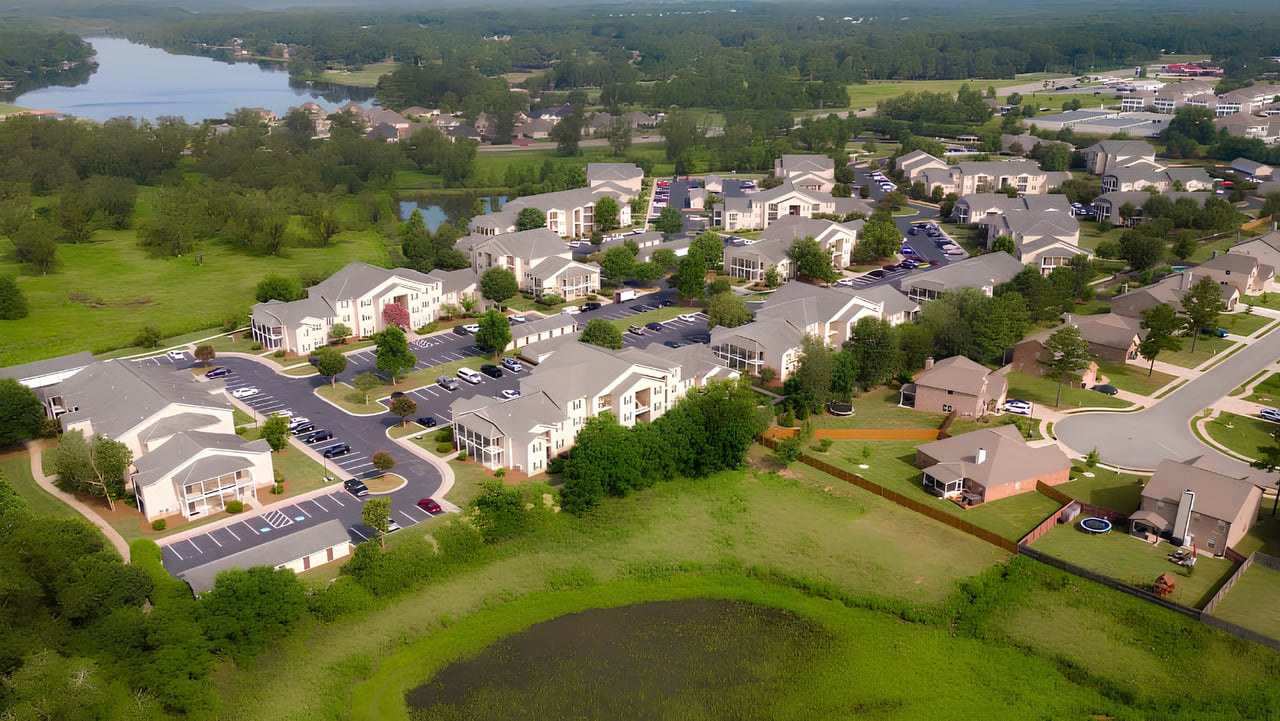
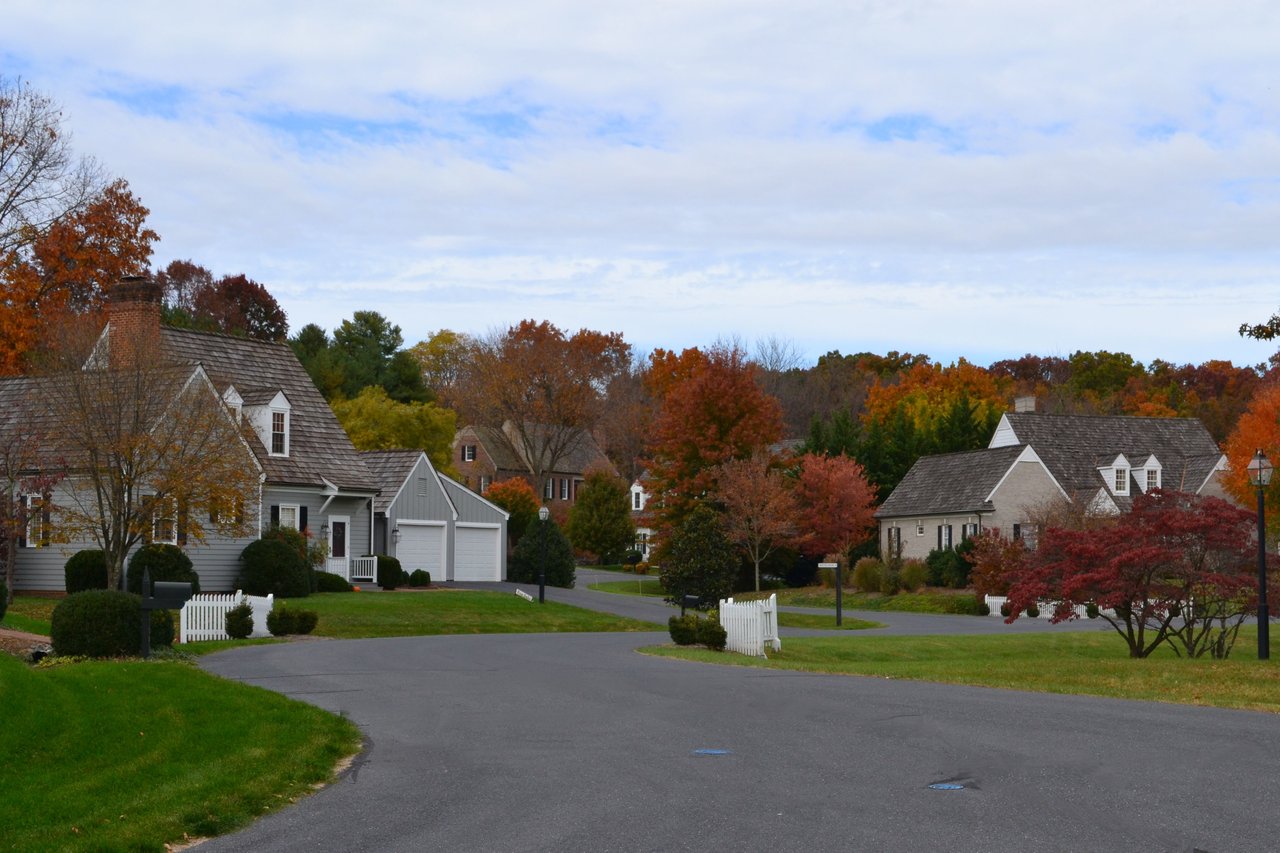
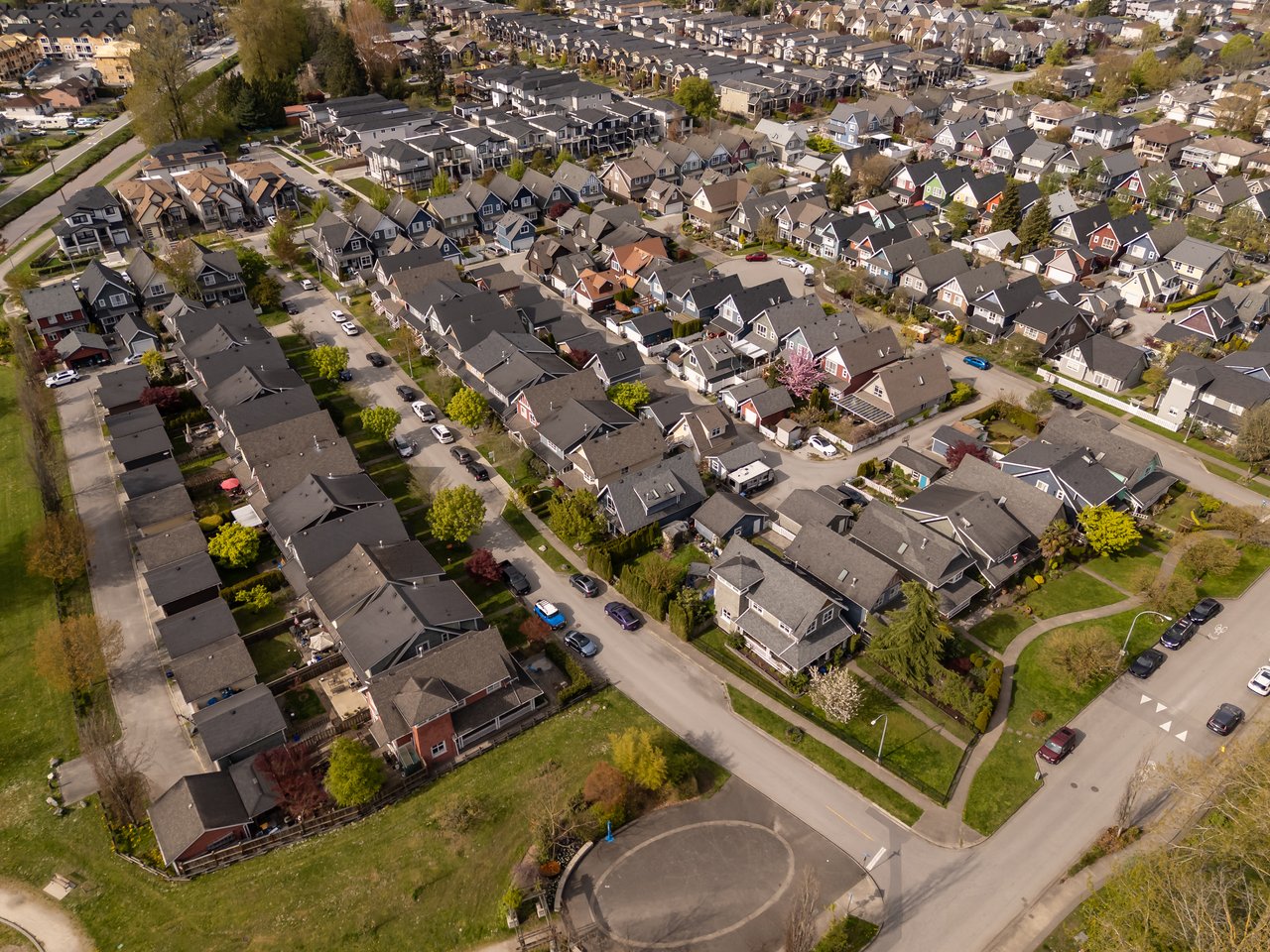
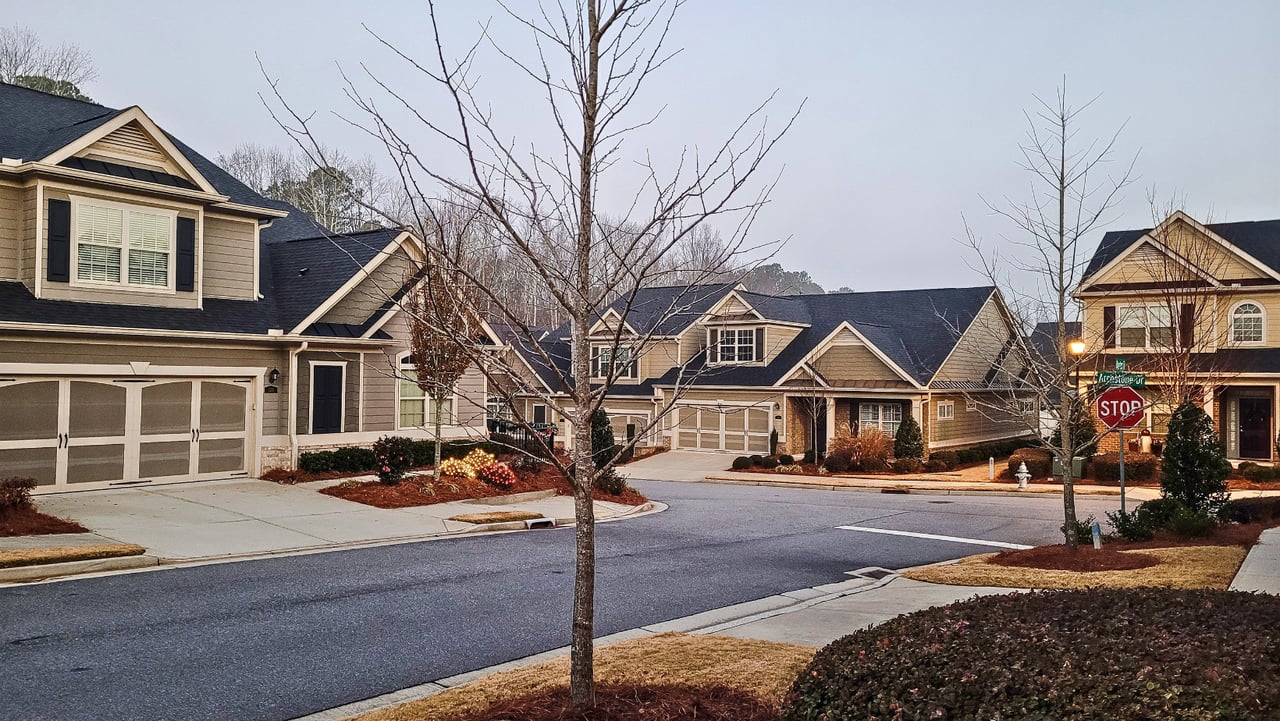
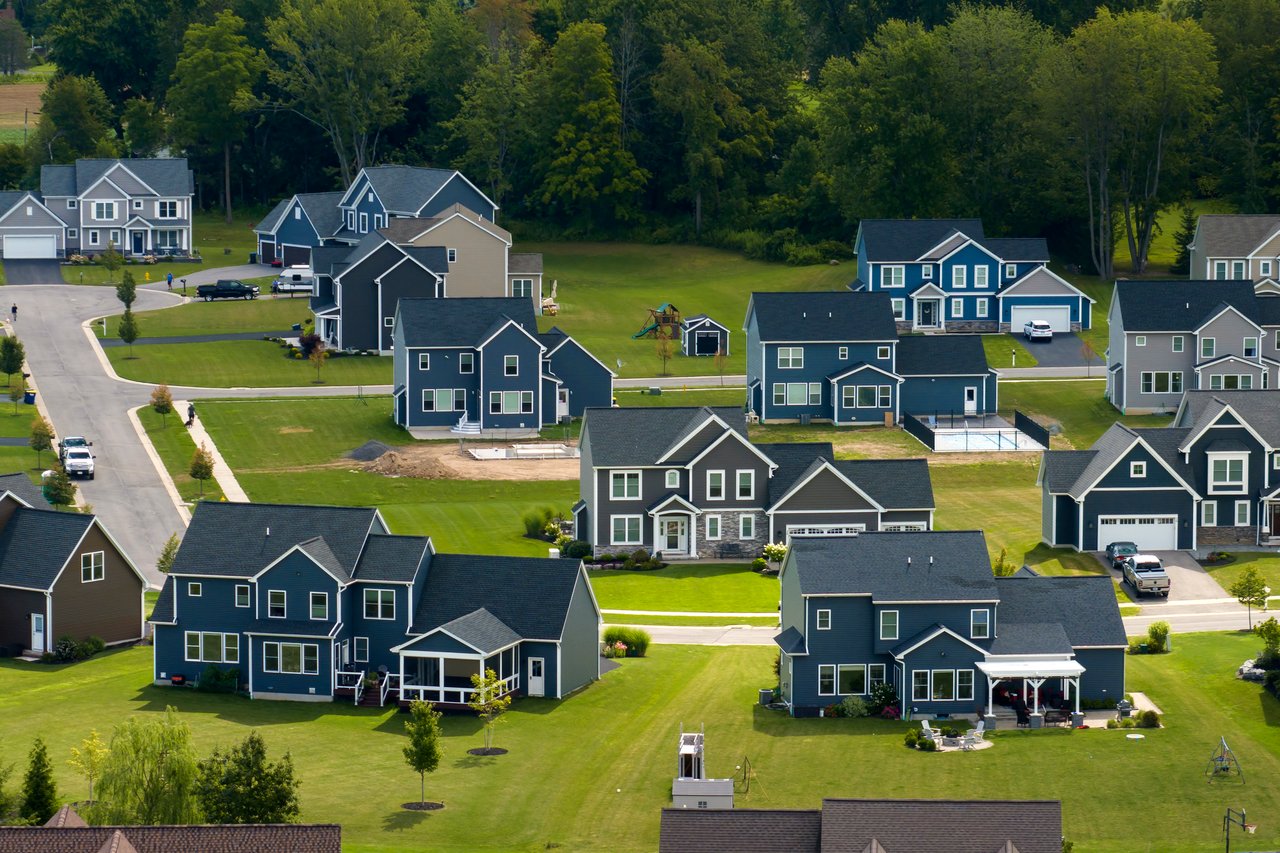
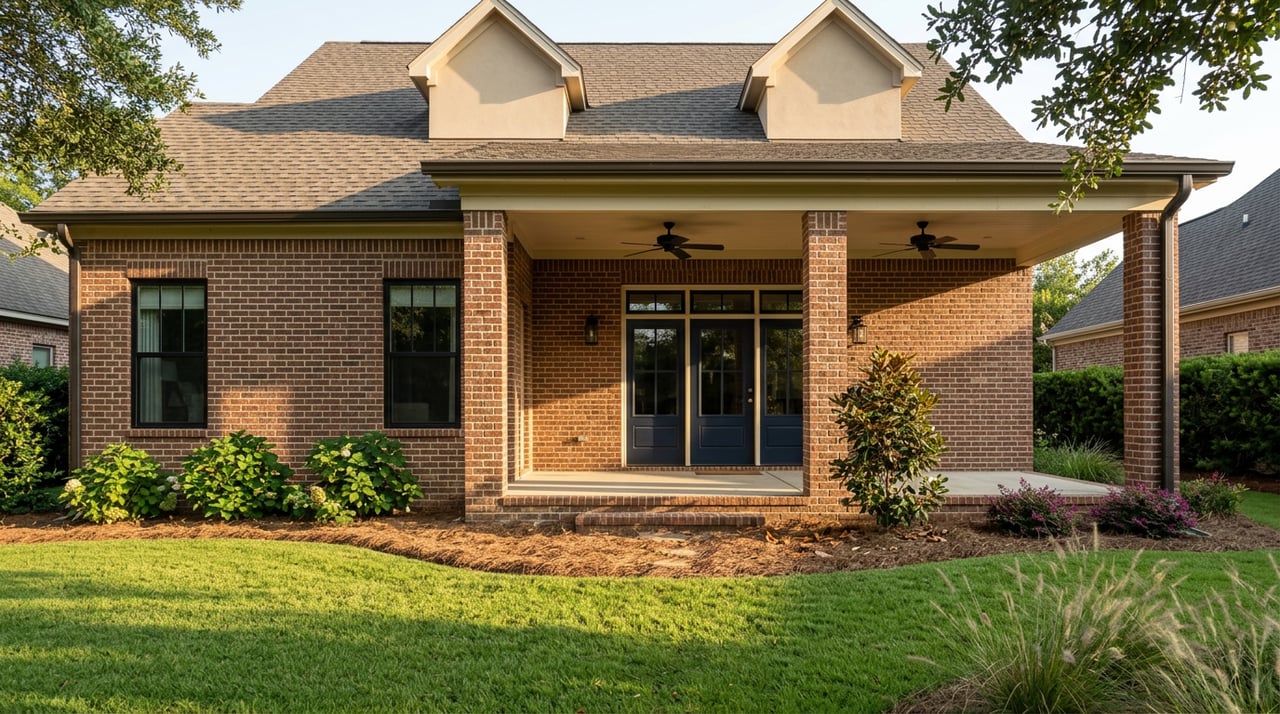
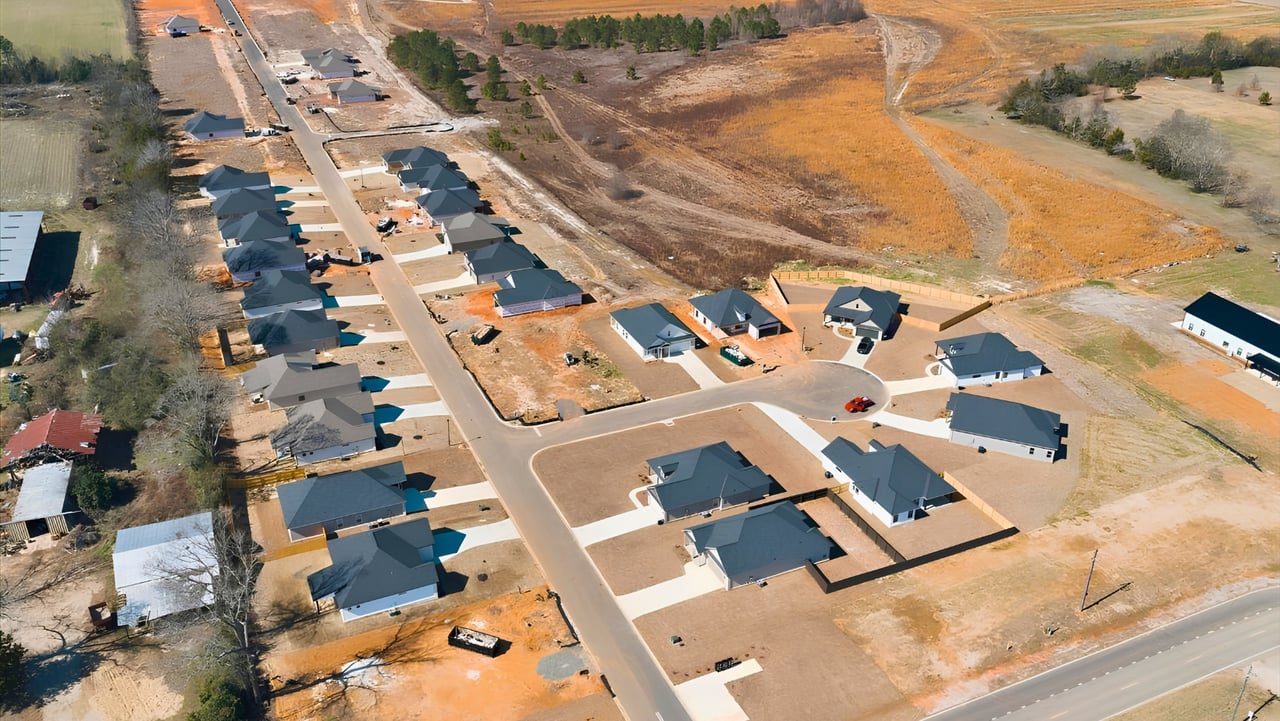
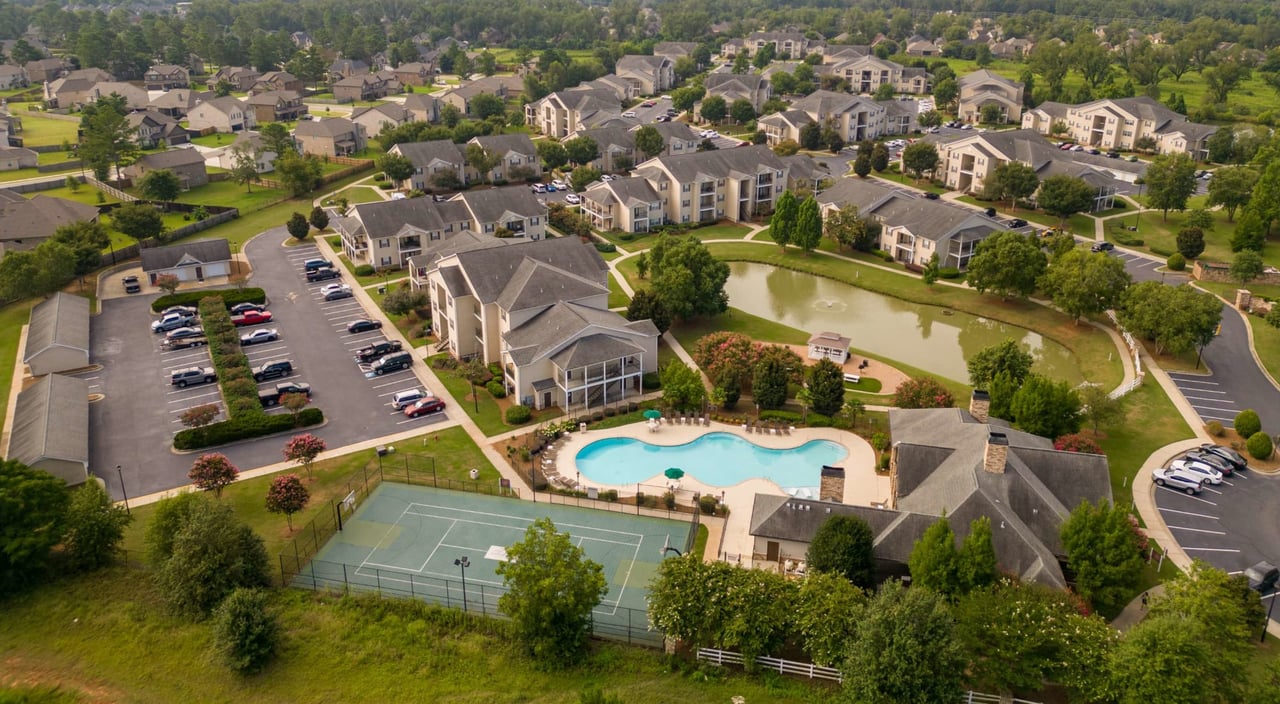
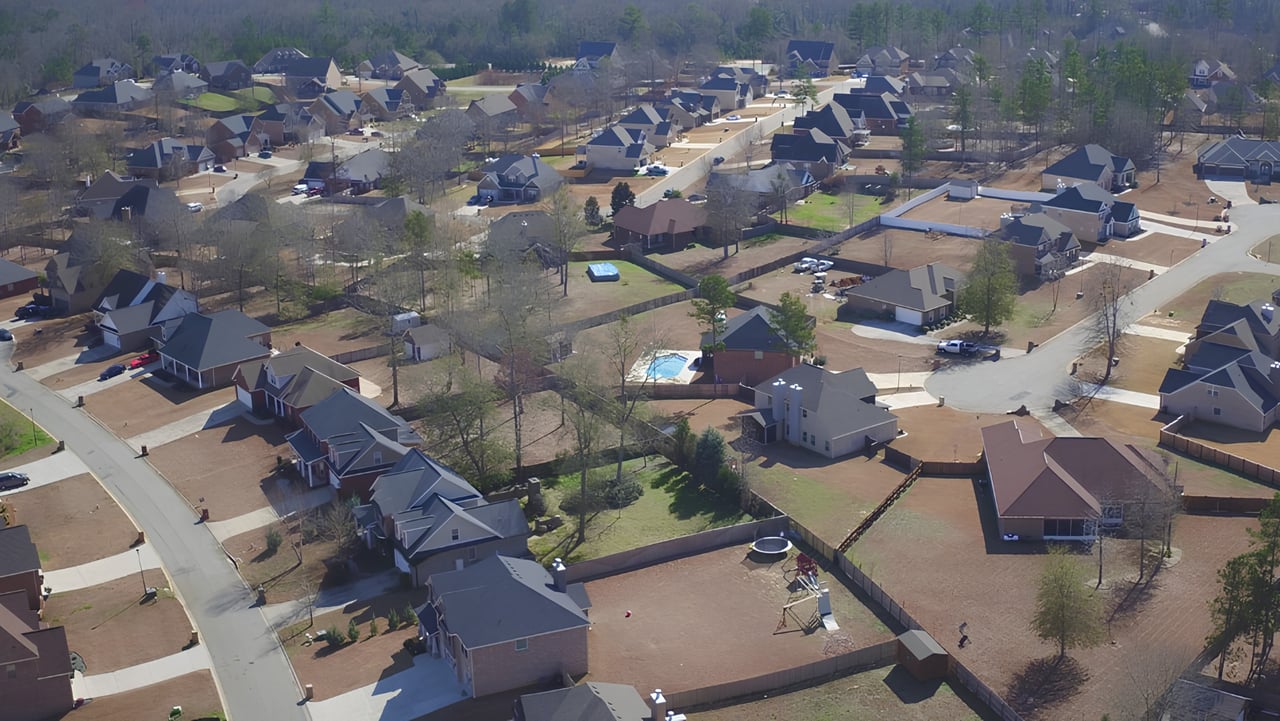
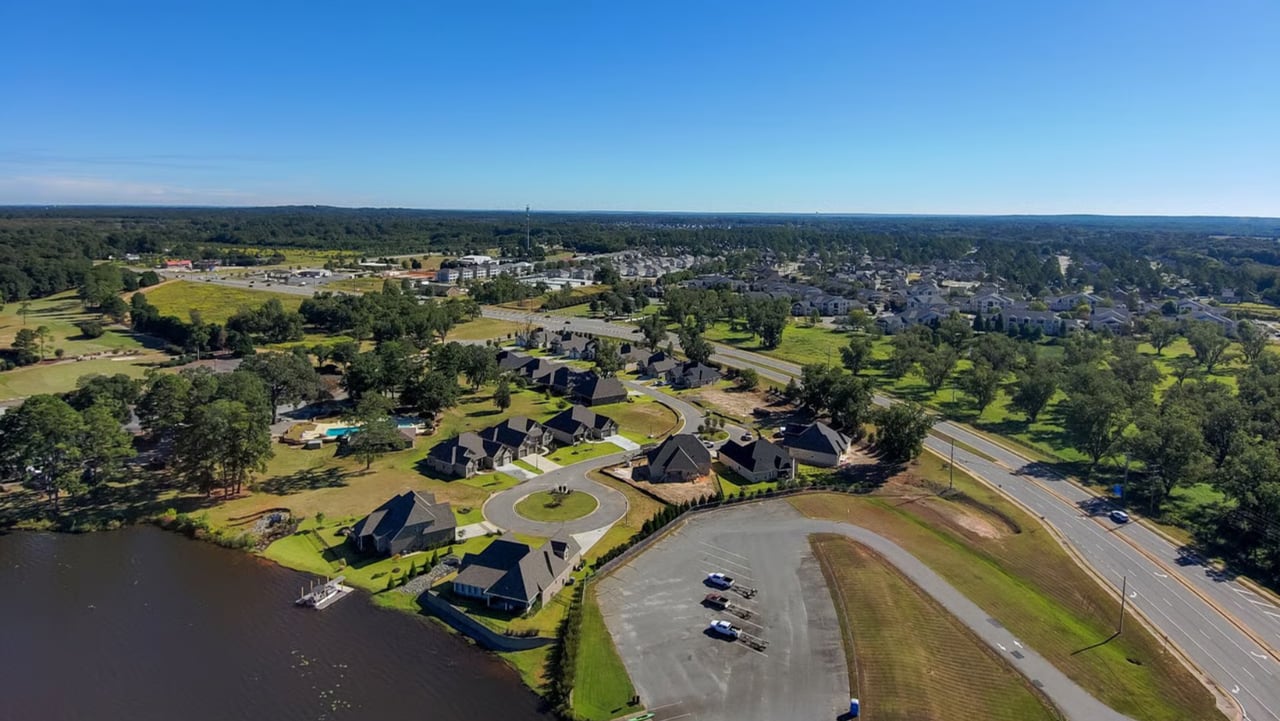
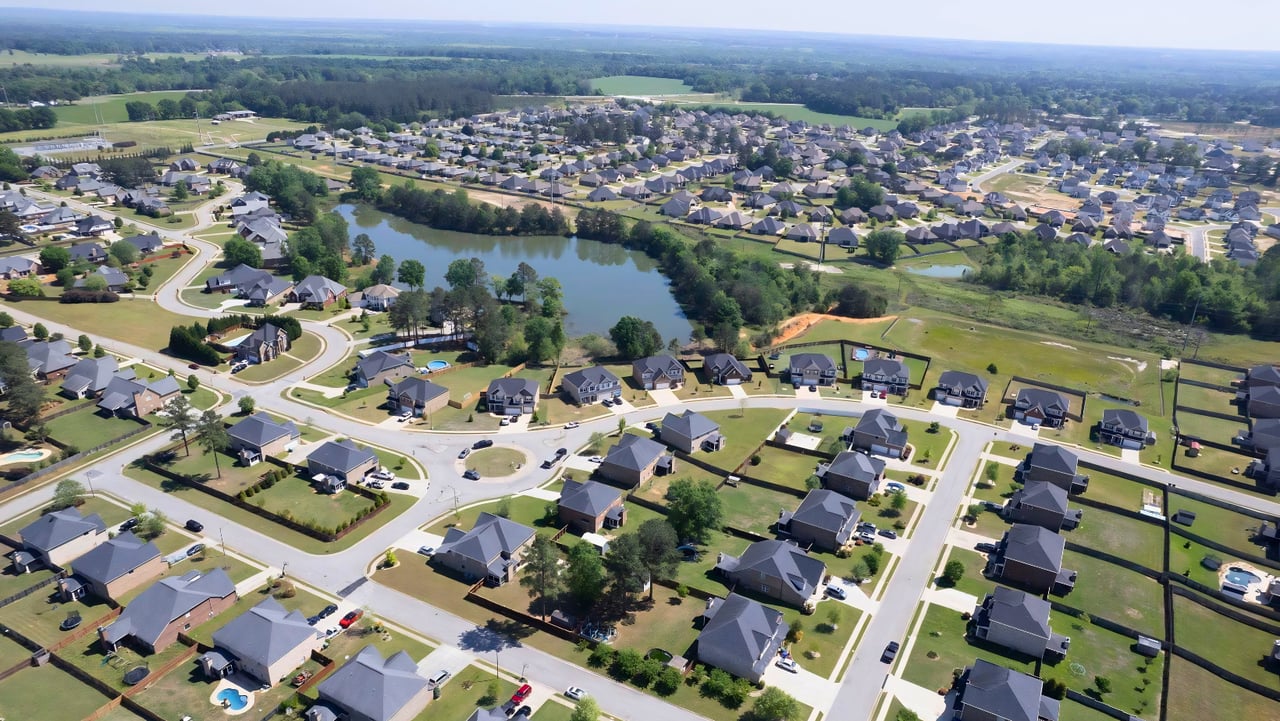
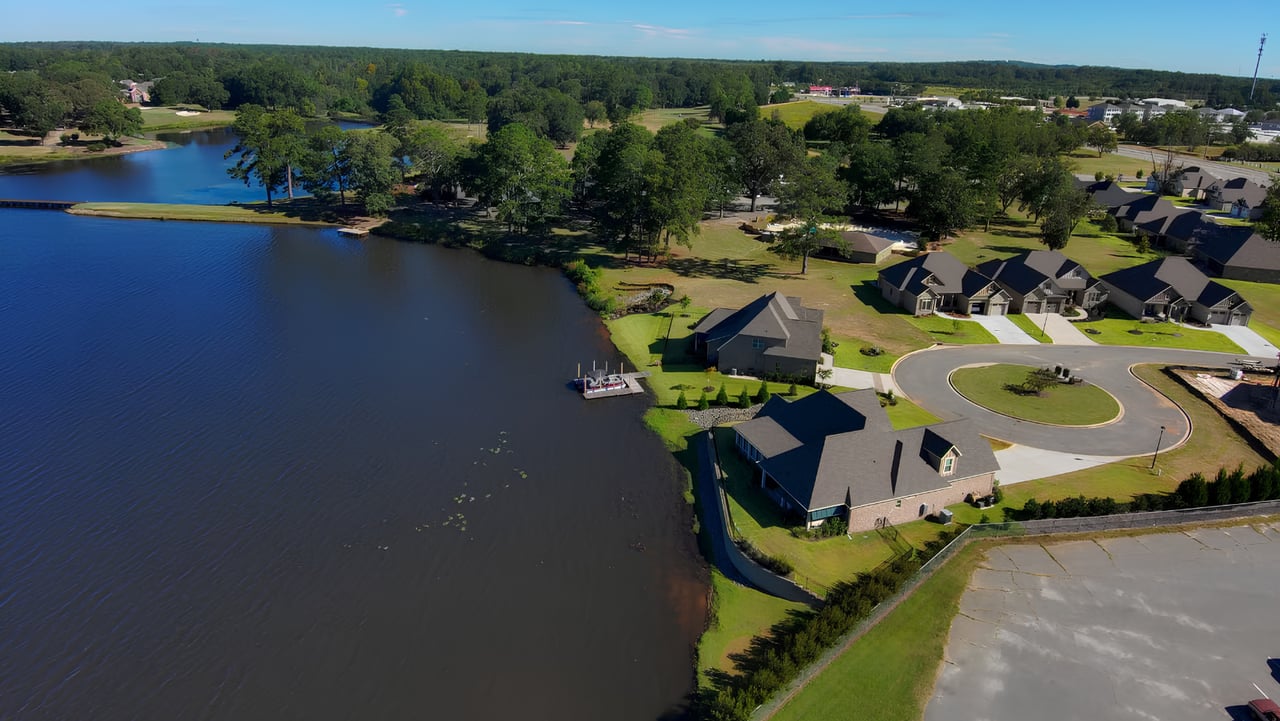
The practical connection is straightforward. While Macon-Bibb's study identifies missing middle housing as a gap, Houston County has been delivering exactly that product type at volume. Attached cottages, low-maintenance communities, and homes on smaller lots have become a meaningful share of what is available in the Warner Robins, Kathleen, and Bonaire markets, frequently landing under the $300,000 mark.
That is not coincidence, and it is not purely a builder preference. It reflects real demand from the households that make up this market: military and civilian workers tied to Robins Air Force Base, right-sizers moving out of larger homes, and buyers who want ownership without the weekend labor a large lot demands. The product exists here because the demand for it is genuine and sustained.
What I find useful about the Macon study is the outside confirmation. When a nine-month professional assessment of a neighboring county identifies a housing category as underbuilt, and that category is one we have been supplying steadily, it says something about the durability of demand for it. That is context worth having whether you are buying into this product or already own a piece of it.
For Buyers: Is a Townhome or Cottage a Smart Buy in Middle Georgia?
It depends on what you need, and the honest answer requires naming the trade. Missing middle housing typically delivers more interior square footage per dollar than a comparable detached home on a full lot, along with lower exterior maintenance and, in many communities, shared amenities. What you give up is land, a degree of privacy, and in HOA communities some autonomy over the exterior of your property, in exchange for a monthly fee.
For buyers whose priorities are price point, location, and freedom from yard work, that trade is often clearly worth making. For a buyer who wants a workshop, a garden, room for a fence and a dog, or simply distance from neighbors, it is not, and a small-lot or attached home will feel like a compromise no matter how well it is finished. Neither preference is wrong, and the mistake is buying one while wanting the other.
My advice is to be specific with yourself before you tour. If you are buying this product, read the HOA documents carefully, confirm what the fee covers, and verify whether a home is attached or detached rather than assuming from a community name. Those details determine what you actually own and what you actually owe. Legal questions about governing documents belong with a real estate attorney, and I am glad to flag what to look for.
For Sellers: What Does This Mean If I Own a Townhome or Cottage?
If you own in this category, the study is a useful piece of external context supporting the demand behind your home type. A professional regional assessment identifying missing middle housing as underbuilt reinforces that the buyer pool for this product is durable rather than a passing preference, particularly in a market anchored by a large employer and steady relocation activity.
The practical implication for a listing is about positioning rather than price alone. Buyers drawn to this product are not primarily comparing square footage against a large-lot home; they are choosing a way of living. Marketing that leads with the lifestyle, the handled maintenance, the single-level layout, the amenities, and the location, tends to reach that buyer more effectively than a spec-sheet approach. Having the HOA documents, current fee, and a clear account of what the fee covers ready before listing removes the friction that slows these transactions.
The honest counterpoint is that this product does not appeal to every buyer, and a seller in this category is marketing to a defined pool rather than the whole market. That is not a weakness if the home is positioned to reach that pool deliberately. When it comes to pricing and positioning a specific home, that is the hyper-local judgment I bring to a listing, and it starts with a real analysis of what comparable homes in that community have actually done.
Frequently Asked Questions
Q: What did the Macon-Bibb housing study find?
A: A nine-month housing assessment conducted by consulting firm RKG Associates concluded that housing affordability, not raw supply, is Macon-Bibb County's most pressing long-term housing challenge. Planning and zoning leadership described a widening mismatch between what residents earn and what available housing costs, with the gap projected to worsen. The study also projects the county could add approximately 32,800 residents and more than 11,500 households by 2050, and identified growing demand for "missing middle" housing types including townhomes, cottages, accessory dwelling units, and small-lot homes. County leaders indicated the report will inform future planning decisions on zoning, redevelopment, and neighborhood reinvestment.
Q: What is missing middle housing?
A: Missing middle housing refers to home types that fall between older, lower-cost housing stock and higher-end new construction, including townhomes, cottages, accessory dwelling units, and homes on smaller lots. It is market-rate housing rather than subsidized housing, built at a scale and price point that working households can more readily reach. The term reflects that this category has been underbuilt in many American markets for decades in favor of large-lot single-family homes on one end and larger multifamily apartments on the other. These homes achieve lower price points primarily by reducing land and exterior maintenance costs rather than by shrinking interior living space.
Q: Why does the study say building more homes won't fix affordability?
A: The distinction the study draws is between the quantity of housing and its price relative to local wages. If a market's problem were purely a shortage, additional construction of any type would relieve it. Because the identified problem is a widening gap between earnings and housing costs, adding inventory at price points the local workforce cannot reach does not close that gap. This is why the assessment emphasizes the composition of new housing, specifically the missing middle types, rather than volume alone, and frames housing as connected to workforce retention and economic health.
Q: Is Houston County building missing middle housing?
A: Housing types matching the missing middle description have been delivered at volume in Houston County in recent years, particularly across Warner Robins, Kathleen, and Bonaire. Attached cottages, low-maintenance communities, and homes on smaller lots frequently come to market under the $300,000 mark in these areas. The demand behind that product reflects the composition of the local market, including military and civilian households connected to Robins Air Force Base, right-sizers moving out of larger homes, and buyers who prioritize ownership without extensive yard maintenance.
Q: Are townhomes and cottages a good investment in Middle Georgia?
A: These home types typically deliver more interior square footage per dollar than a comparable detached home on a full lot, along with lower exterior maintenance and, in many communities, shared amenities. The trade is less land, reduced privacy, and in HOA communities some limits on exterior autonomy in exchange for a monthly fee. Whether that represents a good buy depends on individual priorities, and resale performance depends on market conditions, the specific community, and the individual home. Buyers should evaluate a specific property with a comparative market analysis rather than relying on generalizations about a category.
Q: What is the difference between missing middle housing and affordable housing?
A: Missing middle housing is market-rate housing built at more attainable price points through efficiencies in land use and maintenance; it is bought and sold on the open market like any other home. Affordable housing generally refers to housing with income restrictions or subsidy programs attached, often administered through public or nonprofit initiatives and targeted to households below a defined share of area median income. The two address related problems through different mechanisms, and the Macon-Bibb study's missing middle finding concerns market-rate housing types rather than subsidized programs.
Q: Who typically buys townhomes and cottages in Warner Robins and Kathleen?
A: The buyer pool for this product in Houston County commonly includes military and civilian households connected to Robins Air Force Base who value proximity and low-maintenance ownership, right-sizers moving out of larger homes who want less upkeep without sacrificing interior space, first-time buyers seeking an accessible price point, and buyers who travel frequently and want a home that does not require weekend maintenance. This is a defined but durable buyer pool, which matters for sellers positioning a home in this category.
Q: Should I buy a townhome or a single-family home on a larger lot?
A: The decision comes down to what you value most. A townhome, cottage, or small-lot home generally offers a lower price point, reduced maintenance, and often shared amenities, while a larger-lot single-family home offers more land, privacy, and autonomy over the property. Buyers who want a workshop, garden, or substantial yard space typically find the missing middle product feels like a compromise, while buyers who prioritize price, location, and freedom from yard work often find it is exactly right. Being specific about your own priorities before touring is the most useful step.
Q: What should I check before buying in a townhome or cottage community?
A: Review the HOA governing documents, confirm the current monthly fee and precisely what it covers, and check the association's reserve balance, special assessment history, and any pending litigation. Verify whether a specific home is attached or detached rather than assuming based on the community's name, since this affects privacy, insurance, and resale. Under Georgia's Property Owners' Bill of Rights Act, associations face registration and transparency requirements phasing in through 2027, which over time gives buyers more insight into how a community has been managed. Legal questions about governing documents should be directed to a licensed Georgia attorney.
Q: How does housing affordability in Houston County compare to Macon-Bibb?
A: Both counties sit within the broader Middle Georgia market and share regional economic conditions, though Houston County's housing market is heavily influenced by Robins Air Force Base and the steady relocation activity it generates. The Macon-Bibb study's findings concern that county specifically, and its conclusions about affordability and missing middle demand should not be read as measurements of Houston County. What the study offers Houston County readers is regional context and outside confirmation that demand for attainable housing types is a structural feature of the market rather than a temporary trend. Current local figures are best obtained through a market analysis of a specific area.
Q: Will the Macon-Bibb study change zoning or development rules?
A: County leaders indicated the report will serve as a foundation for future planning decisions, potentially influencing zoning, redevelopment, neighborhood reinvestment, and blight reduction. A study of this kind is an input to policy rather than a policy change itself, so any actual changes to zoning or development regulations would proceed through the county's normal planning and approval processes. Residents and property owners interested in those outcomes should follow Macon-Bibb's planning process directly, and Houston County residents should note that this study concerns Macon-Bibb rather than their own county's regulations.
This article is reviewed and updated quarterly. Study findings, projections, and market conditions change over time. Details current as of July 2026. Study facts reflect published reporting on the RKG Associates housing assessment for Macon-Bibb County.
About the Author
William Walton-Dean is a licensed REALTOR® with Walton Dean Realty, operating under Real Broker LLC, serving buyers and sellers across Houston County, Georgia, including Perry, Warner Robins, Bonaire, Kathleen, Byron, and the surrounding Middle Georgia housing market. Known for a data-driven, hyper-local approach and deep expertise in the military and PCS relocation market around Robins Air Force Base, he helps buyers and sellers at every price point make clear, confident decisions backed by real market insight.
📱 478-371-7069
Walton Dean Realty | Real Broker LLC
Buying or Selling a Townhome or Cottage in Houston County? Let's Talk.
This category of housing serves a specific buyer exceptionally well and the wrong buyer poorly, and knowing which one you are is most of the decision. Reach out and we will look honestly at whether this product fits how you want to live, or what your home in one of these communities would bring in today's market.
William Walton-Dean | Walton Dean Realty | 📱 478-371-7069 | 📧 [email protected]
"A More Strategic Approach to Real Estate"
Disclaimer: This article is provided for general informational purposes only and does not constitute financial, legal, tax, or investment advice. William Walton-Dean is a licensed real estate agent. Findings described here reflect published reporting on a housing assessment conducted for Macon-Bibb County and concern that county specifically; they are not measurements of Houston County or any other market. Projections are estimates and are not guarantees of future conditions, and nothing here guarantees any outcome, development, or effect on property values. HOA governing documents, fees, and community rules vary and should be reviewed directly; legal questions belong with a licensed Georgia attorney. For analysis of a specific property or market, consult a licensed real estate professional.