
Once a Houston County buyer is under contract, the loan becomes the longest and least visible workstream in the transaction. Inspections happen in a week. Title work runs in the background. The mortgage, by contrast, moves through a sequence of stages that most buyers only see the edges of, and the phrase they are waiting to hear, clear to close, arrives near the very end.
The sequence is broadly the same whether the buyer is in Warner Robins, Kathleen, Perry, Bonaire or neighboring Byron: application, processing, appraisal, underwriting, conditional approval, conditions cleared, clear to close, closing disclosure, funding. What varies is how much friction each stage generates, and the buyer controls more of that than most realize.
Houston County's loan mix also matters. The area around Robins Air Force Base carries a high share of VA and other government-backed financing, and those programs add steps that a conventional file does not have. Understanding where those steps fall is the difference between a closing that lands on the contract date and one that slides.
What Are the Stages of a Mortgage After Going Under Contract?
A purchase mortgage moves through a defined sequence once the contract is binding. Each stage produces something the next stage depends on, which is why a delay early in the file compounds later.
Stage | What Happens | What the Buyer Controls |
Application | The buyer completes the formal application on the specific property and receives the Loan Estimate | Speed of submission and completeness of documents |
Processing | The processor gathers and verifies income, assets, employment and credit documentation | Responding to document requests immediately |
Appraisal | The lender orders the appraisal; the appraiser assesses value and, on government-backed loans, property condition | Access to the property and any comparable sale information provided through the agent |
Underwriting | The underwriter reviews the full file against program guidelines and issues a decision | Not changing anything in the financial picture |
Conditional approval | Approval subject to specific conditions, such as updated statements or explanations | Clearing conditions quickly and completely |
Clear to close | All conditions satisfied; the lender authorizes closing | Nothing, other than not disturbing the file |
Closing Disclosure | Delivered at least three business days before consummation under federal TRID rules | Reviewing it promptly and flagging errors |
Closing and funding | Documents signed with the closing attorney; funds disbursed after the lender authorizes funding | Bringing verified funds and identification |
What Does Clear to Close Actually Mean?
Clear to close is the lender's confirmation that underwriting is complete, every condition has been satisfied, and the file is authorized to proceed to the closing table. It is not the same as a pre-approval and it is not the same as conditional approval.
A pre-approval is issued before a property is identified, based on a preliminary review of the buyer's credit and stated finances. A conditional approval is issued by the underwriter after reviewing the actual file and the appraisal, but with conditions still outstanding. Clear to close arrives only after those conditions are cleared. Buyers who hear approved early in the process and treat it as final are usually hearing conditional approval, which is a meaningful milestone but not the end.
Even after clear to close, most lenders perform a final verification before funding, commonly including a credit refresh and an employment verification. A buyer who opens a new account or changes jobs in the window between clear to close and funding can convert a cleared file back into a conditional one.
What Should a Buyer Do to Keep the Loan on Schedule?
A buyer keeps a loan on schedule by submitting the application immediately after the contract becomes binding, responding to every document request the same day, and changing nothing about their credit, employment or assets until after funding.
Here is what I tell every buyer the day we go under contract, because the loan is the one thing I cannot fix for them.
Apply the same day the contract binds. The financing contingency deadline is counted from the Binding Agreement Date, and every day the application sits unsubmitted is a day taken out of a window that was already negotiated tight.
Treat document requests as same-day tasks. A processor who asks for two months of bank statements and receives them a week later has lost a week, and the appraisal and underwriting queue behind that request.
Change nothing. No new credit accounts, no financed furniture, no new vehicle, no job changes, no closing existing accounts, no large unexplained deposits. Underwriters verify what they were told, and the file is built on the picture as it existed at application. Anything that changes the picture generates a condition at best and a denial at worst.
Keep the money where it is. Moving funds between accounts creates a paper trail that every transfer has to explain. Gift funds have their own documentation requirements, and a gift that arrives without a letter and a source trail slows the file.
Watch the financing contingency deadline separately from the due diligence deadline. They are different dates with different consequences. A buyer focused on inspections sometimes lets the loan sit, and the second deadline arrives while the first one is being solved.
What Is Different About a VA Loan Under Contract Near Robins Air Force Base?
VA financing follows the same broad sequence as a conventional loan but adds a Certificate of Eligibility, a VA-assigned appraisal with property condition requirements, and a required contract clause protecting the buyer if the appraised value falls below the purchase price.
The appraisal is the step that most often shapes a VA timeline. Rather than the lender selecting the appraiser, the assignment runs through the VA, and the appraisal evaluates both value and the VA's minimum property requirements for health and safety. A property that does not meet those requirements can require correction before the loan will fund, which converts what would otherwise be a negotiable repair into a condition of that financing.
VA appraisals also include an early warning process, commonly called Tidewater, that notifies the lender before a low value is finalized and provides a short window to submit additional comparable sales. That process is covered in detail in the appraisal post in this series.
For buyers relocating on orders, the practical issue is sequencing. Getting the Certificate of Eligibility in hand and the application submitted immediately after the contract binds gives the VA appraisal the maximum runway inside a contract timeline that PCS dates often make less flexible than a civilian move.
What Is the Closing Disclosure and Why Does the Three Day Rule Matter?
The Closing Disclosure is the federally required five page statement of the final loan terms and closing costs. Under the TRID rule administered by the Consumer Financial Protection Bureau, the borrower must receive it at least three business days before consummation of the loan.
The three day rule is a floor, not a formality. Certain changes made after delivery, including changes to the loan product, the addition of a prepayment penalty, or an increase in the annual percentage rate beyond a set tolerance, require a corrected disclosure and restart the three day period. A last minute renegotiation in a Houston County transaction that touches the loan terms can move the closing date for that reason alone.
Buyers should compare the Closing Disclosure against the Loan Estimate they received at application and raise any discrepancy immediately, while there is still time to correct it without shifting the closing.
What Does the Loan Process Mean for a Seller?
From the seller's side, the buyer's loan is the largest single source of timeline risk in the transaction, and the seller's most useful tools are appraisal access, responsiveness to lender-required repairs, and attention to the financing contingency deadline.
A few things I watch on the listing side.
Make the appraisal appointment easy. The appraisal cannot be ordered until the application is in, and it cannot be completed until the appraiser gets in. Every day of delayed access is a day off the back of the file.
Know the financing contingency date and what it means. After it passes, a buyer who cannot obtain financing is generally no longer protected by that contingency, which changes the seller's position materially.
Take lender-required repairs seriously. A condition flagged on a VA or FHA appraisal is not a negotiating position. It is a requirement of that financing, and declining it means losing that buyer and, in Warner Robins, a meaningful share of the buyer pool.
Does the Loan Process Differ Across Houston County?
The lending framework is federal and program-based, so the stages are identical everywhere. What differs across the county is the financing mix and the property types that shape appraisal and condition requirements.
Area | What Commonly Shapes the Loan Timeline |
Warner Robins | The highest concentration of VA and government-backed financing in the county, with VA appraisal requirements and PCS-driven closing dates. |
Kathleen | A strong share of newer construction, where builder lender incentives and new-build appraisal comparables come into play. |
Perry | The county seat with a wider price range and more acreage, where USDA eligibility may apply in rural areas and acreage can complicate appraisal comparables. |
Bonaire | Established unincorporated subdivisions with a mix of conventional and government-backed financing. |
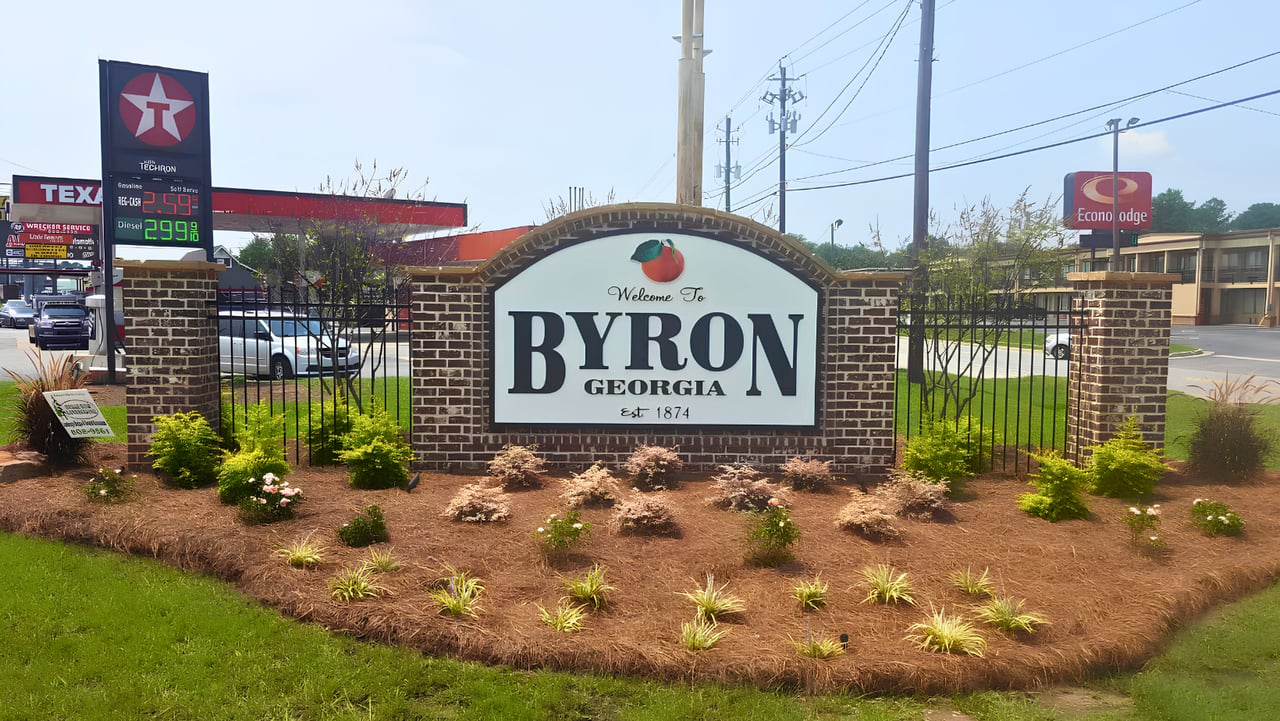
Byron | Neighboring Byron sits in Peach County, which changes the tax figures used in escrow calculations but not the lending process. |
USDA financing deserves a specific note. Eligibility is determined by USDA's area maps and by income limits, and portions of Houston County's rural areas can qualify. Eligibility is address-specific and should be confirmed with the lender before an offer is written rather than assumed from a general sense of where the county line runs.
The Bottom Line
The mortgage is the workstream in a Houston County purchase that runs longest and is hardest to see, and it is also the one where buyer behavior has the largest effect. Apply immediately, respond the same day, and change nothing until the funds have disbursed.
Clear to close is a real milestone, but it is not the finish line. Final verifications happen after it, and the Closing Disclosure carries a federal three day floor that can move a closing date if the loan terms change late. Buyers who understand those last two steps rarely get surprised by them.
Frequently Asked Questions About the Loan Process in Houston County, GA
Q: What does clear to close mean on a mortgage?
A: Clear to close is the lender's confirmation that underwriting is complete, all conditions have been satisfied, and the loan is authorized to proceed to closing. It is issued after the appraisal and after conditional approval, and it is distinct from a pre-approval, which is a preliminary assessment made before a property is identified. Most lenders still perform a final credit refresh and employment verification between clear to close and funding. A change in the buyer's credit, employment or assets in that window can reopen conditions.
Q: How long does underwriting take after an offer is accepted in Georgia?
A: Underwriting timelines vary by lender, loan program and file complexity, and there is no Georgia-specific rule that sets them. What buyers control is how quickly the application is submitted after the Binding Agreement Date and how fast document requests are answered, because the appraisal and the underwriting review queue behind those steps. Government-backed loans such as VA and FHA add property condition requirements that can extend the timeline. The financing contingency deadline in the contract is the date to plan around.
Q: What is a financing contingency in a Georgia real estate contract?
A: A financing contingency is a negotiated contract provision that protects a buyer who is unable to obtain loan approval within a stated period, allowing termination under the contract's terms. The period is counted from the Binding Agreement Date and is written into the Georgia Association of REALTORS Purchase and Sale Agreement by the parties rather than set by statute. It is separate from the due diligence period and carries its own deadline. After it passes, a buyer who cannot obtain financing is generally no longer protected by it.
Q: Can I change jobs while my mortgage is in underwriting?
A: Changing jobs during underwriting can delay or derail a loan, because the file is built on employment and income as they existed at application and the lender verifies employment again before funding. A change within the same field with comparable or higher income may be workable with documentation, while a move to a new field, to commission-based pay or to self-employment can create significant problems. Buyers in Houston County who anticipate a job change should discuss it with the lender before the change occurs rather than after.
Q: Why does my lender keep asking for more documents?
A: Underwriters must verify every element of the file against program guidelines, and a condition is generated whenever something requires clarification, such as a large deposit, a gap in employment, an address discrepancy or an updated statement. Conditions are a normal part of the process rather than a sign of trouble. The speed at which a buyer clears them is one of the largest factors in whether the loan reaches clear to close on schedule. Same-day responses keep the file moving.
Q: What is the Closing Disclosure three day rule?
A: Under the federal TRID rule, a borrower must receive the Closing Disclosure at least three business days before consummation of the loan. Certain changes after delivery, including a change in loan product, the addition of a prepayment penalty, or an increase in the annual percentage rate beyond a set tolerance, require a corrected disclosure and restart the three day period. Because of this, a late change to loan terms in a Houston County transaction can move the closing date. Buyers should compare the Closing Disclosure to the Loan Estimate promptly and flag errors immediately.
Q: What is different about a VA loan under contract in Warner Robins?
A: A VA loan requires a Certificate of Eligibility, uses a VA-assigned appraisal that evaluates both value and the VA's minimum property requirements, and includes a required contract clause protecting the buyer if the appraised value is below the purchase price. Property condition issues identified by the VA appraiser can require correction before the loan will fund. The VA appraisal process also includes an early warning step before a low value is finalized. Given the concentration of VA financing near Robins Air Force Base, these steps affect a large share of Warner Robins transactions.
Q: What is a VA Certificate of Eligibility and when do I need it?
A: The Certificate of Eligibility is the document confirming a borrower qualifies for the VA home loan benefit and stating the available entitlement. Lenders generally obtain it electronically, and having it in hand before an offer is written removes one potential source of delay once the contract binds. For buyers relocating to Houston County on orders, sequencing the certificate, the application and the VA appraisal as early as possible protects a contract timeline that PCS dates can make less flexible.
Q: Can I use USDA financing in Houston County, GA?
A: USDA financing may be available for eligible properties in rural portions of Houston County, subject to USDA's area eligibility maps and household income limits. Eligibility is determined by the specific property address rather than by city or county boundaries in general, so a lender should confirm it before an offer is written. Properties in and around Perry and the county's more rural areas are the most likely to fall within eligible zones, but confirmation should never be assumed.
Q: What happens if my loan is denied after the financing contingency expires?
A: If the financing contingency has expired and the buyer cannot obtain financing, the buyer is generally no longer protected by that contingency and may be in default under the contract. In that situation the seller may be entitled to retain the earnest money as liquidated damages where the contract provides for it. This is why the financing contingency deadline should be tracked separately from the due diligence deadline, and why buyers should request an extension in writing before the date passes if the loan is not yet approved.
Q: Who closes the loan in Georgia, a title company or an attorney?
A: Georgia requires a licensed Georgia attorney to conduct real estate closings under O.C.G.A. Section 15-19-50, so the lender's closing package is delivered to the closing attorney rather than to a title company or escrow agent. The attorney prepares or reviews the deed and security instruments, conducts the closing, disburses funds after the lender authorizes funding, and records the documents. Buyers relocating to Houston County from states where title companies close loans should expect this structural difference.
Q: Does clear to close mean I definitely get the house?
A: Clear to close is the lender's final authorization to proceed, but funding does not occur until closing documents are signed with the closing attorney and the lender releases funds. Most lenders perform a final credit and employment verification in the interval, and a change in the buyer's financial picture can reopen conditions. The contract also has to be performed by both sides, including the final walkthrough and any agreed repairs. Buyers should treat the period between clear to close and funding as part of the loan process rather than as the end of it.
About the Author
William Walton-Dean is a licensed REALTOR® with Walton Dean Realty, operating under Real Broker LLC, serving buyers and sellers across Houston County, Georgia, including Perry, Warner Robins, Bonaire, Kathleen, Byron, and the surrounding Middle Georgia housing market. He brings a data-driven, hyper-local approach to both residential and commercial transactions, working with first-time buyers, move-up sellers, investors, and families relocating to the area, including those tied to Robins Air Force Base. Drawing on a prior career as a C-level executive, he helps buyers and sellers at every price point make clear, confident decisions backed by real market insight.
📱 478-371-7069
Walton Dean Realty | Real Broker LLC
Buying or Selling in Houston County? Let's Talk About the Timeline
The loan is the part of a Warner Robins, Perry or Kathleen purchase that quietly decides whether the closing date holds, and most delays trace back to the first week. If you want the sequence mapped out before you go under contract, reach out.
William Walton-Dean | Walton Dean Realty
📱 478-371-7069
A More Strategic Approach to Real Estate
Disclaimer
This article is provided for general informational purposes only and does not constitute legal, financial or lending advice. Loan programs, underwriting guidelines, eligibility requirements and federal disclosure rules are subject to change and vary by lender. Contract contingencies and deadlines are negotiated between the parties and written into the individual agreement. Nothing in this article creates an attorney-client relationship or a brokerage relationship. For advice regarding a specific loan, transaction or contract, consult your lender, a licensed Georgia real estate attorney, and your licensed real estate agent.