If foundation movement is Middle Georgia’s most common inspection finding, moisture is its most persistent. The region’s humid subtropical climate means high humidity for much of the year, and that moisture finds its way into crawlspaces, against foundations, and onto cool surfaces inside homes across Houston County. Left unaddressed, it produces wood rot, musty odors, and mold, and it shows up on inspection reports from Warner Robins to Perry, Bonaire, Kathleen, and neighboring Byron.
The good news is that moisture is almost always a solvable problem once you understand the source. This post explains what drives moisture and mold in Middle Georgia homes, why the crawlspace is ground zero, what inspectors flag, what remediation involves, and how a moisture finding affects your financing and your negotiation. It is a companion to the pillar on the most common Middle Georgia inspection problems, and it connects closely to the foundation post, since water drives both.
Why Moisture Is Such a Persistent Problem Here
Middle Georgia’s climate is the starting point. Long, humid summers mean the outdoor air holds a great deal of moisture, and that humidity is relentless in a way it is not in drier climates. When humid air reaches a cool surface, a crawlspace floor, ductwork, a foundation wall, it condenses into liquid water, and liquid water in contact with wood and organic material is what feeds rot and mold.
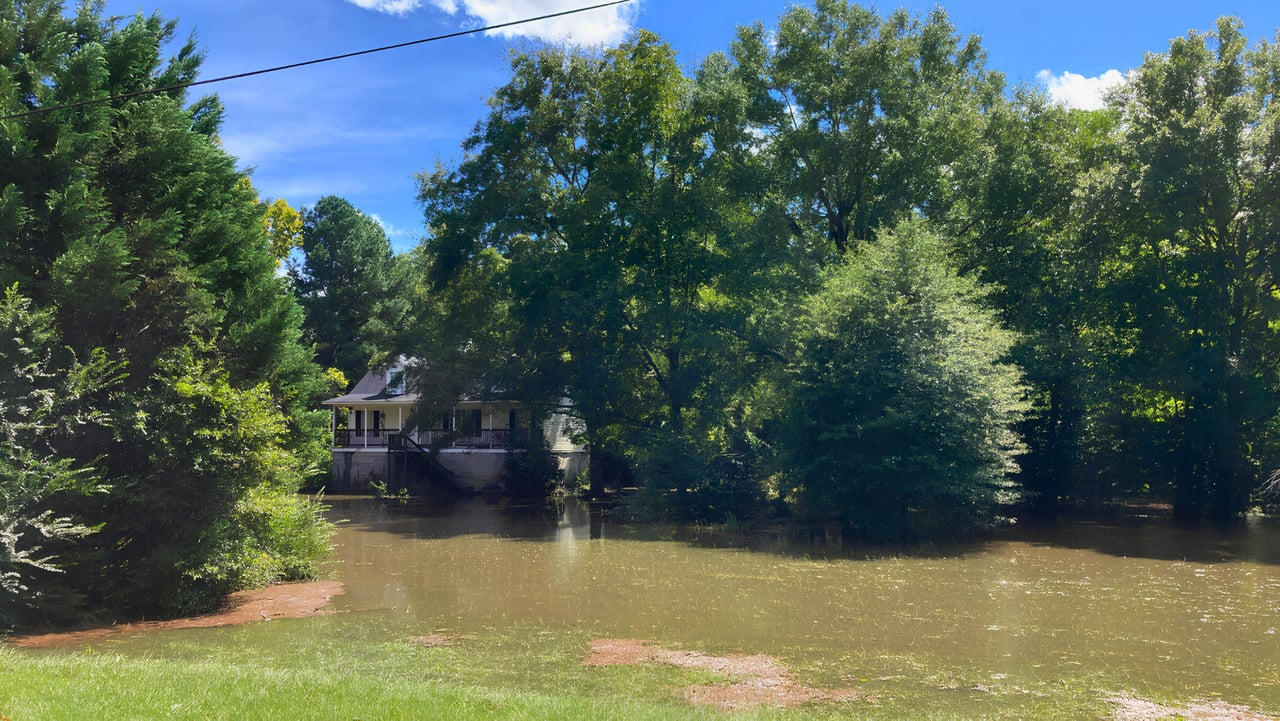
Three things turn that climate into an inspection finding. First, drainage: grading that slopes toward the house, clogged or missing gutters, and downspouts that discharge at the foundation all send water where it should not be. Second, the crawlspace: the traditional vented crawlspace design, common throughout Houston County, invites humid outdoor air underneath the home. Third, interior sources: plumbing leaks, poor bathroom and kitchen ventilation, and HVAC condensation add moisture from within. Any of these, and often several together, produce the moisture findings that are so routine on Middle Georgia reports.
The Crawlspace: Ground Zero for Moisture Findings
Most of the region’s moisture problems concentrate in the crawlspace, and understanding why explains most of what an inspector writes up. A traditional crawlspace is vented to the outside on the theory that airflow keeps it dry. In Middle Georgia’s humid climate, that theory often backfires: the vents pull warm, humid outdoor air into the cooler crawlspace, where it condenses on the framing and the underside of the floor. Over time, that persistent dampness can rot floor joists and subflooring and grow mold on wood surfaces.
Crawlspace Finding | What It Indicates | Common Remedy |
Missing or damaged vapor barrier | Ground moisture evaporating into the space | Install or repair a ground vapor barrier |
Standing water or damp soil | Drainage or grading problem | Correct grading, gutters, and downspouts; add drainage |
Condensation on framing or ducts | Humid air meeting cool surfaces | Improve moisture control; consider encapsulation |
Wood rot on joists or subfloor | Prolonged moisture exposure | Repair or replace affected wood; fix the source |
Mold growth on wood surfaces | Sustained dampness | Remediate and, critically, eliminate the moisture source |
Musty odor | Elevated humidity or hidden moisture | Identify and correct the underlying source |
A vapor barrier and drainage correction resolve many crawlspace moisture issues. Persistent problems sometimes lead owners to crawlspace encapsulation, which seals and conditions the space, though it is a larger investment.
Encapsulation: When Moisture Control Goes Further
On homes with chronic crawlspace moisture, some owners move beyond a vapor barrier to full encapsulation, sealing the crawlspace vents, lining the floor and walls with a heavy vapor barrier, and often adding a dehumidifier to control humidity. Encapsulation can be highly effective at ending a persistent moisture problem, but it is a larger investment, often several thousand dollars, so it is typically a solution for a genuine, ongoing issue rather than a routine measure. For a buyer, seeing an encapsulated crawlspace can be a positive sign that a past moisture issue was addressed thoroughly, provided it was done correctly.
Mold: Understanding the Finding
Mold on an inspection report understandably worries buyers, but it helps to frame it correctly: mold is a symptom of a moisture problem, not an independent disease. Where there is sustained moisture and an organic surface, mold can grow, so the presence of mold on crawlspace framing or a damp wall almost always points back to a water source. Solving the moisture source is what actually resolves the mold; cleaning the surface without fixing the source simply invites it to return.
A general home inspector may note visible mold-like growth and moisture but is not a mold specialist, and confirming the type and extent of mold requires specialized testing. For most Middle Georgia moisture findings, the productive path is to identify and fix the moisture source, remediate the affected area, and, if the growth is extensive or a household member has health sensitivities, bring in a qualified mold professional. The health considerations are real, particularly for people with respiratory conditions or allergies, which is why a moisture finding deserves a thorough, source-focused response rather than a quick surface cleanup.
How Moisture Findings Affect Financing
Minor moisture issues and a missing vapor barrier generally do not derail a loan, but significant moisture intrusion, active wood rot affecting structural members, or extensive mold can. FHA and VA appraisers assess the home for conditions affecting safety and soundness, and serious moisture damage, particularly wood rot compromising floor framing, can be flagged as a condition requiring correction before a government-backed loan closes. Because VA and FHA financing dominate this market, a substantial moisture finding is a real consideration on any affected Houston County home.
This is also why a termite, or wood-destroying organism, inspection and a moisture assessment often intersect. The same damp conditions that grow mold and rot wood also attract wood-destroying insects and support wood-decaying fungi, so a crawlspace with a moisture problem frequently shows up on both reports. Addressing the moisture source protects the home on multiple fronts at once.
For Buyers: How Do I Handle a Moisture Finding?
Ask the source question first. When a report notes moisture or mold, the productive question is not how do I clean it but where is the water coming from. A moisture finding tied to a fixable source, poor grading, a missing vapor barrier, a downspout dumping at the foundation, is very different from one with no obvious cause. Identifying the source tells you whether the fix is straightforward or open-ended.
Get the crawlspace looked at properly. On a home with a crawlspace, and most Houston County homes with moisture findings have one, make sure the inspector accesses it and, if a significant issue is found, consider a specialist evaluation. A vapor barrier and drainage correction resolve many problems inexpensively, while chronic moisture may point toward encapsulation, and knowing which situation you are in shapes both your budget and your negotiation.
Treat serious moisture as a negotiating point, and mind the health angle. Active wood rot, extensive mold, or significant intrusion are legitimate items to negotiate during the inspection period, through a repair, a credit, or seller-completed remediation. And if anyone in your household has respiratory sensitivities, take mold findings seriously enough to have them properly assessed before closing, since the health considerations are real and easier to address before you own the home.
For Sellers: How Do I Prevent Moisture From Costing Me the Deal?
Moisture and mold findings shake buyer confidence more than almost anything else, so getting ahead of them protects your sale. Before listing, address the controllable sources: correct grading that slopes toward the house, clean and extend gutters and downspouts, install or repair the crawlspace vapor barrier, and fix any plumbing leaks. These are often modest fixes that prevent a buyer’s inspection from returning an alarming moisture list.
If your home has had a moisture or mold issue, addressing it properly and keeping documentation, the remediation, the source correction, any encapsulation, reassures a buyer far more than leaving them to discover the problem and imagine the worst. A visible, unexplained moisture finding invites a buyer to discount the whole home; a documented, resolved issue does not. In a market where buyers compare many homes, a clean, dry crawlspace is a quiet but real advantage, whether your home is in Warner Robins, Perry, Bonaire, Kathleen, or Byron.
The Bottom Line
Moisture is the most persistent category on Middle Georgia inspection reports, driven by a humid climate, vented crawlspaces, and drainage that lets water reach the foundation. Mold, when it appears, is a symptom of that moisture rather than a separate problem, which is why the productive response to any moisture finding is to identify and eliminate the source, not simply clean the surface.
Most moisture issues across Houston County, from Warner Robins to Perry, Bonaire, Kathleen, and neighboring Byron, trace back to fixable causes, and correcting grading, drainage, and vapor barriers resolves the majority of them. Serious moisture, active wood rot, or extensive mold deserve a specialist’s evaluation and can become negotiating points during the inspection period. Read alongside the foundation and termite companion posts, this is how you handle Middle Georgia’s moisture reality with confidence rather than alarm.
Frequently Asked Questions About Moisture and Mold in Middle Georgia Homes
Q: Why do Middle Georgia homes have so many moisture problems?
A: The root cause is the region’s humid subtropical climate, which keeps outdoor humidity high for much of the year. When that humid air reaches cooler surfaces, such as crawlspace framing, ductwork, or foundation walls, it condenses into liquid water that feeds wood rot and mold. Three factors turn the climate into inspection findings: drainage that sends water toward the home, traditional vented crawlspaces that pull humid air underneath, and interior sources like plumbing leaks and poor ventilation. Because these conditions are widespread across Houston County, moisture findings appear on inspection reports throughout Warner Robins, Perry, Bonaire, Kathleen, and neighboring Byron.
Q: Is mold in a crawlspace a serious problem?
A: It depends on the extent and, most importantly, the moisture source behind it. Mold is a symptom of sustained moisture, so mold on crawlspace framing almost always points back to a water problem that must be fixed for the mold to be truly resolved. Limited growth tied to a fixable source, such as a missing vapor barrier or a drainage issue, is often manageable. Extensive growth, or mold combined with active wood rot affecting floor framing, is more serious and can affect both structural soundness and financing. Because health considerations are real, particularly for people with respiratory sensitivities, a mold finding warrants a source-focused evaluation rather than a surface cleanup.
Q: What is crawlspace encapsulation and do I need it?
A: Crawlspace encapsulation seals the crawlspace vents, lines the floor and walls with a heavy vapor barrier, and often adds a dehumidifier to control humidity, effectively isolating the space from Middle Georgia’s humid outdoor air. It can be highly effective at ending a chronic moisture problem, but it is a larger investment, often several thousand dollars, so it is typically a solution for a genuine ongoing issue rather than a routine measure. Many moisture problems are resolved more simply with a vapor barrier and drainage correction. For a buyer, an existing, properly done encapsulation can be a positive sign that a past moisture issue in a Houston County home was addressed thoroughly.
Q: Can moisture or mold stop an FHA or VA loan in Houston County?
A: Significant moisture problems can. FHA and VA appraisers assess the home for conditions affecting safety and soundness, and serious moisture damage, particularly active wood rot compromising floor framing or extensive mold, can be flagged as a condition requiring correction before a government-backed loan closes. Minor moisture issues and a missing vapor barrier generally do not derail financing. Because VA and FHA loans are common across Houston County, a substantial moisture finding is a real consideration, and resolving it, through repair, remediation, or negotiation, becomes part of the transaction during the inspection and appraisal process on any affected home.
Q: How much does it cost to fix crawlspace moisture problems?
A: Costs vary widely by the source and severity. Installing or repairing a vapor barrier and correcting drainage, gutters, and downspouts can be relatively inexpensive, often a few hundred to a couple thousand dollars, and resolves many problems. Repairing wood rot on floor joists or subflooring adds to that, and full crawlspace encapsulation with a dehumidifier can run several thousand dollars. Because the range is so wide, identifying the specific source and getting a qualified contractor’s estimate during the inspection period is essential to knowing what you are dealing with on a Houston County home, and to negotiating from a real number rather than a guess.
Q: Does homeowners insurance cover mold damage in Georgia?
A: Coverage is limited and conditional. Standard homeowners policies often exclude or sharply limit mold coverage, particularly mold resulting from long-term moisture, humidity, or maintenance issues, which describes most Middle Georgia mold. Some policies cover mold that results from a sudden, covered event like a burst pipe, but gradual moisture problems are typically not covered. Because coverage varies significantly and mold from chronic moisture is often excluded, buyers should not assume insurance will address a mold issue and should instead treat a significant mold finding as something to resolve during the inspection period. Review any specific policy’s mold provisions with your insurance agent before relying on them.
Q: Why are vented crawlspaces a problem in Middle Georgia?
A: Vented crawlspaces were designed on the assumption that outdoor airflow keeps the space dry, which works in drier climates but often backfires in Middle Georgia’s humidity. The vents pull warm, humid outdoor air into the cooler crawlspace, where it condenses on the framing and the underside of the floor, creating the sustained dampness that leads to wood rot and mold. This is why so many crawlspace moisture findings appear on Houston County inspection reports, and why solutions like a ground vapor barrier, improved drainage, or full encapsulation, which reduce the moisture entering and lingering in the space, are the common remedies for a persistent problem.
Q: What is the difference between mold and mildew on an inspection?
A: Both are fungal growth that thrives in moisture, and in practice inspection reports and homeowners often use the terms loosely. Mildew typically refers to surface growth that is easier to clean, while mold can penetrate materials and, when extensive, raises greater structural and health concerns. For the purposes of a Middle Georgia home purchase, the more important distinction is not the label but the moisture source and the extent of the growth, since both point to dampness that needs correcting. A general inspector may note visible growth, but confirming the type and extent requires specialized testing, which is worth pursuing when growth is extensive or health sensitivities are a concern.
Q: Should moisture findings make me walk away from a home?
A: Usually not, because most Middle Georgia moisture findings trace to fixable sources and moisture issues are common region-wide. The better approach is to identify the source and understand the scope: a finding tied to poor grading, a missing vapor barrier, or a downspout problem is often inexpensive to correct, while chronic moisture with active wood rot or extensive mold is more serious. Get the crawlspace properly evaluated, obtain estimates during the inspection period, and negotiate a repair, credit, or remediation as warranted. Walking away makes sense only when a moisture problem is severe, expensive, and the seller is unwilling to address it, not for routine dampness.
Q: How does moisture relate to termites and foundation problems?
A: Moisture is the common thread linking several Middle Georgia inspection categories. The same damp crawlspace conditions that grow mold and rot wood also attract wood-destroying insects and support wood-decaying fungi, so a moisture problem frequently appears on both the general inspection and the wood-destroying organism report. Moisture also drives foundation movement, since water is what makes Georgia’s clay soil swell and shrink. This interconnection is why correcting a home’s moisture and drainage protects it on multiple fronts at once, and why inspectors and buyers in Houston County look at grading, crawlspace conditions, and water management as central to a home’s overall health.
Moisture or Mold on a Houston County Inspection? Let’s Find the Source
In Middle Georgia, moisture findings are common and almost always come down to where the water is getting in. Reach out and we will help you trace the source, get the crawlspace properly evaluated, and turn a serious moisture issue into a repair or credit while you still have room to negotiate.
William Walton-Dean | Walton Dean Realty
📱 478-371-7069
A More Strategic Approach to Real Estate
About the Author
William Walton-Dean is a licensed REALTOR® with Walton Dean Realty, operating under Real Broker LLC, serving buyers and sellers across Houston County, Georgia, including Perry, Warner Robins, Bonaire, Kathleen, Byron, and the surrounding Middle Georgia housing market. Known for a data-driven, hyper-local approach and deep expertise in the military and PCS relocation market around Robins Air Force Base, he helps buyers and sellers at every price point make clear, confident decisions backed by real market insight.
📱 478-371-7069
Walton Dean Realty | Real Broker LLC
This article is provided for general informational purposes only and reflects Georgia climate conditions, building science practice, and market conditions as of August 2026. It is not remediation, health, construction, lending, tax, or legal advice. Moisture and mold conditions and remediation needs vary widely by property, and loan and insurance outcomes depend on the specific finding and provider. Obtain qualified professional evaluations for any specific moisture or mold concern, and consult a licensed loan officer regarding financing. William Walton-Dean is a licensed REALTOR® in the State of Georgia with Walton Dean Realty, operating under Real Broker LLC.