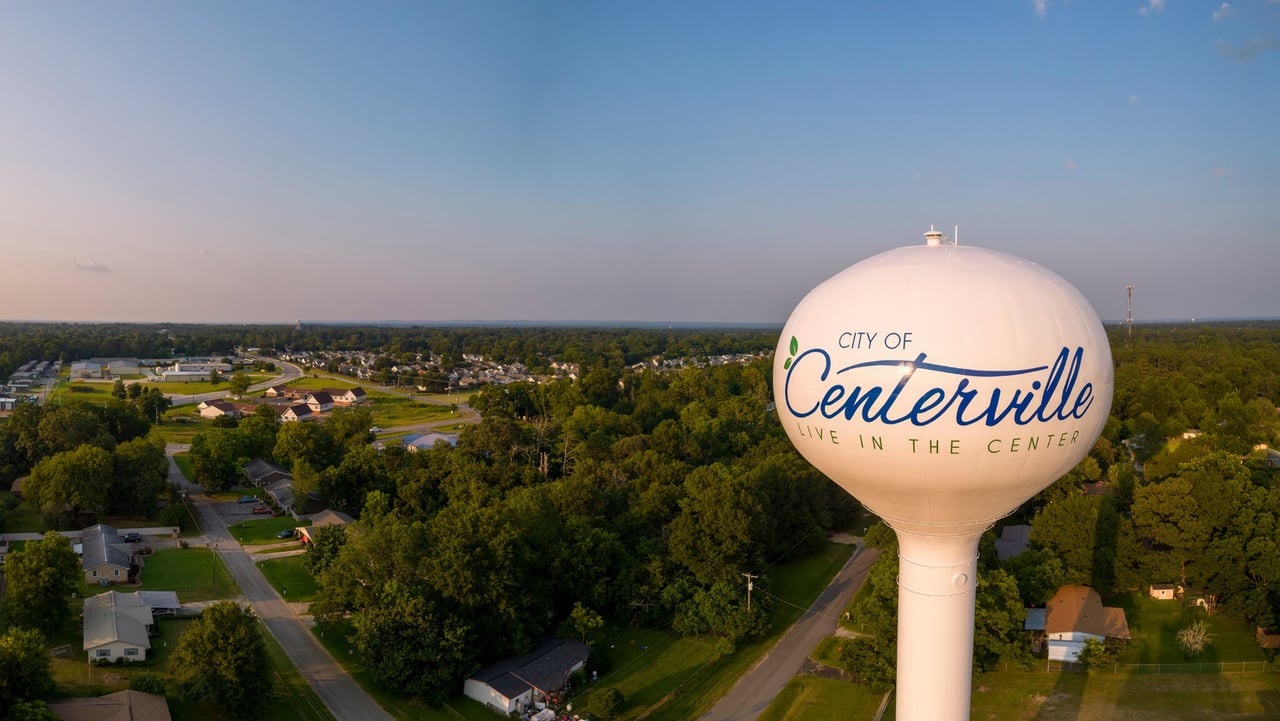
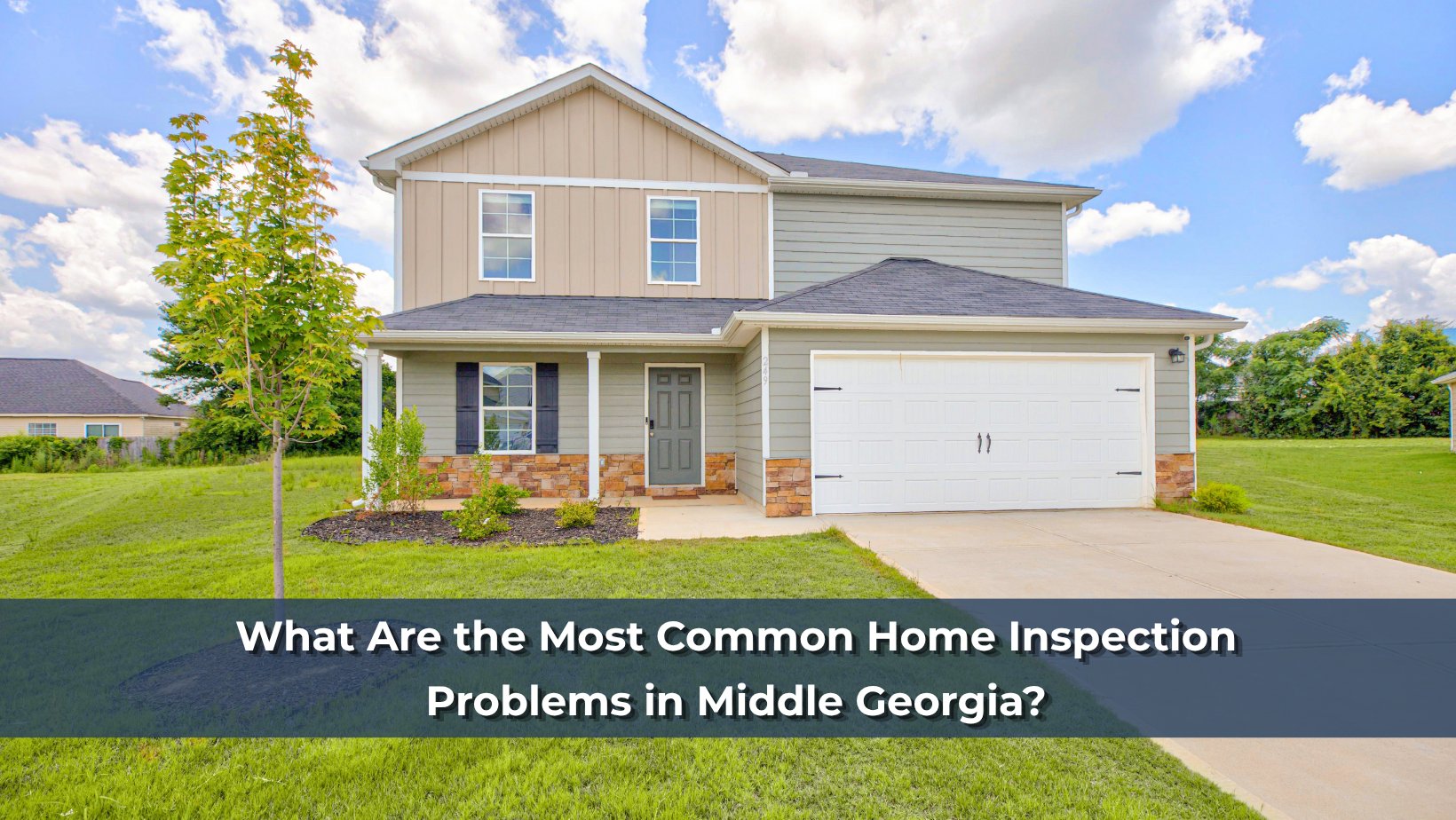
Common Home Inspection Problems in Middle Georgia
Nearly every home inspection in Middle Georgia comes back with a list, and that is normal. The region’s humid subtropical climate, its shrink-and-swell red clay soil, its heavy termite pressure, and its stock of older homes around Robins Air Force Base combine to produce a fairly predictable set of findings. Knowing what those common problems are, and more importantly which ones are routine maintenance versus which ones threaten your financing or your safety, is what separates a calm, informed buyer from a rattled one.
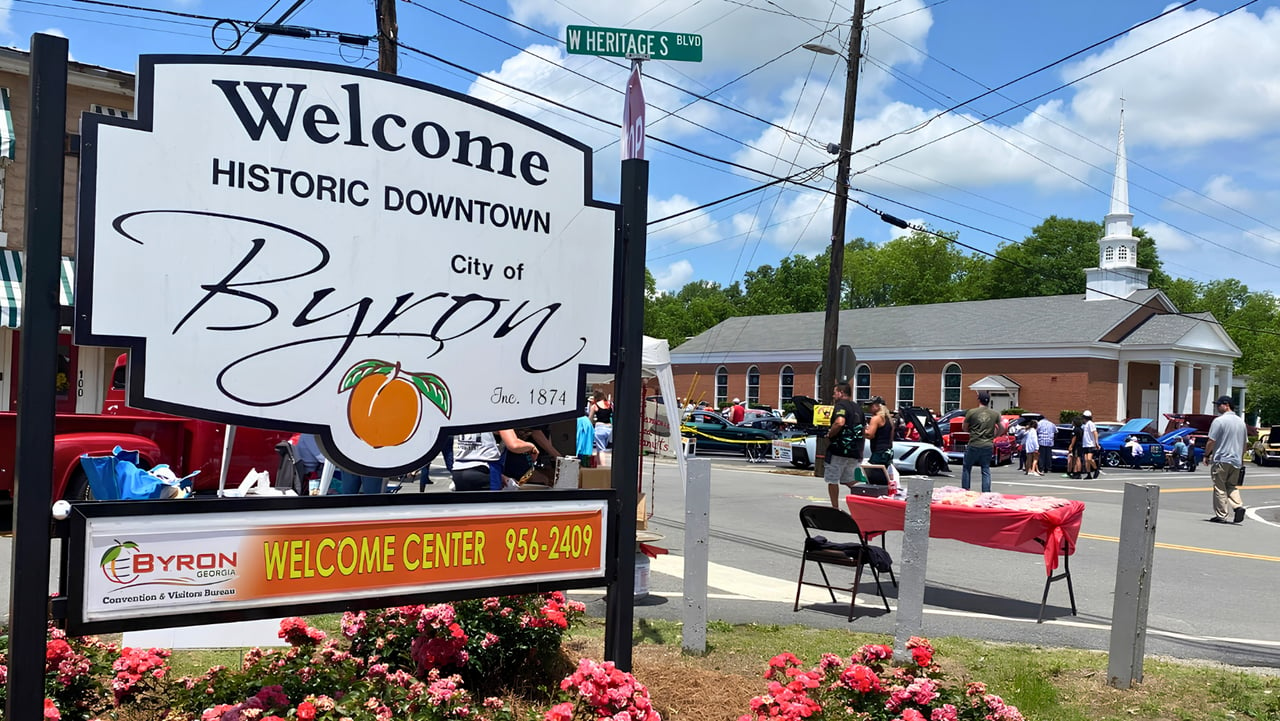
This pillar walks through the categories of problems inspectors flag most often across Houston County, from Warner Robins and Perry to Bonaire, Kathleen, and neighboring Byron, how the inspection process actually works in Georgia, and what to do when a finding lands. Four companion posts go deep on the biggest categories: foundation and structural, moisture and mold, termites and wood-destroying organisms, and electrical and plumbing.
How the Home Inspection Works in Georgia
A general home inspection is a visual, non-invasive examination of the accessible parts of a home: the roof, structure, foundation, attic, crawlspace, electrical, plumbing, HVAC, and the major built-in systems. The inspector does not open walls, move heavy belongings, or dig, so anything blocked, buried, or finished over is noted as not inspected rather than cleared. In Georgia, a standard inspection generally runs $350 to $550, with larger homes, older homes, and specialty inspections such as a dedicated foundation review costing more.
One fact catches many Middle Georgia buyers by surprise: Georgia does not currently require a state license to perform general home inspections. As of publication, anyone with a business license can offer inspections, and the professional standard is voluntary certification through the American Society of Home Inspectors (ASHI) or the International Association of Certified Home Inspectors (InterNACHI). Legislation to create statewide licensing, including House Bill 1305, was advancing through the Georgia General Assembly in 2026 but had not become law when this was written. Until it does, vetting your inspector’s certification, sample reports, and local experience is entirely on the buyer, so it is worth doing carefully.
The Most Common Inspection Findings in Middle Georgia
Across Houston County transactions, the same categories come up again and again, shaped directly by local climate, soil, and housing age. Here is the overview, with each major category covered in depth in its own companion post.
Foundation and Structural
Georgia’s red clay is expansive soil: it swells when wet and shrinks when dry, and that seasonal movement is transmitted straight into foundations. The result is one of the most common Middle Georgia findings, hairline cracks in brick veneer, stair-step cracks in block, doors and windows that stick, and sloping floors. Most of it is cosmetic and normal for the region, but some of it is not, and telling the difference is exactly what the foundation companion post covers.
Moisture and Mold
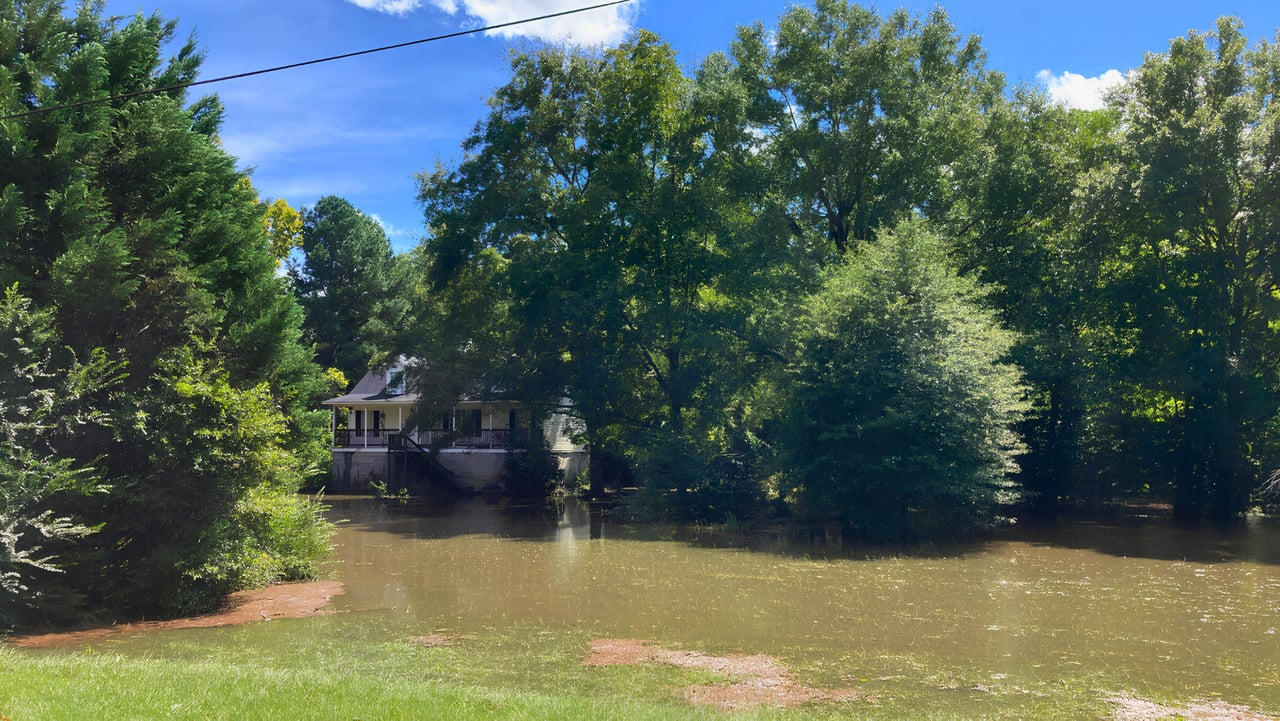
The same humidity that makes Middle Georgia summers what they are also drives the region’s most persistent inspection category. Vented crawlspaces trap humid air, poor grading sends water toward foundations, and condensation forms on cool surfaces, all of which can produce wood rot, musty odors, and mold. This is common across the county’s older stock and even in newer homes with grading or drainage issues, and the moisture and mold companion post explains what inspectors flag and what it takes to fix.
Termites and Wood-Destroying Organisms
Georgia sits in a very-heavy termite-risk zone, so wood-destroying organisms are a routine concern rather than a rare one. This category gets its own separate report, the Official Georgia Wood Infestation Inspection Report, performed by a licensed pest company, and it is required for VA financing statewide and common for FHA and USDA. The termite and WDO companion post explains the report, what it covers, who pays, and how findings affect closing.
Electrical and Plumbing
The older housing stock around Robins Air Force Base, particularly the near-base Warner Robins homes from the 1950s through the 1970s and comparable-era homes in Perry and Byron, frequently carries aging electrical and plumbing that inspectors write up: outdated panels, ungrounded outlets, aluminum wiring, older pipe materials, and water heaters past their service life. Some of these are simple fixes and some are safety or insurability issues that can affect financing, which the electrical and plumbing companion post details.
What About Radon and Other Optional Tests?
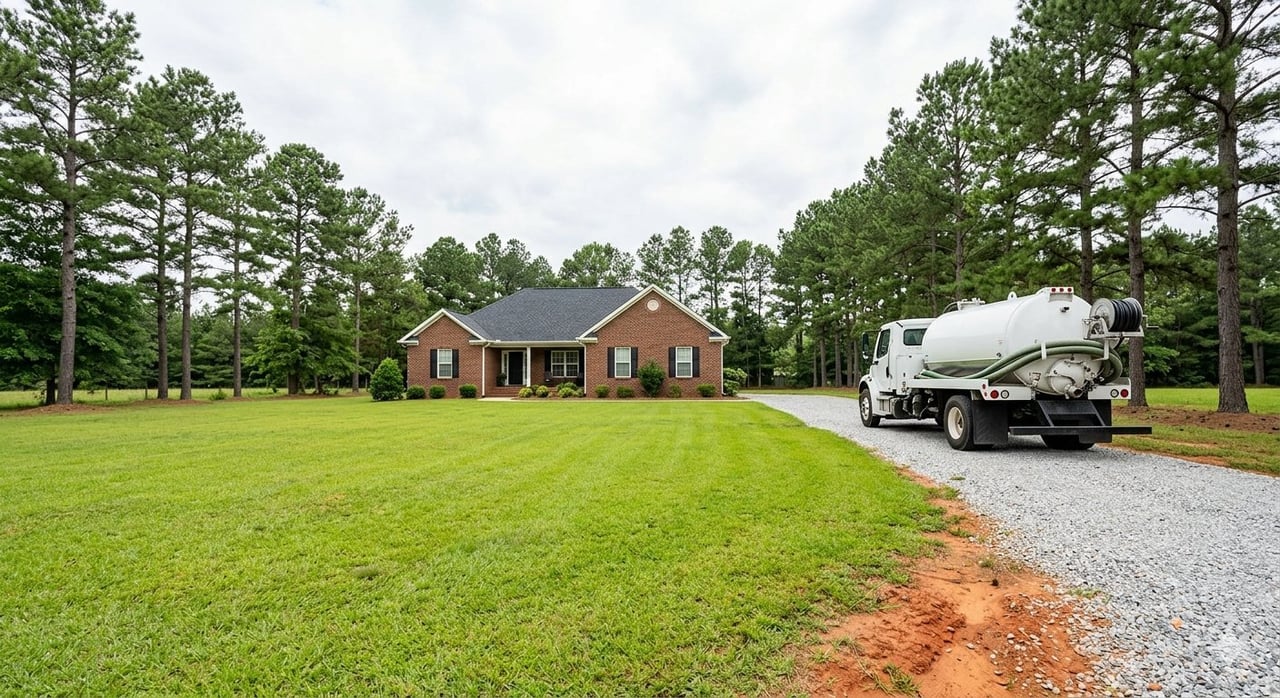
Beyond the general inspection, buyers can add specialized tests, and a few are worth knowing about in Middle Georgia. Radon, a naturally occurring radioactive gas and the second leading cause of lung cancer, varies by county across Georgia, and the only way to know a specific home’s level is to test it. The EPA action level is 4.0 picocuries per liter, and mitigation is recommended at or above that level. Sewer scopes are worth considering on older homes with mature trees near the line, and separate HVAC or structural evaluations make sense when the general inspection flags a concern. None of these is mandatory, but each can convert an unknown into a known while you still have negotiating leverage.
For Buyers: How Do I Handle a Middle Georgia Inspection Report?
Choose your inspector deliberately, because the state will not do it for you. Since Georgia does not currently license general home inspectors, look for ASHI or InterNACHI certification, ask for a sample report, and favor someone with deep local experience in crawlspaces, clay-soil foundations, and moisture management. A thorough Middle Georgia inspector who explains findings clearly is worth more than the cheapest quote.
Separate the routine from the serious. Middle Georgia reports are long, and the length itself can be alarming to a first-time buyer. The skill is triage: cosmetic clay cracks, a few missing GFCI outlets, and minor grading are routine, while active water intrusion, structural movement, an active termite infestation, or a hazardous electrical panel are the findings that actually change the deal. A good agent and inspector help you sort the list rather than react to its size.
Know what threatens your financing. Because VA and FHA financing dominate this market, understand that certain findings, active wood-destroying insects, safety hazards, non-functional major systems, can stall or block a loan until they are resolved. On any such finding, resolution generally has to happen before closing, and who pays is exactly what your agent negotiates. Use the inspection period, because every option you have, a price reduction, a repair credit, a seller-completed repair, or walking away, exists only before you close.
For Sellers: How Do I Get Ahead of the Inspection?
A pre-listing inspection is the single most effective way to control the process. Knowing what a buyer’s inspector will find lets you address the deal-killers on your own terms and price the rest honestly, rather than negotiating from surprise after you are under contract. In an inventory-rich market, a home that survives inspection cleanly holds its price and its timeline far better than one that returns a long list of findings and shakes buyer confidence.
Address the common Middle Georgia items proactively. Improve grading and drainage away from the foundation, clear crawlspace moisture issues, keep a current termite bond or WDO documentation ready, and handle obvious electrical and plumbing safety items. Documentation matters too: receipts for a recent roof, HVAC, or system replacement, and a clean or bonded termite history, reassure a buyer who might otherwise discount the whole home out of uncertainty. Getting ahead of the report is how you protect both your net and your closing date.
The Bottom Line
Home inspection findings are a normal part of buying in Middle Georgia, not a red flag by themselves. The region’s clay, humidity, termite pressure, and older housing stock make a certain set of problems predictable across Houston County, from Warner Robins and Perry to Bonaire, Kathleen, and neighboring Byron. The goal is not a perfect report, which almost never exists here, but an informed reading of the report you get.
Choose a certified, locally experienced inspector, understand which findings are routine and which threaten your safety or financing, and use the inspection period to negotiate from a position of knowledge. Do that, and the inspection becomes what it is meant to be: your best protection in the entire transaction. The four companion posts break down each major category so you know exactly what you are looking at.
Frequently Asked Questions About Home Inspection Problems in Middle Georgia
Q: What are the most common home inspection problems in Middle Georgia?
A: The most common findings are shaped by local climate and soil: foundation and structural movement from Georgia’s expansive red clay, moisture and mold in vented crawlspaces from the humid climate, wood-destroying insects in a very-heavy termite-risk region, and aging electrical and plumbing in older homes around Warner Robins, Perry, and neighboring Byron. Roof and HVAC wear from heat and storms are also frequent. Most inspections across Houston County turn up several of these, which is normal for the area, so the important skill is distinguishing routine maintenance items from findings that genuinely affect safety, insurability, or financing.
Q: How much does a home inspection cost in Georgia?
A: A standard general home inspection in Georgia typically costs $350 to $550, with larger homes, older homes, and specialty inspections costing more. A dedicated foundation or structural evaluation can run around $800, and add-ons like a sewer scope or radon test carry their own fees. The inspection is a visual, non-invasive review of accessible areas, and it is one of the highest-return expenses in the entire purchase, since it can uncover problems worth many thousands of dollars while you still have leverage to negotiate. For an older home in Warner Robins, Perry, or Byron, paying for a thorough, experienced inspector is well worth the cost.
Q: Does Georgia require home inspectors to be licensed?
A: As of publication, Georgia does not require a state license to perform general home inspections, meaning anyone with a business license can offer them. The professional standard is voluntary certification through the American Society of Home Inspectors (ASHI) or the International Association of Certified Home Inspectors (InterNACHI). Legislation to create statewide licensing, including House Bill 1305, was moving through the Georgia General Assembly in 2026 but had not become law when this was written. Because the state does not currently regulate general home inspectors, buyers in Houston County should carefully vet an inspector’s certification, sample reports, and local experience before hiring.
Q: Is a termite inspection separate from a home inspection in Georgia?
A: Yes. A general home inspection and a termite, or wood-destroying organism, inspection are two different services performed by two different professionals. The termite inspection is conducted by a licensed pest control company and documented on the Official Georgia Wood Infestation Inspection Report. Because Georgia is classified as a very-heavy termite-risk state, this report is required for VA loans statewide and is commonly required for FHA and USDA loans as well. A general home inspector may note visible evidence of termites, but the formal WDO report that lenders rely on must come from a licensed pest professional, so budget for both when buying in Middle Georgia.
Q: What inspection findings can stop a home loan in Middle Georgia?
A: Because VA and FHA financing are common across Houston County, certain findings can stall or block a loan until they are resolved. These include an active wood-destroying insect infestation, safety hazards like exposed or hazardous wiring, non-functional major systems such as a dead HVAC unit, an active roof leak, and significant structural or moisture problems. Government-backed loans carry Minimum Property Requirements, so a deal-affecting condition typically must be corrected before closing, and who pays for the repair is negotiated between buyer and seller. Identifying these issues during the inspection period is what preserves your options and your leverage.
Q: Should I test for radon when buying a home in Georgia?
A: Radon testing is optional but worth considering, because radon is a naturally occurring radioactive gas and the second leading cause of lung cancer, and its levels vary by county and by individual home across Georgia. The EPA action level is 4.0 picocuries per liter, with mitigation recommended at or above that level and consideration between 2 and 4. A zone map indicates general regional risk but is not a substitute for testing, since the only way to know a specific home’s level is to test it. For a modest fee added to your inspection, a radon test converts an unknown into a known during your due diligence period.
Q: How do I choose a good home inspector in Middle Georgia?
A: Since Georgia does not currently license general home inspectors, the responsibility to vet one falls on the buyer. Look for voluntary certification through ASHI or InterNACHI, ask to see a sample report to gauge thoroughness and clarity, and favor an inspector with deep local experience in the issues that define Middle Georgia: crawlspaces, expansive clay-soil foundations, moisture management, termite-prone construction, and older housing systems. A strong local inspector helps you distinguish minor maintenance items from serious defects, which is precisely the value you are paying for. The cheapest quote is rarely the best choice on an older Houston County home.
Q: Are inspection problems normal, or should they scare me off a home?
A: A long list of inspection findings is normal in Middle Georgia and not, by itself, a reason to walk away. The region’s clay soil, humidity, termite pressure, and older housing stock make certain findings predictable, so almost every inspection turns up something. The key is triage: cosmetic clay cracks, a few missing GFCI outlets, and minor grading are routine, while active water intrusion, structural movement, an active termite infestation, or a hazardous electrical panel are the findings that genuinely change the calculus. A good agent and inspector help you read the report for what matters rather than reacting to its length.
Q: What is the difference between a cosmetic and a structural foundation problem?
A: Cosmetic foundation issues are the hairline cracks, minor brick-veneer separation, and slightly sticking doors that Georgia’s expansive red clay commonly produces as soil expands and contracts seasonally; they are widespread and usually not a structural concern. Structural problems involve active, progressing movement, wide or offset cracks, significant floor sloping, or signs the foundation is failing, and they can require an engineer’s evaluation and substantial repair. Because the two can look similar to an untrained eye, a foundation finding that concerns the inspector often warrants a structural engineer’s opinion, which the foundation companion post explains in detail for Houston County buyers.
Q: Can I negotiate repairs after a home inspection in Houston County?
A: Yes, and the inspection period is exactly when you have the leverage to do so. Depending on the severity and the market, your options include a price reduction, a repair credit at closing, having the seller complete the repair before closing, a home warranty for near-term failures, or terminating the contract under your inspection contingency. All of these require that you have not yet closed. In an inventory-rich Houston County market, a documented significant finding on a listing that has been sitting is a reasonable negotiation, since time on market and the cost of the issue both shift leverage toward a prepared, pre-approved buyer.
Facing a Long Inspection Report in Houston County? Let’s Read It Together
Middle Georgia inspections almost always turn up findings, and the length can be alarming when most of it is routine. Reach out and we will help you sort the cosmetic from the serious, line up the right specialists, and turn the findings that matter into negotiating points while you still have leverage.
William Walton-Dean | Walton Dean Realty
📱 478-371-7069
A More Strategic Approach to Real Estate
About the Author
William Walton-Dean is a licensed REALTOR® with Walton Dean Realty, operating under Real Broker LLC, serving buyers and sellers across Houston County, Georgia, including Perry, Warner Robins, Bonaire, Kathleen, Byron, and the surrounding Middle Georgia housing market. Known for a data-driven, hyper-local approach and deep expertise in the military and PCS relocation market around Robins Air Force Base, he helps buyers and sellers at every price point make clear, confident decisions backed by real market insight.
📱 478-371-7069
Walton Dean Realty | Real Broker LLC
This article is provided for general informational purposes only and reflects Georgia inspection practice, agency guidance, and market conditions as of August 2026. It is not construction, lending, tax, or legal advice. Home-inspector licensing status, loan program requirements, and inspection standards are subject to change and pending legislation. Obtain a professional home inspection and, where indicated, specialized evaluations for any specific property, and consult a licensed loan officer regarding financing. William Walton-Dean is a licensed REALTOR® in the State of Georgia with Walton Dean Realty, operating under Real Broker LLC.