
Earnest money is the most misread number on a Georgia purchase contract. Buyers across Warner Robins, Kathleen, Perry, Bonaire and neighboring Byron routinely describe it as a fee, a down payment, or money that is gone the moment it is handed over. It is none of those things. Earnest money is a deposit that demonstrates a buyer is serious, and in nearly every completed transaction it comes back to the buyer as a credit at closing.
It is also not required. Georgia law does not mandate earnest money in a residential real estate transaction. A contract can be valid without it, because offer, acceptance and consideration are what create a binding agreement. What earnest money does is give the seller a financial remedy if the buyer defaults without a valid contractual reason. That is why sellers want it, and why the amount is a negotiated term rather than a fixed rule.
The questions that actually matter are who holds the money, what conditions return it, and what happens when the two sides disagree. Georgia answers all three through a combination of the purchase contract and state law governing broker trust accounts.
What Is Earnest Money and How Is It Different From a Down Payment?
Earnest money is a good faith deposit delivered after a contract becomes binding, held by a neutral or contractually designated party, and credited back to the buyer at closing. A down payment is the portion of the purchase price the buyer pays from personal funds at closing, and it is a function of the loan program rather than the contract.
The two get confused because earnest money is eventually absorbed into the down payment figure. A buyer who delivers earnest money and later brings a down payment to closing is not paying twice. The deposit appears as a credit on the closing statement and reduces what is owed at the table.
This distinction matters most for buyers using loan programs with little or no down payment requirement. A VA-eligible buyer purchasing near Robins Air Force Base may have no down payment obligation at all and still be expected to deliver earnest money, because the deposit answers a contract question rather than a lending one.
How Much Earnest Money Should I Offer in Houston County?
There is no required amount and no statutory formula. Earnest money in Georgia is commonly expressed either as a flat sum or as a small percentage of the purchase price, and the figure is negotiated between buyer and seller as part of the offer.
BUYER KEYWORD TARGETS: earnest money amount Georgia | how much earnest money first time buyer GA | earnest money percentage Houston County | competitive offer earnest money Warner Robins
Published buyer guides that quote specific dollar ranges are almost always describing metro Atlanta practice. Those figures should not be assumed to transfer to Houston County, where price points, competition levels and buyer profiles differ meaningfully between Warner Robins, Perry and the unincorporated areas. Rather than anchoring on a number pulled from an Atlanta article, the useful question is what the deposit is communicating in the specific situation.
Here is how I think about it with my buyers.
The deposit is a signal, and signals are relative. On a home that has been listed for a while with no competing interest, a larger deposit buys very little. On a home receiving multiple offers in the same weekend, it is one of a small number of levers a buyer has that costs nothing if the deal closes.
A larger deposit is not a larger risk while contingencies are intact. During the due diligence period, a buyer who terminates properly recovers the deposit. The risk profile of a deposit changes after that window closes, not before it.
Never offer earnest money you cannot deliver on time. The deadline for delivery is written into the contract and counted from the Binding Agreement Date. A deposit that is promised and delivered late is worse than a smaller deposit delivered promptly, because late delivery is an avoidable default.
Who Holds Earnest Money in a Georgia Transaction?
The purchase contract names the Holder. In Georgia residential transactions, that role is commonly filled by the listing broker, the buyer's broker, a title company or the closing attorney, and practice varies by market.
Holder | How It Commonly Works | What the Buyer Should Confirm |
Listing broker | The seller's brokerage holds funds in its trust account | Written receipt and the trust account rules the brokerage follows |
Buyer's broker | The buyer's own brokerage holds funds in trust | Written receipt and confirmation of the deposit date |
Closing attorney | A neutral third party already handling the closing holds the funds | Wire instructions verified by phone before sending anything |
Title company or settlement agent | Funds sit with the settlement agent through closing | Written receipt and the named escrow account |
Whoever holds it, Georgia brokers are bound by O.C.G.A. Section 43-40-20, which requires that deposits be maintained in a trust or escrow account and disbursed only under the terms of the agreement. The statute also provides that a broker is not entitled to any part of the earnest money as commission until the transaction has been consummated or terminated. Mishandling trust funds carries real consequences for a Georgia licensee, including license discipline.
A wire fraud note that belongs in every earnest money conversation. Wiring instructions delivered by email are a known fraud vector in real estate transactions. Before sending funds, call the holder at a number you independently confirmed, not a number contained in the email, and verify the instructions verbally. This applies to every closing in Houston County regardless of price point.
When Do I Get My Earnest Money Back?
A buyer recovers earnest money when the contract permits termination and the buyer terminates properly and on time. The most common path is termination during the due diligence period, which in the standard Georgia forms allows a buyer to terminate for any reason and recover the deposit.
The word doing the work in that sentence is properly. Termination is a written process governed by the notice provisions of the contract. A buyer who decides to walk away, tells their agent verbally, and takes no further action has not terminated anything. The deadline passes, the protection lapses, and the deposit that was fully refundable the day before is now exposed.
Other contingencies can also return the deposit depending on how the contract is written, including financing and appraisal contingencies. Each has its own deadline and its own notice requirement, and each is counted from the Binding Agreement Date.
What Happens if the Buyer and Seller Disagree About the Earnest Money?
The Holder cannot resolve the dispute and cannot split the funds. Disbursement requires the terms of the contract, a mutual written agreement signed by both buyer and seller, the dispute resolution process the contract specifies, or a court order. Where a dispute cannot be resolved, the holder may interplead the funds into court and let a judge determine who receives them.
SELLER KEYWORD TARGETS: can seller keep earnest money Georgia | earnest money dispute Georgia | liquidated damages Georgia real estate | buyer defaulted earnest money Houston County
From the seller's side, the question is usually whether the deposit can be retained when a buyer walks. If a buyer defaults without a valid contractual reason, the seller may be entitled to keep the earnest money as liquidated damages where the contract provides for that remedy. Georgia courts have upheld such forfeitures in appropriate circumstances.
What I tell sellers is that an earnest money fight is rarely the win it appears to be. The deposit is usually a small fraction of the value at stake, the funds sit frozen while the dispute runs, and the home is off the market or restarting its marketing clock the entire time. There are situations where holding the line is right. More often the better outcome is a clean mutual release and a fast return to market, and that decision is worth making deliberately rather than emotionally.
Does This Work Differently Across Houston County?
The statutory and contract framework is identical everywhere in Georgia. What varies by area is the competitive pressure that shapes what a deposit needs to communicate.
Area | What Commonly Shapes the Earnest Money Conversation |
Warner Robins | The county's largest and most active market, with heavy VA and government-backed volume. Buyers with no down payment obligation still negotiate a deposit. |
Kathleen | A strong share of newer construction, where builder contracts may use their own forms and deposit structures rather than the standard association forms. |
Perry | The county seat, with a wider price range and more acreage properties. Longer marketing periods at higher price points can reduce the leverage a larger deposit buys. |
Bonaire | Unincorporated Houston County with established subdivisions. Deposits are generally a straightforward negotiated term. |
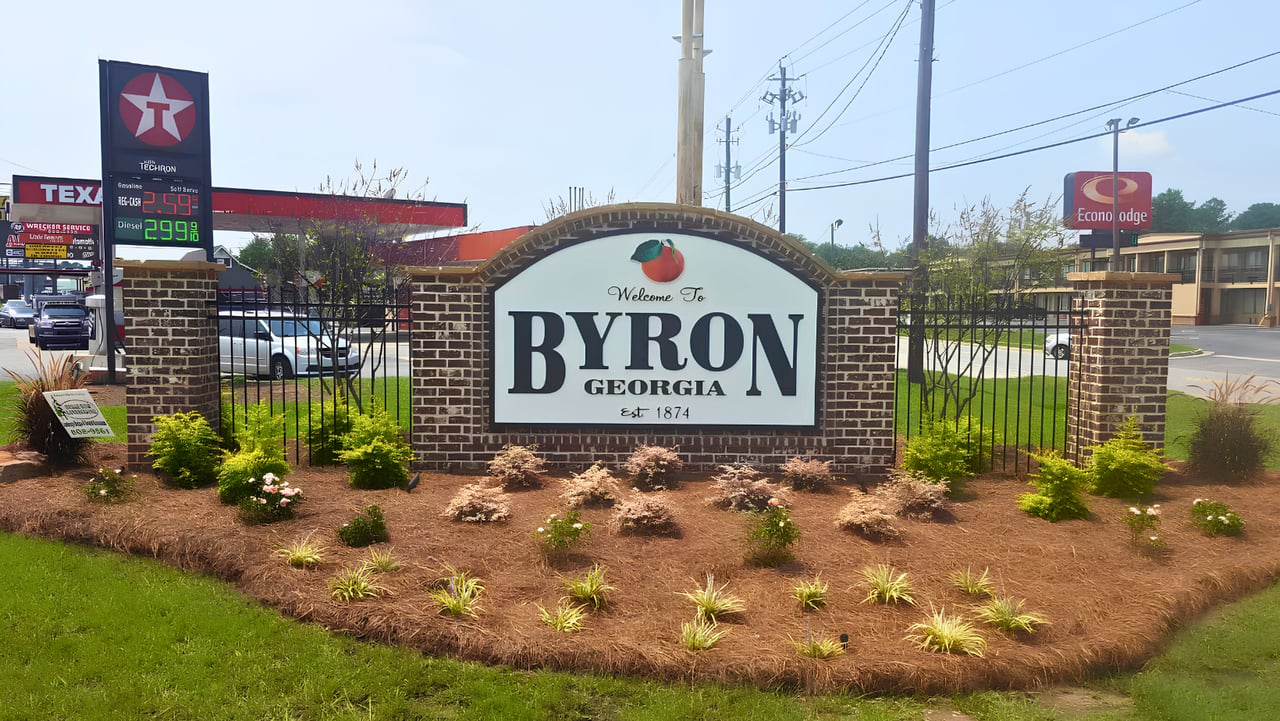
Byron | Neighboring Byron is in Peach County, a separate taxing and school jurisdiction, though earnest money mechanics under Georgia law are unchanged. |
New construction deserves a specific caution. Builders in Kathleen and elsewhere in the county frequently write on their own contract forms rather than the standard Georgia association forms, and builder deposits are not always refundable on the same terms buyers expect from a resale transaction. Read the builder's deposit language specifically rather than assuming it mirrors a resale contract.
Internal links: All five city market update blogs, and the Houston County city comparison cluster
The Bottom Line
Earnest money is a negotiated deposit, not a fee and not a sunk cost. In a transaction that closes, it comes back as a credit. In a transaction that ends during due diligence with proper written notice, it comes back to the buyer. In a transaction where a buyer simply stops performing, it becomes the seller's remedy.
The amount matters less than the discipline around it. Deliver it on time, get a written receipt, verify wire instructions by phone, and treat every termination as a written process with a deadline. Those four habits protect the deposit far more reliably than choosing a particular number.
Frequently Asked Questions About Earnest Money in Houston County, GA
Q: Is earnest money required to buy a house in Georgia?
A: No. Georgia law does not require earnest money in a residential real estate transaction, and a purchase contract can be valid without a deposit because offer, acceptance and consideration are what create a binding agreement. In practice, nearly every Houston County seller expects one, because without a deposit the seller has very little financial remedy if the buyer defaults. The amount and the delivery deadline are negotiated terms written into the contract rather than figures set by statute.
Q: How much earnest money is typical in Houston County, GA?
A: There is no required amount and no statutory formula. Earnest money in Georgia is commonly expressed as either a flat sum or a small percentage of the purchase price, negotiated between the parties as part of the offer. Published dollar ranges found online generally reflect metro Atlanta practice and should not be assumed to apply to Warner Robins, Perry or Bonaire, where price points and competition levels differ. The right figure depends on how much competition the specific home is drawing.
Q: Is earnest money the same as a down payment?
A: No. Earnest money is a good faith deposit delivered after the contract becomes binding, while a down payment is the portion of the purchase price paid from the buyer's own funds at closing under the terms of the loan program. Earnest money is credited back to the buyer at closing and applied toward the down payment or closing costs, so a buyer is not paying twice. A VA-eligible buyer near Robins Air Force Base may have no down payment obligation at all and still be expected to deliver earnest money.
Q: Who holds earnest money in a Georgia real estate transaction?
A: The purchase contract names the Holder, and in Georgia that is commonly the listing broker, the buyer's broker, a title company or the closing attorney. Georgia brokers holding these funds are governed by O.C.G.A. Section 43-40-20, which requires deposits be maintained in a trust or escrow account. Buyers should obtain a written receipt confirming the deposit was received and where it is held. Practice on who holds the funds varies by market within Georgia.
Q: Do I get my earnest money back if I back out during due diligence?
A: Under the standard Georgia forms, a buyer who terminates during the due diligence period may do so for any reason and recover the earnest money. The requirement is that termination be delivered properly and on time under the notice provisions of the contract. A verbal decision to walk away is not a termination. Buyers in Houston County who let the due diligence deadline pass without written notice lose that protection, and the deposit becomes exposed.
Q: Can a seller keep my earnest money in Georgia?
A: A seller may be entitled to retain earnest money as liquidated damages if the buyer defaults without a valid contractual reason and the contract provides for that remedy. Georgia courts have upheld such forfeitures in appropriate circumstances. The seller cannot simply instruct the holder to release the funds, however, because disbursement requires the contract terms, a mutual written agreement, the contract's dispute process or a court order. Whether a particular termination constitutes a default depends on the contract language and the facts.
Q: What happens if the buyer and seller both claim the earnest money?
A: The Holder is not permitted to decide the dispute or split the funds. Disbursement must follow the contract terms, a mutual written agreement signed by both parties, the dispute resolution process specified in the contract, or a court order. If the dispute cannot be resolved, the holder may interplead the funds into court, which means depositing them with the court and allowing a judge to determine the rightful recipient. Funds remain frozen while this plays out.
Q: When is earnest money due after going under contract in Georgia?
A: The delivery deadline is stated in the contract and is typically counted forward from the Binding Agreement Date, which is the date the contract becomes binding. It is not set by Georgia statute, so the timeframe varies from transaction to transaction. Late delivery is an avoidable default that can hand the seller leverage or, depending on contract language, grounds to terminate. Buyers should deliver promptly and obtain written confirmation of receipt.
Q: Should I wire earnest money or write a check?
A: Either method may be acceptable depending on what the holder accepts and what the contract specifies, but wire transfers carry a specific risk worth naming. Wiring instructions sent by email are a known fraud vector in real estate transactions nationally. Before sending funds, call the holder at a number independently verified rather than a number contained in the email, and confirm the instructions verbally. This precaution applies to every Houston County transaction regardless of price point.
Q: Does earnest money work differently with new construction in Kathleen or Warner Robins?
A: It can. Builders frequently write on their own contract forms rather than the standard Georgia association forms, and builder deposit terms are not always refundable on the same basis buyers expect from a resale transaction. Some builder agreements make portions of a deposit non-refundable once selections are made or construction reaches a defined stage. Buyers purchasing new construction in Houston County should read the builder's deposit and termination language specifically rather than assuming it mirrors a resale contract.
Q: Does a larger earnest money deposit make my offer stronger in Warner Robins?
A: It can, in situations where a seller is comparing multiple offers and weighing which buyer is most likely to perform. A larger deposit signals commitment and increases what the buyer stands to lose by defaulting, which is precisely the reassurance a seller is looking for. On a home with no competing interest, a larger deposit buys comparatively little. Because the deposit remains refundable while contingencies are intact, increasing it is a lower-risk lever than shortening a due diligence window.
Q: What happens to earnest money at closing?
A: In a transaction that closes, earnest money is credited to the buyer on the closing statement and applied toward the down payment or closing costs. It is not an additional cost and it is not retained by the brokerage as commission. Under O.C.G.A. Section 43-40-20, a broker is not entitled to any part of the earnest money as commission until the transaction has been consummated or terminated. The closing attorney accounts for the deposit in the final figures the buyer brings to the table.
About the Author
William Walton-Dean is a licensed REALTOR® with Walton Dean Realty, operating under Real Broker LLC, serving buyers and sellers across Houston County, Georgia, including Perry, Warner Robins, Bonaire, Kathleen, Byron, and the surrounding Middle Georgia housing market. He brings a data-driven, hyper-local approach to both residential and commercial transactions, working with first-time buyers, move-up sellers, investors, and families relocating to the area, including those tied to Robins Air Force Base. Drawing on a prior career as a C-level executive, he helps buyers and sellers at every price point make clear, confident decisions backed by real market insight.
📱 478-371-7069
Walton Dean Realty | Real Broker LLC
Buying or Selling in Houston County? Let's Talk About Your Offer
The size of an earnest money deposit is one of several levers that decide whether an offer gets accepted in Warner Robins, Perry or Bonaire, and it is worth setting deliberately rather than by default. If you are preparing an offer or weighing one that came in, reach out.
William Walton-Dean | Walton Dean Realty
📱 478-371-7069
A More Strategic Approach to Real Estate
Disclaimer
This article is provided for general informational purposes only and does not constitute legal or financial advice. Earnest money amounts, deadlines and disbursement terms are negotiated between the parties and written into the individual contract. Georgia statutes, regulations and standard association forms are subject to change. Nothing in this article creates an attorney-client relationship or a brokerage relationship. For advice regarding a specific transaction or contract, consult a licensed Georgia real estate attorney and your licensed real estate agent.