
The due diligence period is the strongest protection a buyer has in a Georgia real estate contract, and it is routinely wasted. It is a negotiated window, counted from the Binding Agreement Date, during which a buyer may inspect the property, investigate anything that matters to them, and terminate the contract for any reason with the earnest money returned.
The phrase for any reason is not a loose paraphrase. Under the standard Georgia Association of REALTORS forms, the right to terminate during this window is unrestricted. A buyer does not have to prove a defect, produce an inspection report, or justify the decision. Discovering a problem with the roof, deciding the commute from Kathleen to Robins Air Force Base is longer than expected, or simply changing their mind all sit within the same right.
The window is also not required by Georgia statute. It is a feature of the contract, negotiated between the parties and filled into the agreement, which means its length varies from one Houston County transaction to the next. What does not vary is that when it expires, it is gone.
How Long Is the Due Diligence Period in Georgia?
The length is negotiated and written into the contract. Georgia law does not prescribe a number of days, which is why two homes listed on the same street in Bonaire can carry different windows.
Because the count runs from the Binding Agreement Date rather than from signature or from the offer date, an error at the top of the contract shifts the end of the window. Buyers relocating to Houston County from states where a contract becomes binding on signature are the most likely to miscount, and a two day error is enough to walk a buyer past a deadline they believed was still open.
What Should Push the Window Longer
● Older homes. An initial inspection on an older Warner Robins home frequently generates a second appointment with a roofer, an HVAC contractor or a structural engineer, and that second appointment needs room inside the window.
● Well and septic properties. Septic inspections and water quality testing are separate appointments on separate schedules, common on acreage properties around Perry and Elko.
● Acreage, shared drives and recorded easements. Survey work and title questions take longer to resolve than a standard inspection.
● Anything requiring a specialist. Foundation, mold, pest and pool inspections all run on the specialist's calendar rather than the buyer's.
What Should a Buyer Actually Do During Due Diligence?
The due diligence period is an investigation window, and the general inspection is only one part of it. A buyer should use the time to inspect the physical property, verify the cost of ownership, and investigate anything about the location or the title that would change the decision.
BUYER KEYWORD TARGETS: what to inspect during due diligence Georgia | home inspection checklist Houston County GA | septic inspection Perry GA | flood zone Houston County | due diligence checklist Warner Robins
Here is the sequence I run with buyers, and the order is deliberate.
Book the general inspection at the front of the window. Not the middle, and never the last two days. Everything else in this list is triggered by what the inspection turns up, so a late inspection collapses every downstream option.
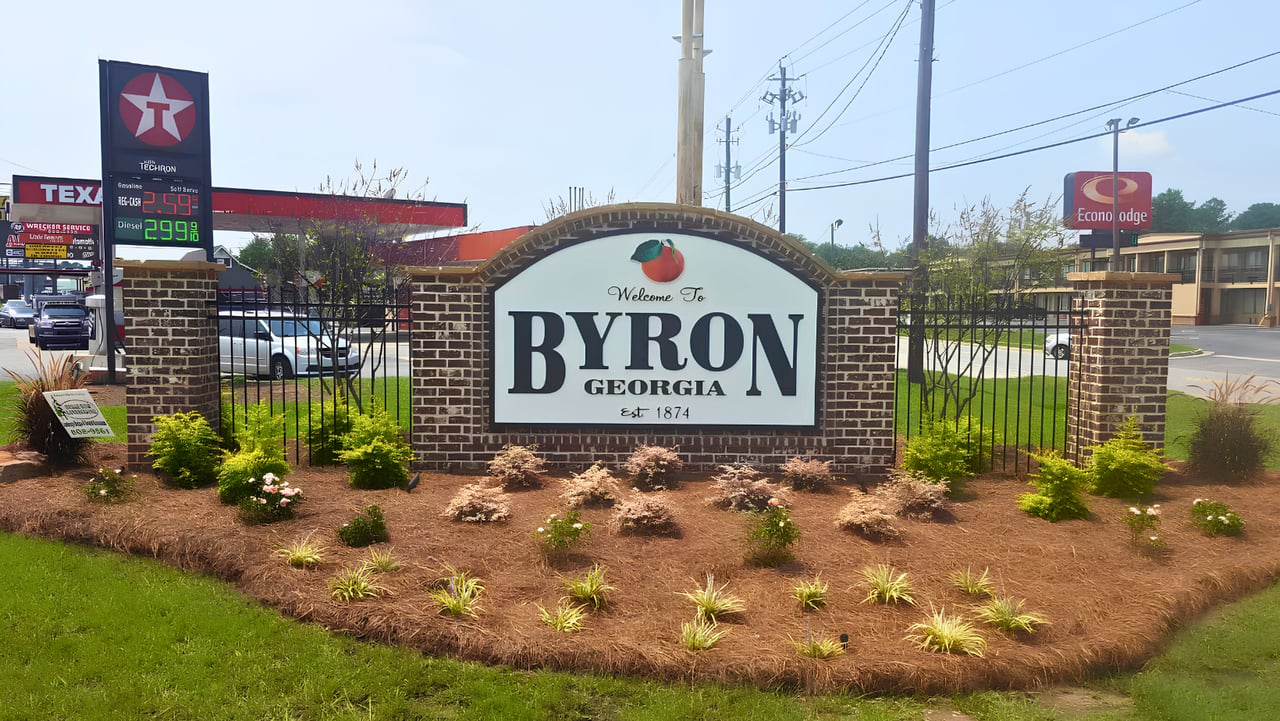
Verify the real cost of ownership, not the estimate. Property tax treatment, homeowners insurance quotes, flood zone status, HOA dues and any transfer requirements. In Houston County the tax picture differs between incorporated Warner Robins and unincorporated Bonaire and Kathleen, and neighboring Byron sits in Peach County entirely. A buyer comparing two homes on price alone can be comparing two very different monthly numbers.
Investigate the title and the land, not just the house. Recorded easements, shared driveways, prior survey discrepancies, and anything that appeared in the seller's disclosure. These are the items that surface late and cause the most damage when they do.
Bring in specialists on anything the inspector flags. A general inspector identifies concerns and recommends further evaluation. That recommendation is not a formality. The difference between a roof that needs repair and a roof that needs replacement is a number a roofer produces, not one an inspector estimates.
Confirm the loan is progressing. Due diligence and financing run on separate clocks with separate deadlines. Buyers concentrating on the inspection sometimes let the loan file sit, which creates a second problem after the first one is solved.
How Does a Buyer Terminate During Due Diligence?
Termination during the due diligence period requires written notice delivered in the manner the contract specifies, before the window expires. A buyer who decides to terminate and communicates it only verbally has not terminated, and the deadline continues running.
This is the single most expensive misunderstanding in the entire process. The right to walk away with earnest money returned is unconditional during the window and unavailable after it. There is no grace period, no good faith exception for a buyer who meant to send notice, and no partial credit for having decided in time.
In practice, what I do is work backward from the deadline rather than forward from the binding date. If a decision has to be made and delivered by a specific day, then inspections have to be complete several days before that, and specialist follow-ups have to be booked earlier still. Buyers who plan forward from day one tend to run out of window. Buyers who plan backward from the deadline tend not to.
What Happens When the Due Diligence Period Expires?
When the window closes without termination, the buyer has accepted the property in its existing condition. The unrestricted right to walk away with earnest money returned ends at that moment.
Other contingencies may still be in place depending on the contract, including financing and appraisal contingencies, and those carry their own deadlines and their own notice requirements. They are narrower protections. A financing contingency protects a buyer who cannot obtain loan approval. It does not protect a buyer who developed second thoughts about the house.
Stage | What the Buyer Can Do | What Happens to Earnest Money |
During the due diligence period | Terminate for any reason with proper written notice | Returned to the buyer under the standard forms |
After due diligence, contingencies intact | Terminate only under a remaining contingency such as financing or appraisal | Depends on the contingency and the contract language |
After all contingencies expire | Perform under the contract or face default | May be retained by the seller as liquidated damages where the contract provides |
What Does the Due Diligence Period Mean for Sellers?
For a seller, the due diligence period is the stretch of the transaction with the highest probability of losing the buyer, and the seller's main lever over it is access and responsiveness rather than negotiation.
SELLER KEYWORD TARGETS: seller during buyer due diligence Georgia | can seller accept backup offers during due diligence | pre-listing inspection Houston County GA | seller disclosure Perry GA
Two things I push sellers on.
Make access easy and immediate. A seller who is slow to approve inspection appointments is compressing the buyer's window, and a compressed window produces a more aggressive repair request or a nervous termination. Slow access does not protect a seller. It raises the temperature.
Consider a pre-listing inspection. Knowing what a buyer's inspector will find, before the home is listed, changes the negotiation from a reaction into a plan. A seller who has already priced in a known issue is in a far better position than one absorbing it as a surprise mid-contract.
The Bottom Line
The due diligence period is the cheapest protection in a Georgia real estate transaction and the easiest one to waste. It is unconditional while it lasts and unavailable the moment it ends, and it runs on a clock that starts from a date many buyers count incorrectly.
Used properly, it is the window in which a buyer learns what the home actually is, what it will actually cost to own, and whether the decision still holds up. Front-load the inspection, chase down every specialist recommendation, verify the cost of ownership rather than estimating it, and treat the deadline as the most important date in the file.
Frequently Asked Questions About Due Diligence in Houston County, GA
Q: What is the due diligence period in a Georgia real estate contract?
A: The due diligence period is a negotiated window in a Georgia purchase contract during which the buyer may inspect and investigate the property and terminate the contract for any reason, with earnest money returned. It is not required by Georgia statute but is a standard feature of the Georgia Association of REALTORS forms. The right to terminate during this window is unrestricted, meaning the buyer does not need to prove a defect. The window is counted forward from the Binding Agreement Date.
Q: How long is the due diligence period in Houston County, GA?
A: The length is negotiated between buyer and seller and written into the contract rather than set by state law, so it varies from transaction to transaction. Two homes listed on the same street in Bonaire can carry different windows. Older homes, properties on well and septic, and acreage near Perry or Elko generally warrant a longer window because specialist inspections run on the specialist's schedule. The count begins on the Binding Agreement Date, which is when the contract becomes binding.
Q: Can I really back out of a home purchase for any reason during due diligence?
A: Yes. Under the standard Georgia forms, the right to terminate during the due diligence period is unrestricted, and a buyer does not have to identify a defect or justify the decision. The buyer must deliver written notice of termination in the manner the contract specifies before the window expires. Changing your mind about the commute from Kathleen to Robins Air Force Base is as valid a basis for termination as a failed inspection. The reason does not have to be disclosed.
Q: When does the due diligence clock start in Georgia?
A: The due diligence period is counted forward from the Binding Agreement Date, which is the date the contract becomes binding under Georgia contract mechanics. That date is not the offer date and is not necessarily the date the seller signed, because the contract becomes binding when notice of acceptance is delivered and received. Buyers relocating to Houston County from states where contracts bind on signature frequently miscount from the wrong date. Confirming the Binding Agreement Date in writing at the start of the transaction prevents this.
Q: Do I lose my earnest money if I terminate during due diligence?
A: No, provided the termination is delivered properly and on time. Under the standard Georgia forms, a buyer who terminates within the due diligence window recovers the earnest money. The protection depends entirely on the written notice being delivered in the manner the contract requires before the deadline. A buyer who decides to terminate but communicates it only verbally has not terminated, and the deadline continues to run against them.
Q: What happens if I miss the due diligence deadline in Georgia?
A: When the window expires without termination, the buyer has accepted the property in its existing condition and the unrestricted right to walk away with earnest money returned ends. There is no grace period and no exception for a buyer who intended to give notice. Other contingencies such as financing or appraisal may remain in place with their own deadlines, but those are narrower protections that address specific circumstances rather than a general change of mind. After all contingencies expire, a buyer who fails to perform may forfeit the earnest money as liquidated damages where the contract provides.
Q: What should I inspect during due diligence in Houston County?
A: Start with a general home inspection, then pursue every specialist evaluation the inspector recommends, including roofing, HVAC, structural, pest or pool as applicable. Beyond the structure, verify the real cost of ownership, including property tax treatment, homeowners insurance quotes, flood zone status and any HOA dues or transfer requirements. On acreage properties around Perry and Elko, septic inspection and water quality testing are separate appointments. Title items such as recorded easements and shared driveways belong in this window as well.
Q: Do I need a separate inspection for septic and well in Perry or Elko, GA?
A: Yes. A general home inspection typically does not include a septic system evaluation or water quality testing, and both are separate appointments with separate providers. These are common on acreage properties in the southern part of Houston County and in surrounding rural areas. Because they run on the specialist's schedule rather than the buyer's, they are a leading reason to negotiate a longer due diligence window at the time the offer is written rather than requesting an extension later.
Q: Is the seller required to fix what the inspection finds in Georgia?
A: No. Georgia does not obligate a seller to make repairs identified during a buyer's inspection. A buyer may request repairs, a credit or a price adjustment through an amendment, and the seller may agree, counter or decline. The buyer's leverage is the right to terminate during the due diligence window, which is why using that window well matters more than the inspection report itself. Whether a seller agrees is a negotiation, not an obligation.
Q: Does Georgia's caveat emptor rule mean the seller can hide problems?
A: No. Georgia follows caveat emptor as a general principle, meaning the burden of investigation largely sits with the buyer, but the rule has limits. Georgia case law places a duty on a seller to disclose where the seller has special knowledge of a material condition that is not apparent to the buyer and knows the buyer is acting under a misapprehension. Active concealment of a defect and affirmative misrepresentation can create liability. The practical takeaway for a Houston County buyer is that the due diligence window is the primary protection, not the disclosure form.
Q: Can the seller keep showing the house during my due diligence period?
A: Whether a seller may continue showing the property and accept backup offers depends on the terms written into the contract rather than on Georgia law. Some Houston County listings remain active for backup offers specifically during the due diligence window, because that is the period in which a buyer is most likely to terminate. Buyers who want certainty on this point should have their agent confirm both the listing status and the contract language rather than assuming the home is fully off the market.
Q: Can I extend the due diligence period in a Georgia contract?
A: An extension requires the seller's agreement through a written amendment, because the deadline is a contract term. A seller has no obligation to grant one, and in a situation with backup offers there is often little incentive to do so. This is why the window should be negotiated realistically when the offer is written rather than treated as something to extend later. For properties likely to require specialist inspections, building the time in up front is far more reliable than asking for it mid-contract.
About the Author
William Walton-Dean is a licensed REALTOR® with Walton Dean Realty, operating under Real Broker LLC, serving buyers and sellers across Houston County, Georgia, including Perry, Warner Robins, Bonaire, Kathleen, Byron, and the surrounding Middle Georgia housing market. He brings a data-driven, hyper-local approach to both residential and commercial transactions, working with first-time buyers, move-up sellers, investors, and families relocating to the area, including those tied to Robins Air Force Base. Drawing on a prior career as a C-level executive, he helps buyers and sellers at every price point make clear, confident decisions backed by real market insight.
📱 478-371-7069
Walton Dean Realty | Real Broker LLC
Buying or Selling in Houston County? Let's Talk About Your Timeline
The due diligence window is where a purchase in Warner Robins, Kathleen or Perry is either protected or quietly lost, and the difference usually comes down to how the first few days are used. If you want someone building that schedule backward from the deadline with you, reach out.
William Walton-Dean | Walton Dean Realty
📱 478-371-7069
A More Strategic Approach to Real Estate
Disclaimer
This article is provided for general informational purposes only and does not constitute legal advice. Due diligence periods, deadlines and termination rights are negotiated between the parties and written into the individual contract. Georgia law and standard association forms are subject to change. Nothing in this article creates an attorney-client relationship or a brokerage relationship. For advice regarding a specific transaction, property or contract, consult a licensed Georgia real estate attorney and your licensed real estate agent.