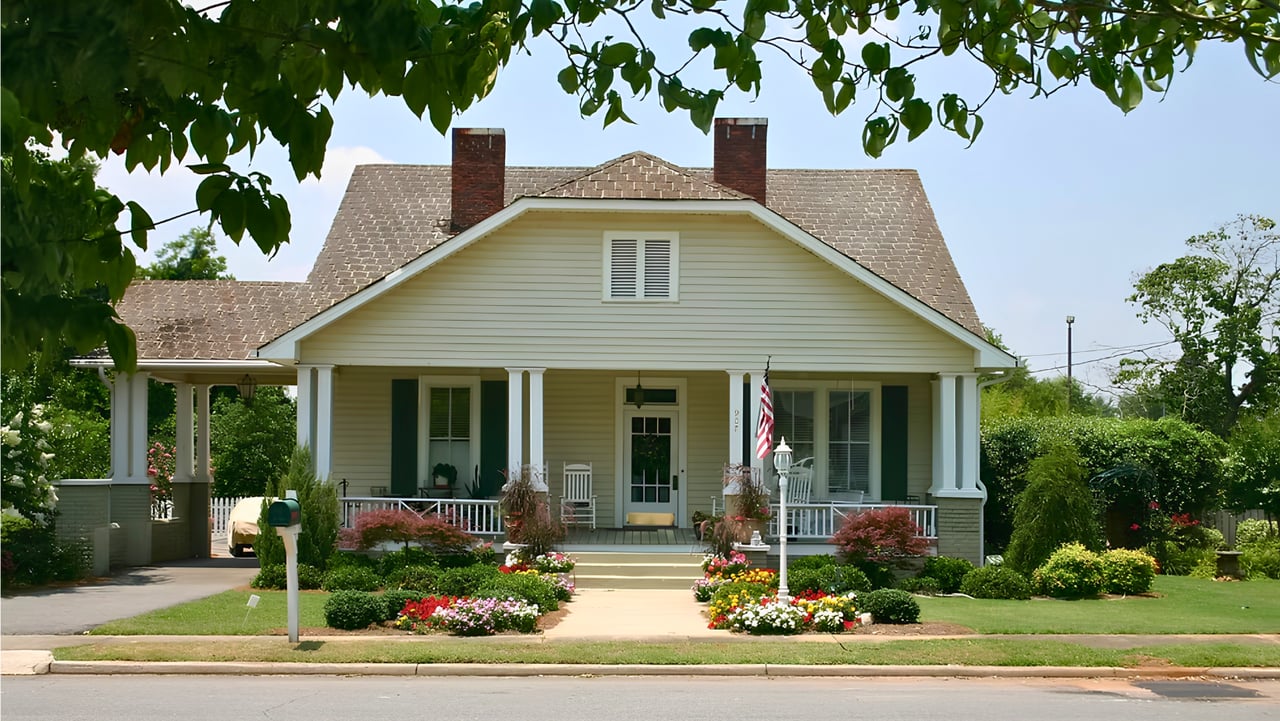

Owners of older homes in Perry gained access to a state tax credit this year that most of them have not used. Georgia's State Income Tax Credit Program for Rehabilitated Historic Property previously required a home to be listed in, or eligible for, the National Register of Historic Places. Legislation passed in 2024 expanded eligibility for owner-occupied primary residences to include homes in locally designated historic districts, with applications accepted from October 1, 2025 and rehabilitation work permitted to begin January 1, 2026, according to the Georgia Department of Community Affairs.
Perry designated three local historic districts in the two years before that change took effect. The city established its Historic Preservation Commission by ordinance in 2022. City Council approved the Washington-Evergreen Historic District in January 2024, the Swift Street Historic District followed in 2025, and the Downtown Historic District received its first reading in May 2025 with a final vote set for May 20 of that year. The city's economic development staff said at the time that the downtown designation would open access to state and federal tax credits for property improvements.
For a qualifying primary residence, the Georgia credit is capped at $100,000, per the Department of Community Affairs. Work must meet the Secretary of the Interior's Standards for Rehabilitation and the department's own standards, must pass a substantial rehabilitation test, and must be approved through the state's Historic Preservation Division. A separate state program can freeze the county property tax assessment on a rehabilitated historic property for more than eight years, subject to its own listing and value-increase requirements.
Perry's Three Local Historic Districts
District | Designated | What it covers |
Washington-Evergreen | January 2024 | Residential streets including Washington and Evergreen; homes dating to the early twentieth century |
Swift Street | 2025 | One of Perry's first residential streets; nine surviving nineteenth-century homes, including the Greek Revival house where SSS Tonic was first made |
Downtown | 2025 (first reading May 2025) | Historic commercial core around Carroll Street; exterior review shifts from the Main Street Advisory Board to the HPC |
Each district came with a report of designation prepared by the Historic Preservation Commission and reviewed by the state's Historic Preservation Division, and each carries design guidelines for exterior work. Local designation is separate from National Register listing; a property can be in one, both or neither, and the two systems have different consequences for tax credits.
How the Georgia Historic Rehabilitation Credit Works for a Home
Eligibility
The property must be a certified structure: listed in or eligible for the National or Georgia Register of Historic Places individually or as a contributing property in a listed district, or, for the historic home credit only since 2026, contributing to a locally designated district or locally designated as a historic property. The owner must occupy the home as a primary residence to claim the historic home credit.
The work
Rehabilitation must meet the Secretary of the Interior's Standards for Rehabilitation and the Georgia Department of Community Affairs' Standards for Rehabilitation, and it must satisfy a substantial rehabilitation test that ties minimum spending to the property's value. The Historic Preservation Division reviews plans before work begins and certifies the completed project. Applications are submitted digitally.
The credit
The credit is a percentage of qualified rehabilitation expenditures, capped at $100,000 for a principal residence. Unused historic home credit may be carried forward for ten years after the year the certified rehabilitation is completed, according to the Georgia Department of Revenue's credit form. The state's rate for other certified structures changed in 2026, and owners should confirm the current rate for historic homes with the Department of Community Affairs before planning around it.
Historic Districts Across Houston County
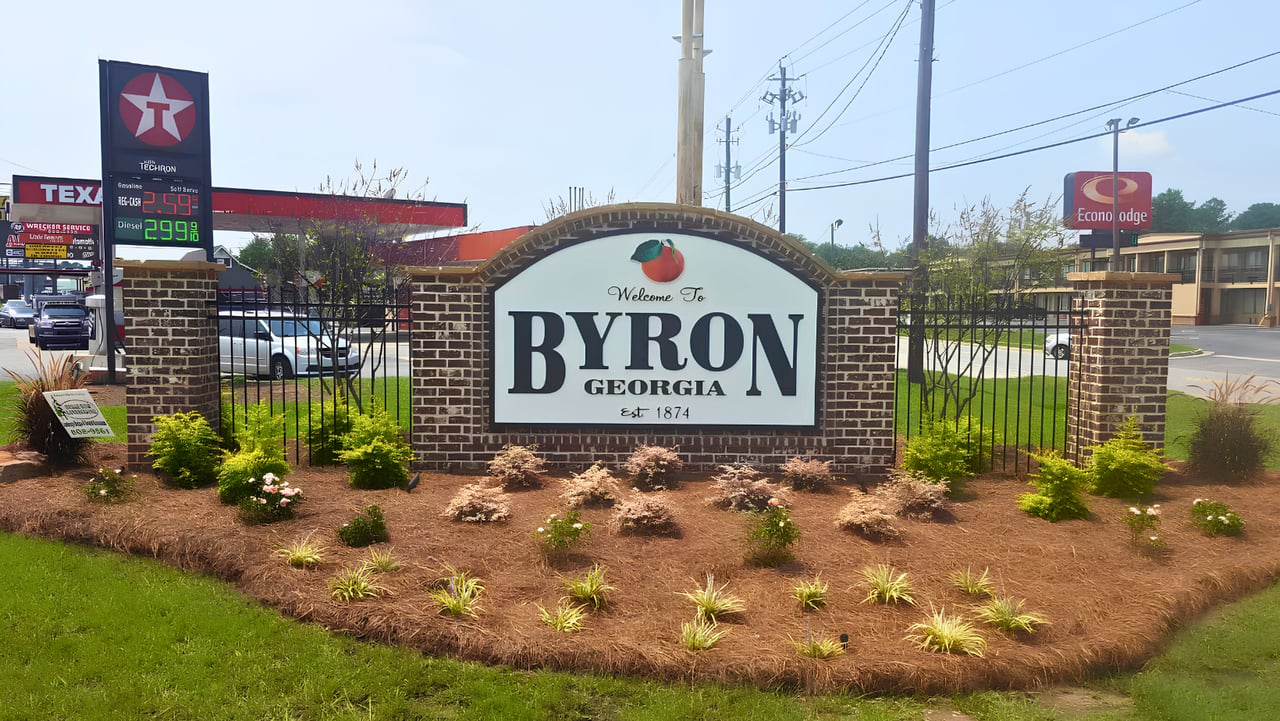
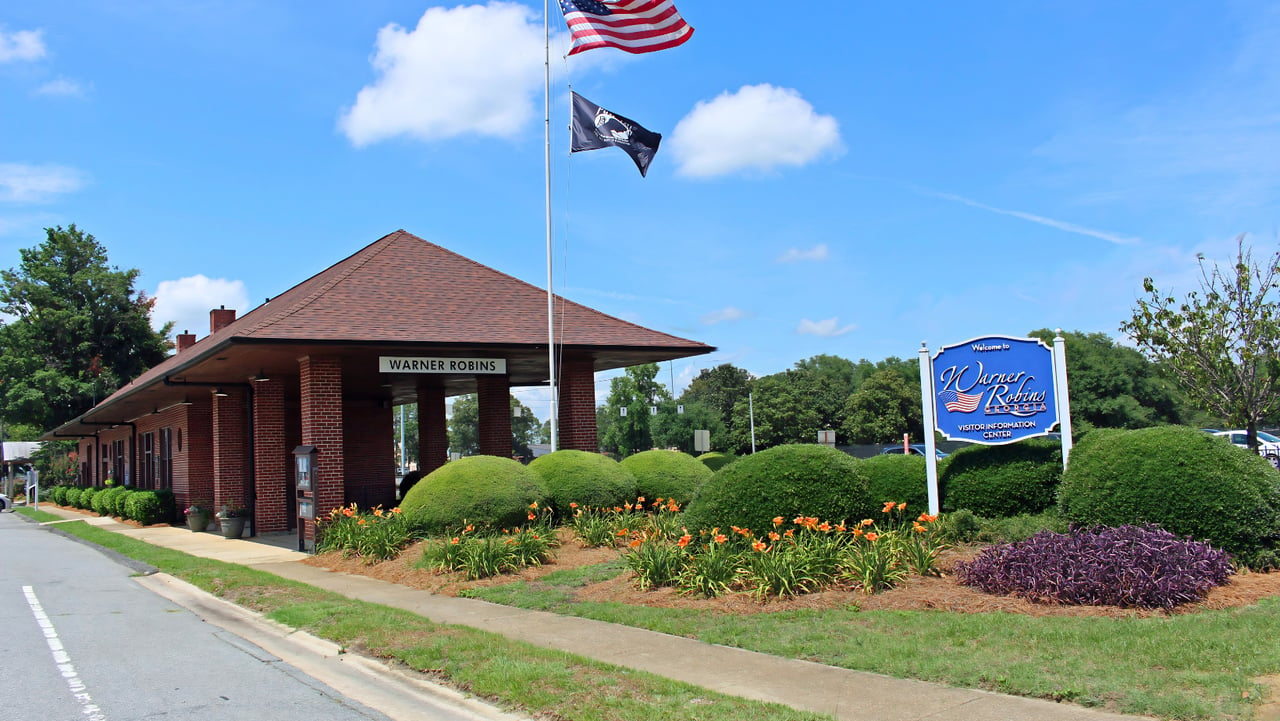
Perry is the only Houston County community with locally designated historic districts administered by a preservation commission. Warner Robins was founded in 1942 around the air depot and its housing stock does not reach the nineteenth century. Bonaire and Kathleen are unincorporated and have no local designation authority. Neighboring Byron, incorporated in 1874 in Peach County, has a small historic Main Street but no comparable local district program. For a buyer in Houston County who wants a home built before 1930, Perry's in-town neighborhoods are where that inventory concentrates, and as of 2026 those neighborhoods carry a state incentive that the rest of the county's housing stock does not.
Does a Historic District Designation Help or Hurt My Home's Value?
Local designation adds a review step for exterior changes and, since 2026, adds eligibility for a state tax credit on qualifying rehabilitation. The review requirement is limited to exterior work other than paint color and does not regulate interiors. Residents who spoke in favor of the Washington-Evergreen designation in 2024 cited protection of the neighborhood's character and of their investment. The tax credit attaches to the property's district status, so a seller can present it as a feature of the address.
What I tell sellers in the three districts is that the buyer for a historic home is looking for exactly the things the designation protects, and that the 2026 credit is a selling point that did not exist a year ago. A listing should say which district the home is in, note that exterior changes go through the Historic Preservation Commission, and mention that the state's historic rehabilitation credit may apply to qualifying work. Those are facts, and they attract the right buyer.
What Should I Check Before Buying a Historic Home in Perry?
Confirm the district with the Perry Historic Preservation Commission, since eligibility follows the designation and the district boundaries are set by ordinance. Ask whether the home is a contributing structure within the district, because contributing status is part of the eligibility test. Review the district's design guidelines so that planned exterior changes are understood before closing. And before budgeting around the tax credit, contact the Georgia Department of Community Affairs' Historic Preservation Division to confirm the current credit rate, the substantial rehabilitation threshold and the application timeline, since work must be approved before it begins.
From my side, the buyers who benefit most from the 2026 change are the ones planning a significant renovation anyway. The credit rewards work that meets the standards, and the standards reward keeping what makes the house historic. A buyer who wants a nineteenth-century Swift Street home and intends to restore it is the buyer this program was written for. A buyer who wants to replace the windows with vinyl and add a second story is not, and should know that before writing the offer.
Frequently Asked Questions
What changed in 2026 for Georgia's historic home tax credit?
Legislation passed in 2024 expanded the Georgia State Income Tax Credit Program for Rehabilitated Historic Property to include owner-occupied primary residences in locally designated historic districts, in addition to National Register properties. The Georgia Department of Community Affairs accepted applications for eligible projects beginning October 1, 2025, and rehabilitation work on those projects could begin January 1, 2026.
How much is the Georgia historic rehabilitation tax credit for a home?
The state income tax credit for a principal residence is capped at $100,000, according to the Georgia Department of Community Affairs. The credit is calculated as a percentage of qualified rehabilitation expenditures, and unused historic home credit may be carried forward for ten years after the certified rehabilitation is completed. Owners should confirm the current percentage with the department, since the rate for non-residential certified structures changed in 2026.
Which Perry neighborhoods are local historic districts?
Perry has three locally designated historic districts: Washington-Evergreen, approved by City Council in January 2024; Swift Street, designated in 2025; and Downtown, which received its first reading in May 2025. Each district has a report of designation and design guidelines maintained by the Perry Historic Preservation Commission, which meets the second Tuesday of each month at City Hall.
Do I need permission to change the outside of a home in a Perry historic district?
Yes. Exterior changes to buildings within Perry's designated historic districts, other than paint color, require a Certificate of Appropriateness from the Historic Preservation Commission. Interior modifications are not regulated. The commission's design guidelines describe what is generally approved.
What is the difference between a local historic district and the National Register?
A local historic district is created by city ordinance and gives a local preservation commission review authority over exterior changes. National Register listing is a federal designation that does not restrict private owners but is required for the federal rehabilitation credit and, until 2026, for Georgia's historic home credit. Since 2026, homes in local districts qualify for the state historic home credit without National Register listing.
Can I get a federal tax credit for a historic home in Perry?
The federal rehabilitation investment tax credit, equal to 20 percent of qualified rehabilitation expenses, is available only for income-producing properties listed in or eligible for the National Register of Historic Places. Owner-occupied residences do not qualify for the federal credit. Downtown Perry commercial buildings that meet the listing requirement may qualify, and the Perry Downtown Development Authority has stated it will assist downtown projects in pursuing state and federal credits.
What is the property tax freeze for historic homes in Georgia?
Georgia's Preferential Property Tax Assessment Program for Rehabilitated Historic Property freezes the county property tax assessment of a qualifying property for more than eight years following a substantial rehabilitation. It is available for principal residences and income-producing properties, requires the owner to increase the property's fair market value by 50 to 100 percent depending on use, and has its own listing requirements that should be confirmed with the Georgia Department of Community Affairs.
What kind of work qualifies for the historic rehabilitation credit?
Qualifying work must meet the Secretary of the Interior's Standards for Rehabilitation and the Georgia Department of Community Affairs' Standards for Rehabilitation, which generally favor repairing and retaining historic materials and features over replacing them. The project must also pass a substantial rehabilitation test tied to the property's value. Plans are reviewed before work begins, and the completed project is certified by the state's Historic Preservation Division.
What is the history of Swift Street in Perry?
Swift Street was one of the first residential areas supporting Perry after the town was founded in 1821 and incorporated in 1824. According to the city's report of designation, nine nineteenth-century homes remain in the district, including a Greek Revival house at 1204 Swift Street built for William T. Swift, whose son first made SSS Tonic in the backyard. The district was designated a local historic district in 2025.
Are there historic homes in Warner Robins, Bonaire or Kathleen?
Warner Robins was founded in 1942 around the air depot that became Robins Air Force Base, and its housing stock dates from the mid-twentieth century forward. Bonaire and Kathleen are unincorporated communities whose growth is largely post-1990. Perry, as the county seat founded in 1821, holds the county's nineteenth- and early-twentieth-century residential inventory and is the only Houston County community with locally designated historic districts.
How do I apply for the Georgia historic home tax credit?
Applications are submitted digitally to the Georgia Department of Community Affairs' Historic Preservation Division, which reviews the project against state standards before work begins and certifies it upon completion. The credit is then claimed on the owner's Georgia income tax return using the Department of Revenue's historic rehabilitation credit form. Owners should contact the Historic Preservation Division before starting any work, since work begun without approval may not qualify.
Does a historic district designation affect Perry home prices?
Perry recorded 35 residential closings at a $290,000 median in August 2026 across its full reporting area; the MLS does not break out the historic districts separately. Local designation protects neighborhood character through exterior review and, since 2026, attaches state tax credit eligibility to qualifying homes, both of which are features buyers seeking historic property look for. Individual values depend on the specific home, its condition and its contributing status.
About the Author
William Walton-Dean is a licensed REALTOR® with Walton Dean Realty, operating under Real Broker LLC, serving buyers and sellers across Houston County, Georgia, including Perry, Warner Robins, Bonaire, Kathleen, Byron, and the surrounding Middle Georgia housing market. Known for a data-driven, hyper-local approach and deep expertise in the military and PCS relocation market around Robins Air Force Base, he helps buyers and sellers at every price point make clear, confident decisions backed by real market insight.
📱 478-371-7069
Walton Dean Realty | Real Broker LLC
Buying or Selling in Perry? Let's Talk
If you own a historic home in Perry or you are looking at one, the 2026 change turned the district designation into something with a dollar figure attached, and I can help you confirm which district a home sits in and what to check before you plan a renovation. Reach out and we will start with the map and the state's rules.
William Walton-Dean | Walton Dean Realty
📱 478-371-7069
A More Strategic Approach to Real Estate
Disclaimer: This article is provided for general informational purposes only and does not constitute legal, tax or financial advice. Property tax rates, exemptions, tax credits, assessment procedures and eligibility rules are set by the applicable governing bodies and state agencies, change over time, and apply differently depending on each property and owner. Nothing here should be relied on to determine your own tax liability or eligibility for any program. Consult a licensed attorney, CPA or the relevant tax office regarding your specific situation. Walton Dean Realty operates under Real Broker LLC. Equal Housing Opportunity.