Closing costs are the last number a Houston County buyer learns and the first one they wish they had understood earlier. They are separate from the down payment, they appear across dozens of line items on the federal Closing Disclosure, and several of them are specific to Georgia in ways that surprise buyers relocating from other states.
Two of those Georgia-specific items are taxes. The state imposes a real estate transfer tax on the deed and an intangible recording tax on the security deed, and each has a published rate, a statutory party responsible for paying it, and a local custom about who actually does. A third structural difference is that Georgia closings are conducted by a licensed attorney, so the closing statement carries an attorney fee where a buyer in another state would see a title or escrow company charge.
Beyond the taxes and fees, buyers also carry prepaids, which are amounts collected at closing for insurance and property taxes going forward, and prorations, which settle the seller's share of costs already paid. In Warner Robins, Kathleen, Perry, Bonaire and neighboring Byron, the property tax portion of those figures varies by jurisdiction in ways worth understanding before the Closing Disclosure arrives.
What Is Included in Buyer Closing Costs in Georgia?
Buyer closing costs in Georgia fall into five categories: lender charges, third-party services, title and attorney charges, government taxes and recording fees, and prepaids and prorations.
Category | What It Includes | Who Sets the Amount |
Lender charges | Origination, underwriting and processing fees, discount points if elected | The lender; disclosed on the Loan Estimate |
Third-party services | Appraisal, credit report, flood certification, survey if ordered, home inspection paid outside closing | The service provider |
Title and attorney | Title examination, lender's title policy, owner's title policy if purchased, closing attorney fee | The closing attorney and title underwriter |
Government taxes and recording | Intangible recording tax on the loan, transfer tax if shifted to buyer by contract, deed and security deed recording fees, $10 residential mortgage fee | Georgia statute and county clerk fee schedules |
Prepaids and prorations | Homeowners insurance premium, initial escrow deposits for taxes and insurance, prepaid interest, prorated property taxes and HOA dues | Calculated by the closing attorney from actual figures |
What Are Georgia's Transfer Tax and Intangible Tax?
Georgia taxes a real estate transaction through two separate instruments. The deed that conveys the property carries the real estate transfer tax, calculated on the sale price. The security deed that secures the loan carries the intangible recording tax, calculated on the loan amount.
Real Estate Transfer Tax
The transfer tax rate published by the Georgia Department of Revenue is $1.00 for the first $1,000 or fractional part of the sale price, plus $0.10 for each additional $100 or fractional part. Published guides describe this as roughly one tenth of one percent of the price. The tax must be paid before the Clerk of Superior Court will record the deed, and it is filed through the state's PT-61 e-filing system.
By statute the party who executes the deed, which is the seller, is liable for the transfer tax. The contract can shift the cost, and market conditions and negotiation determine who ultimately pays. Buyers should read the closing cost allocation in their contract rather than assume the statutory default applies.
Intangible Recording Tax
The intangible recording tax applies to the security deed recorded for a long-term note secured by real estate. The rate is $1.50 for each $500 or fraction of the loan principal, described in published guides as approximately three tenths of one percent, and it is capped at $25,000 per note. The holder of the note, meaning the lender, is liable by statute, but the cost is customarily passed to the borrower and collected at closing.
Under HB 586, effective July 1, 2025, the tax applies only to notes with any portion of principal due more than 62 months after the note date. Standard residential mortgages fall well inside that definition. A cash purchase records no security deed and owes no intangible tax. The tax is administered at the county level by the Clerk of Superior Court, which for most of Houston County means the Houston County clerk and for neighboring Byron means the Peach County clerk.
Recording Fees and the Residential Mortgage Fee
Georgia standardized deed recording fees statewide under HB 288, effective January 1, 2020, replacing the prior patchwork of per-page county charges with a flat fee. Financed residential purchases also carry a flat $10 residential mortgage fee collected for the Georgia Department of Banking and Finance. No county or city in Georgia imposes an additional local transfer tax on top of the state tax.
What Should a Buyer Do to Manage Closing Costs?
A buyer manages closing costs by comparing the Loan Estimate to the Closing Disclosure line by line, confirming who pays the transfer tax under the contract, verifying that any seller concession fits inside the loan program's limit, and understanding which items are prepaids rather than fees.
Where I see buyers get surprised, and what I do about it.
Separate the fees from the prepaids before judging the total. A large share of what appears on the cash-to-close line is the buyer's own insurance premium and escrow deposits. That money is not a cost of the transaction. It is a cost of owning the home, collected early. Buyers who look only at the bottom number miss that distinction and think they are being charged for something they are not.
Check the concession against the program limit. Seller concessions are capped differently for conventional, FHA, VA and USDA loans. A credit negotiated above the cap is partially wasted, and the buyer's lender should confirm the number before the amendment is signed.
Buy the owner's title policy. It is a one-time premium and it is the only thing on the statement that protects the buyer's ownership rather than the lender's loan.
Verify wire instructions by phone. Closing funds are wired to the closing attorney's trust account, and wire fraud targeting closing funds is a documented national problem. Call the attorney's office at an independently verified number before sending anything.
What Do I Need Set Up Before Closing Day?
Before closing, a buyer needs a bound homeowners insurance policy with the lender named, flood insurance if the property sits in a designated flood zone, verified closing funds ready for wire, and utility service scheduled to transfer on the possession date.
Homeowners Insurance
The lender requires proof that a homeowners policy is in force before funding, with the lender listed as mortgagee. The first year's premium is typically collected at closing as a prepaid item. Buyers should obtain quotes during the due diligence period rather than in the closing week, because insurability and premium can vary with the home's age, roof condition and claims history, and an unexpected quote late in the process is a problem with no time to solve it.
Flood Insurance
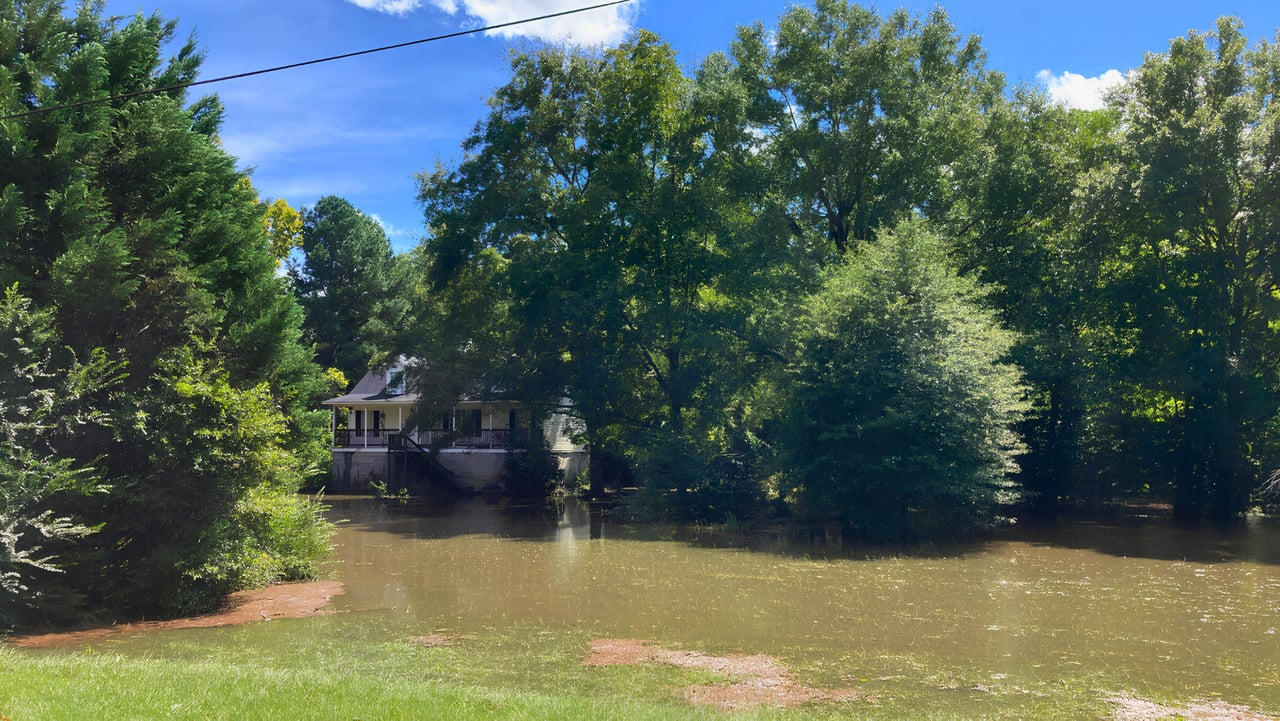
If the property is in a FEMA-designated Special Flood Hazard Area, the lender will require flood insurance as a condition of the loan. Flood zone status is determined by the flood certification ordered during the loan process. Parts of Houston County near creeks and drainage corridors fall inside designated zones, and buyers should confirm the status of a specific address early rather than discovering a required policy at closing.
Utilities
Utility providers vary within Houston County depending on whether the address is inside an incorporated city or in an unincorporated area, and by which electric and water provider serves the specific location. Buyers should identify the providers for the exact address during due diligence and schedule service to begin on the possession date, since a lapse between the seller's disconnect and the buyer's connect can leave a home without power or water on move-in day.
How Do Closing Costs Differ Across Houston County?
The state taxes and attorney structure are uniform. What differs across the county is the property tax component of prepaids and prorations, which depends on the taxing jurisdiction of the specific address.
SELLER KEYWORD TARGETS: seller closing costs Georgia transfer tax | prorated property taxes closing Georgia | who pays what at closing Houston County
Area | What Shapes the Tax Portion of Closing Figures |
Warner Robins | Incorporated city with both county and municipal property tax components, which affects escrow deposits and prorations. |
Kathleen | Unincorporated Houston County with no city property tax line, so escrow and proration figures reflect county taxes only. |
Perry | Incorporated county seat with county and municipal components, and more acreage properties where land valuation affects the tax figure. |
Bonaire | Unincorporated Houston County with no city property tax line, similar in structure to Kathleen. |
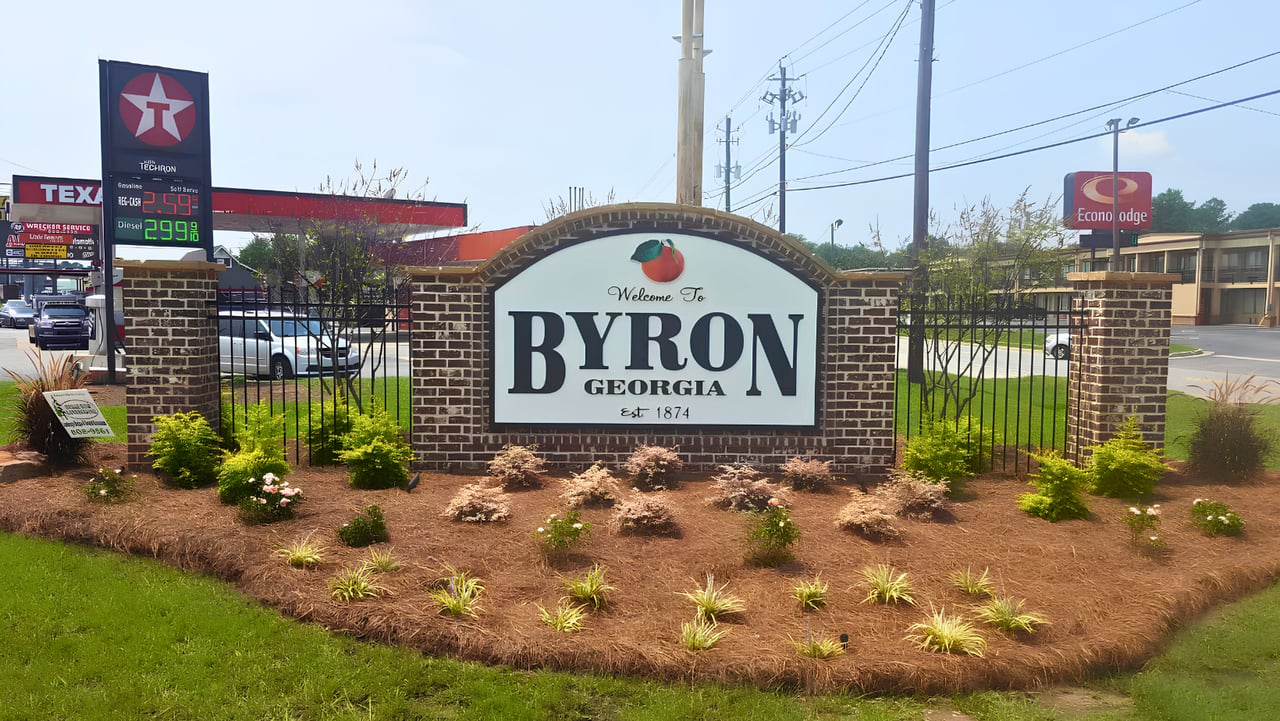
Byron | Neighboring Byron sits in Peach County, so every tax figure on the closing statement, including transfer tax filing and recording, runs through Peach County rather than Houston County. |
The Bonaire and Byron comparison is the one that catches buyers most often. Two homes at similar prices can carry meaningfully different tax escrows because one sits in unincorporated Houston County and the other in Peach County under a different millage structure. That difference appears on the Closing Disclosure and continues every month afterward in the escrow payment.
The Bottom Line
Buyer closing costs in Houston County are a set of identifiable line items, and most of the confusion around them comes from three things: not knowing which Georgia taxes apply and who pays them by statute versus by contract, not separating prepaids from fees, and not confirming the seller concession fits the loan program.
Read the Loan Estimate when it arrives, compare it to the Closing Disclosure when that arrives, and ask about every line that changed. Then have the insurance bound, the flood status confirmed, the utilities scheduled and the wire verified by phone before closing day, so the only thing left to do at the table is sign.
Frequently Asked Questions About Buyer Closing Costs in Houston County, GA
Q: What is the Georgia real estate transfer tax and who pays it?
A: The Georgia real estate transfer tax is an excise tax on the conveyance of real property, calculated at $1.00 for the first $1,000 or fractional part of the sale price and $0.10 for each additional $100 or fractional part, according to the Georgia Department of Revenue. Published guides describe it as roughly one tenth of one percent. By statute the party executing the deed, meaning the seller, is liable, but the purchase contract can allocate it differently. It must be paid, and a PT-61 filing completed, before the deed can be recorded.
Q: What is the Georgia intangible recording tax?
A: The intangible recording tax is a state tax on the security deed recorded for a long-term note secured by real estate, calculated at $1.50 per $500 or fraction of the loan principal and capped at $25,000 per note. The lender is liable by statute but customarily passes the cost to the borrower at closing. Under HB 586, effective July 1, 2025, it applies only to notes with any principal due more than 62 months after the note date, which includes standard mortgages. It is collected by the county Clerk of Superior Court.
Q: Do I pay intangible tax if I buy a house with cash in Georgia?
A: No. The intangible recording tax applies to a security deed recorded for a long-term note, and a cash purchase records no security deed. A cash buyer in Houston County still sees the transfer tax on the deed if the contract allocates it to the buyer, along with deed recording fees, title examination and the closing attorney fee. Cash purchases also do not carry the $10 residential mortgage fee that applies to financed residential purchases.
Q: Why is there an attorney fee on my closing statement in Georgia?
A: Georgia requires that real estate closings be conducted by a licensed Georgia attorney under O.C.G.A. Section 15-19-50, and that title opinions be rendered by an attorney. The closing attorney examines title, prepares or reviews the deed and security instruments, conducts the closing, disburses funds and records the documents. In states where title companies close transactions, those functions appear as escrow and settlement charges. In Georgia they appear as the attorney fee and attorney-conducted title work.
Q: What are prepaids at closing?
A: Prepaids are amounts collected at closing for costs the buyer will owe going forward, most commonly the first year's homeowners insurance premium, initial deposits into the escrow account for property taxes and insurance, and interest from the closing date to the end of the month. They are not transaction fees. They are the buyer's own future obligations collected in advance so the lender's escrow account is funded. Prepaids frequently make up a large share of cash to close, which is why the bottom number can look higher than the actual cost of the transaction.
Q: How much of my closing costs can the seller pay in Georgia?
A: Seller concessions are capped by loan program rather than by Georgia law, and the limits differ for conventional, FHA, VA and USDA financing. A concession negotiated above the program cap is partially unusable, meaning the excess does not benefit the buyer. Before agreeing to a credit amount in a Houston County contract, the buyer's lender should confirm the applicable limit. VA buyers near Robins Air Force Base should verify VA-specific concession rules, which differ from conventional guidelines.
Q: Do I need owner's title insurance in Georgia?
A: Owner's title insurance is optional in Georgia, but it is the only item on the closing statement that protects the buyer's ownership rather than the lender's loan. The lender's policy, which the lender requires, pays the lender in the event of a covered defect and does nothing for the buyer. An owner's policy is a one-time premium paid at closing and remains in force for as long as the buyer or their heirs own the property. It covers defects the title search could not find, such as forgery or undisclosed heirs.
Q: When do I need homeowners insurance in place before closing?
A: The lender requires proof that a homeowners policy is bound and in force before funding, with the lender named as mortgagee, and the first year's premium is typically collected at closing. Buyers should obtain quotes during the due diligence period rather than in the closing week, because insurability and premium depend on the home's age, roof condition and claims history. A surprising quote discovered late in the process leaves no time to shop or to renegotiate with the seller.
Q: Will I need flood insurance in Houston County, GA?
A: Flood insurance is required by the lender when the property sits in a FEMA-designated Special Flood Hazard Area, as determined by the flood certification ordered during the loan process. Portions of Houston County near creeks and drainage corridors fall inside designated zones. The status is address-specific and should be confirmed early in the contract period, because a required flood policy adds to both closing prepaids and the ongoing monthly escrow.
Q: Are closing costs different in Bonaire versus Byron?
A: The state taxes and the attorney-closing structure are the same, but the property tax component differs. Bonaire is in unincorporated Houston County with no city property tax, while neighboring Byron sits in Peach County under a separate millage structure, and all recording and transfer tax filing for a Byron property runs through Peach County. Two similarly priced homes can therefore carry different tax escrows on the Closing Disclosure and different monthly escrow payments afterward.
Q: How do I set up utilities before closing in Houston County?
A: Utility providers vary within the county depending on whether the address is inside an incorporated city such as Warner Robins or Perry or in an unincorporated area such as Bonaire or Kathleen, and by which electric and water provider serves the specific location. Buyers should identify the providers for the exact address during due diligence and schedule service to begin on the possession date. A gap between the seller's disconnect and the buyer's connect can leave the home without service on move-in day.
Q: What is the difference between the Loan Estimate and the Closing Disclosure?
A: The Loan Estimate is the federally required three page disclosure of estimated loan terms and closing costs delivered shortly after application. The Closing Disclosure is the five page final statement delivered at least three business days before consummation under the TRID rule. Buyers should compare the two line by line, because certain charges are subject to tolerance limits on how much they can increase. Discrepancies should be raised with the lender immediately, since corrections that change loan terms can restart the three day period.
About the Author
William Walton-Dean is a licensed REALTOR® with Walton Dean Realty, operating under Real Broker LLC, serving buyers and sellers across Houston County, Georgia, including Perry, Warner Robins, Bonaire, Kathleen, Byron, and the surrounding Middle Georgia housing market. He brings a data-driven, hyper-local approach to both residential and commercial transactions, working with first-time buyers, move-up sellers, investors, and families relocating to the area, including those tied to Robins Air Force Base. Drawing on a prior career as a C-level executive, he helps buyers and sellers at every price point make clear, confident decisions backed by real market insight.
📱 478-371-7069
Walton Dean Realty | Real Broker LLC
Buying or Selling in Houston County? Let's Talk About the Numbers
Cash to close in Warner Robins, Perry or Kathleen is a set of identifiable line items, and most of the surprises trace back to a handful of Georgia-specific ones. If you want the Closing Disclosure walked through before you sign, reach out.
William Walton-Dean | Walton Dean Realty
📱 478-371-7069
A More Strategic Approach to Real Estate
Disclaimer
This article is provided for general informational purposes only and does not constitute legal, tax, financial or lending advice. Tax rates are stated as published by the Georgia Department of Revenue and are subject to change; closing cost allocation is governed by the individual contract; and loan program concession limits vary by lender and program. Nothing in this article creates an attorney-client relationship or a brokerage relationship. For advice regarding a specific transaction, loan or tax matter, consult a licensed Georgia real estate attorney, your lender, a tax professional, and your licensed real estate agent.