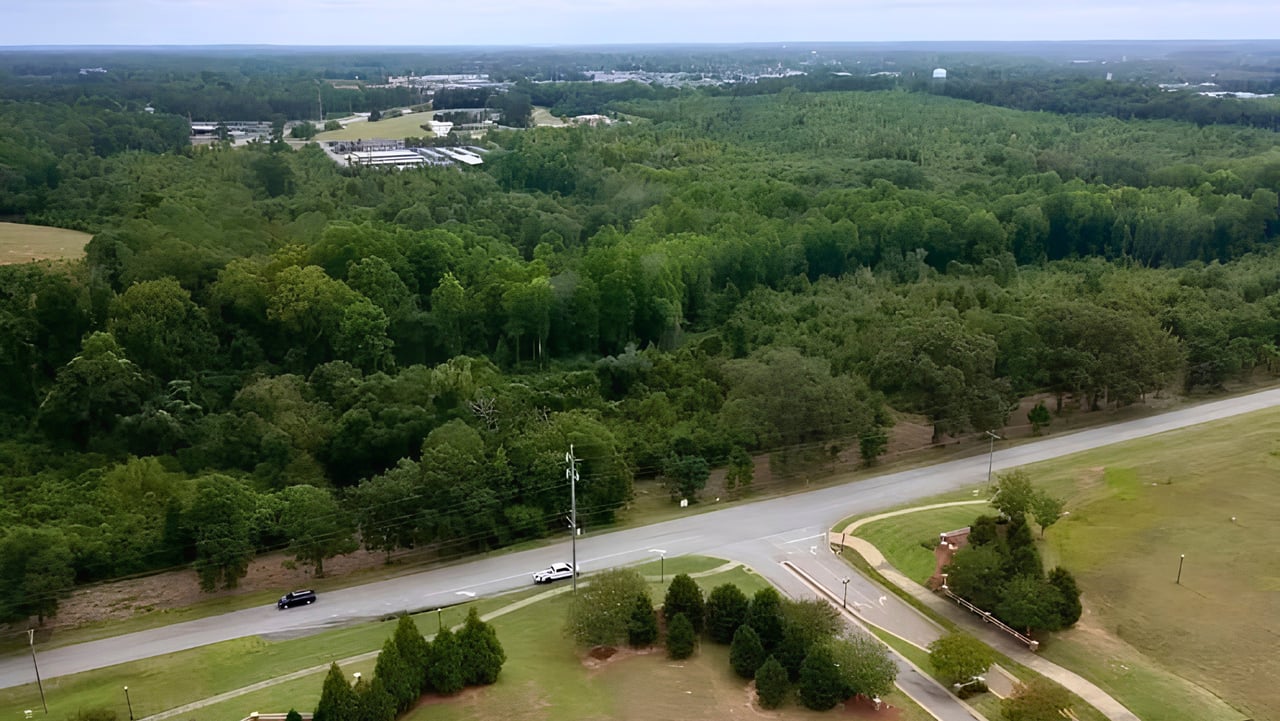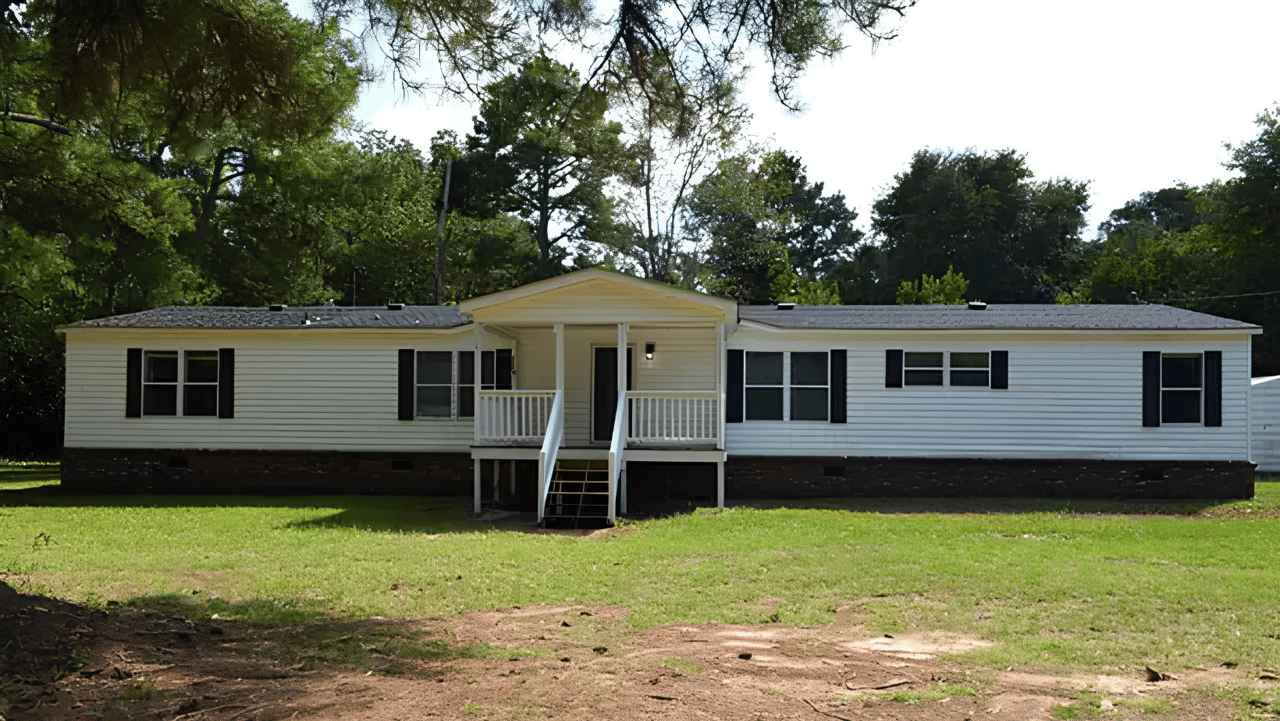
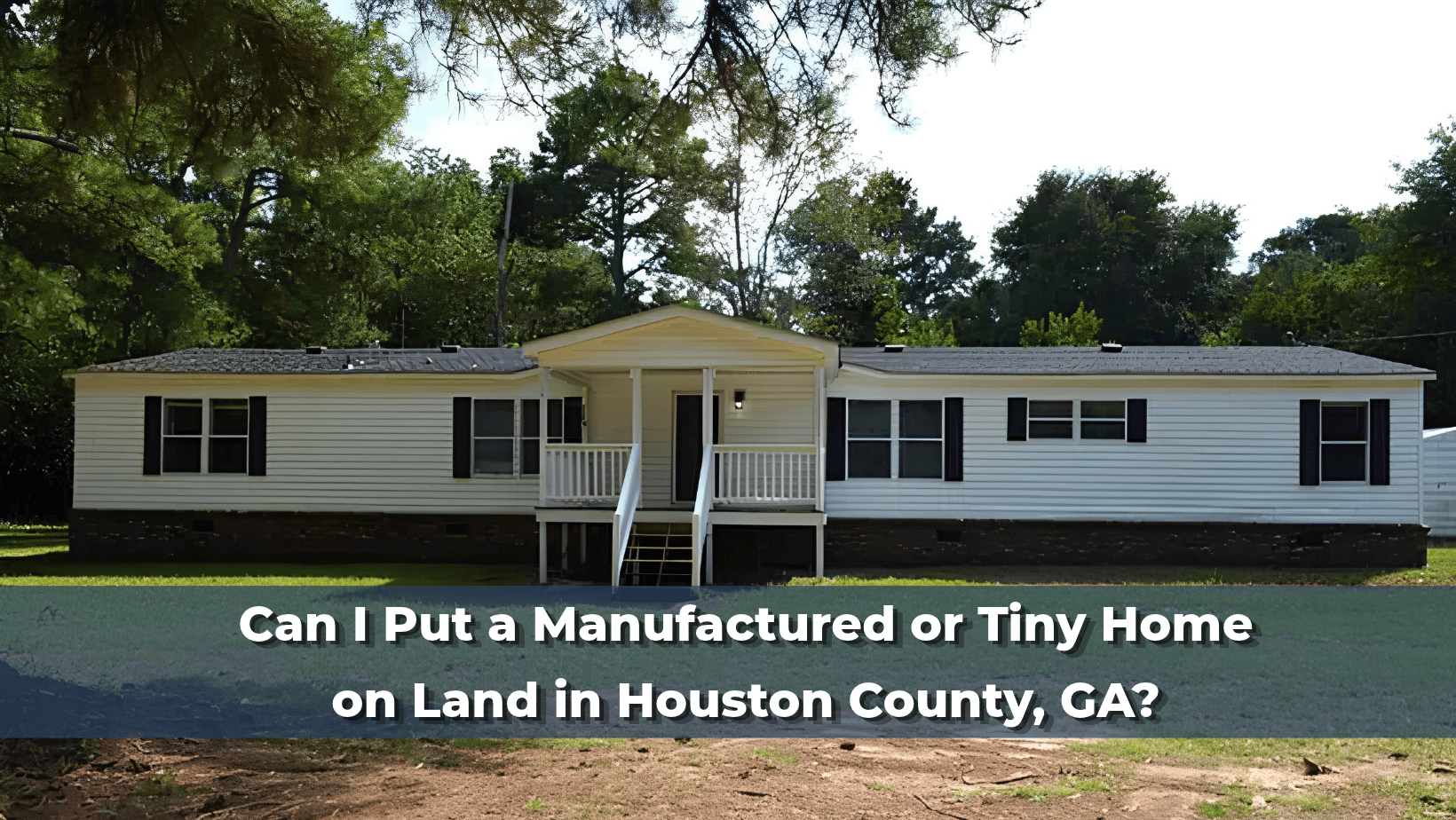
In unincorporated Houston County, Georgia, whether you can place a manufactured, mobile or tiny home on a piece of land depends on three things: the zoning district, the size and type of the home, and the permits. The county's land development regulations list individual mobile homes as a permitted use in the R-AG Agricultural Residential District and the R-MH Mobile Home Residential District but not among the permitted uses in the R-1 Single-Family Residential District that covers most subdivisions. A multi-section manufactured home built to the federal HUD code falls under the county's definition of a single-family manufactured dwelling. A tiny home on wheels with 320 square feet or less of floor area is a travel trailer under the county's definitions, and a travel trailer may not be occupied, temporarily or permanently, anywhere except an authorized travel trailer park. Every mobile home also needs a county building permit, a Tax Commissioner location permit and a current decal, with taxes due April 1.
This guide walks through the county's definitions, which districts allow which homes, the permit and tax steps for a mobile home in Houston County, the tiny home question, and what buyers and sellers of land and manufactured homes in Kathleen, Perry, Elko and rural Houston County should check.
The County's Definitions: Mobile Home, Manufactured Dwelling, Travel Trailer
Section 32 of the Comprehensive Land Development Regulations for Houston County draws the lines. A mobile home is a movable or portable dwelling over 32 feet in length and containing over 320 square feet of floor area, constructed to be towed on its own chassis, connected to utilities and designed without a permanent foundation for year-round occupancy, including units of two or more sections designed to be joined. A manufactured home is a dwelling fabricated off site bearing a label certifying compliance with the federal Manufactured Home Construction and Safety Standards, which took effect June 15, 1976. An industrialized home is one built under Georgia's Industrialized Building Act and bearing the state's insignia of approval.
The definition that matters most for zoning is the one for a single-family dwelling, which the county divides into two types: a site-built single-family dwelling constructed on the lot under the county's building codes, and a single-family manufactured dwelling, meaning a one-family manufactured home of two or more sections or a one-family industrialized home. The separate definition of a single-family detached dwelling states that it is not to be construed to include a mobile home or portable housing for recreational or temporary use. The distinction the regulations draw, between a multi-section HUD-code or state-approved home on one hand and a single-section mobile home or a recreational unit on the other, is the one buyers should keep in mind when reading a district's permitted uses.
A travel trailer or portable recreational housing unit is defined to include travel trailers, pick-up campers, motorized homes, converted buses, tent trailers, tents and similar devices intended as temporary portable recreational housing with not more than 320 square feet of floor area. A tiny house on a trailer chassis that comes in at or under 320 square feet fits that definition, not the mobile home definition.
Which Zoning Districts Allow What
The county's residential districts each list their permitted uses in Section 71. The R-AG Agricultural Residential District, used only in the unincorporated county, permits single-family dwellings, accessory buildings, home pools, agricultural uses, public utility structures, signs, and individual mobile homes, with tenant houses and additional dwellings allowed by special exception at one per five acres. The R-MH Mobile Home Residential District permits any use allowed in R-1 plus individual mobile homes and mobile home parks under Section 91. The R-1 Single-Family Residential District permits single-family dwellings, accessory buildings and uses, a home swimming pool, screened public utility structures and signs; individual mobile homes do not appear in the list. The R-2, R-3 and R-4 districts inherit the R-1 list and add duplexes, attached homes and apartments.
Because a multi-section manufactured home falls within the county's definition of a single-family dwelling, and a single-family dwelling is a permitted use in every residential district, the regulations read as allowing a doublewide or triple-wide HUD-code home where a site-built home is allowed, while a single-section mobile home is confined to R-AG and R-MH. Section 91 of the regulations, which addresses mobile homes, campgrounds and travel trailer parks, may add foundation, skirting, age or appearance standards for individual placements, and the county's Planning and Zoning office at the annex in Warner Robins is the authority on how a specific home on a specific lot is classified. That call is worth making before a deposit is paid on either the land or the home.
Home type | R-AG Agricultural Residential | R-1 Single-Family and districts inheriting R-1 | R-MH Mobile Home Residential |
Site-built single-family home | Permitted | Permitted | Permitted |
Multi-section manufactured home (HUD code) or state-approved industrialized home | Permitted as a single-family dwelling, subject to Section 91 standards | Within the definition of single-family dwelling; confirm classification with Planning and Zoning | Permitted |
Single-section mobile home | Permitted as an individual mobile home | Not among listed permitted uses | Permitted as an individual mobile home |
Mobile home park | Not listed | Not listed | Permitted under Section 91 |
Tiny home on wheels, 320 square feet or less | Travel trailer; may not be occupied outside an authorized travel trailer park | Same | Same |
Tiny home built on a permanent foundation | Treated as a site-built dwelling subject to building codes and minimum lot standards; confirm with Building Inspection | Same | Same |
Second dwelling on one lot | Special exception, one per five acres beyond the principal lot | Special exception under Section 107 | Special exception under Section 107 |
The Tiny Home Question
Houston County's regulations do not use the phrase tiny home, so the answer comes from the definitions. A tiny home on a trailer chassis with 320 square feet or less of floor area is a travel trailer or portable recreational housing unit, and Section 66.3 states that a travel trailer shall not be occupied, either temporarily or permanently, while parked or stored in any area except a travel trailer park authorized under the regulations. That rule prohibits living in a tiny house on wheels in a back yard, on a family member's acreage, or on a lot of its own in unincorporated Houston County, and a travel trailer park is a permitted use in the C-2 General Commercial District, and the districts that inherit C-2 uses, under Section 91. A tiny home on wheels larger than 320 square feet and over 32 feet long is a mobile home under the county's definitions and follows the mobile home rules and districts.
A tiny home built on a permanent foundation is a different case. It is a site-built dwelling, subject to the Georgia State Minimum Standard Codes the county enforces, to the county's building permit process, and to the minimum lot size, lot width, setback and frontage requirements of the zoning district in Section 81 and Section 82 of the regulations. The county's minimum lot frontage of 50 feet on a street, and larger frontages in R-AG and R-1 on roads with open ditches, apply to any dwelling. Whether a very small permanent home meets the residential code's minimum room and ceiling requirements is a question for Building Inspection, and a buyer planning that project should bring the plans to the office before buying the lot.
Permits and Taxes for a Mobile Home in Houston County
Placing a mobile home in unincorporated Houston County involves two offices. The county Building Inspection department issues the building permit; its fee schedule sets a flat $100 permit for a singlewide, with a $50 electrical fee, a $35 moving fee and a $15 location fee, and prices a doublewide permit on the electrical fee, a $25 location fee and a building fee figured on the cost of the home. The county publishes a mobile home permit handout listing what to bring, and the home is inspected to the state codes for setup and utility connections.
The Tax Commissioner handles the tax side. Under Georgia law a mobile or manufactured home is personal property unless it has been converted to real property, and Houston County taxes it annually with a due date of April 1 rather than the December 20 date for real estate. The owner of any mobile home located in the county on January 1 must file a return, pay the current year's tax by April 1, and obtain a location permit and decal from the Tax Commissioner; the permit is issued only when the current year's tax is paid in full. Failure to pay and obtain the permit results in a 10 percent penalty, a citation to appear in Houston County Magistrate Court, or possible sale of the home. Mobile home owners who disagree with the Tax Assessor's value have 45 days to appeal, and 21 days to appeal a value change to the Board of Equalization. Tax bills for mobile homes are generally mailed in January.
Step | Office | What it involves | Cost or deadline |
Zoning check | Houston County Planning and Zoning, 200 Carl Vinson Parkway, Warner Robins | Confirm the district permits the home type; check Section 91 standards and any covenants | Before buying |
Building permit | Houston County Building Inspection | Mobile home permit handout; setup and utility inspections | $100 singlewide permit; doublewide by cost; $50 electrical; moving and location fees |
Return and tax | Houston County Tax Commissioner | File a return for a home in the county on January 1; pay the year's tax | Billed in January; due April 1 |
Location permit and decal | Houston County Tax Commissioner | Issued when the current year's tax is paid; decal must be displayed | Annual; 10 percent penalty and citation if not obtained |
Conversion to real property | Clerk of Superior Court and Tax Assessor | Retiring the title and affixing the home to owned land so it is taxed with the land | Optional; typically required by lenders for a mortgage on the home and land together |
Inside the Cities and Inside Subdivisions
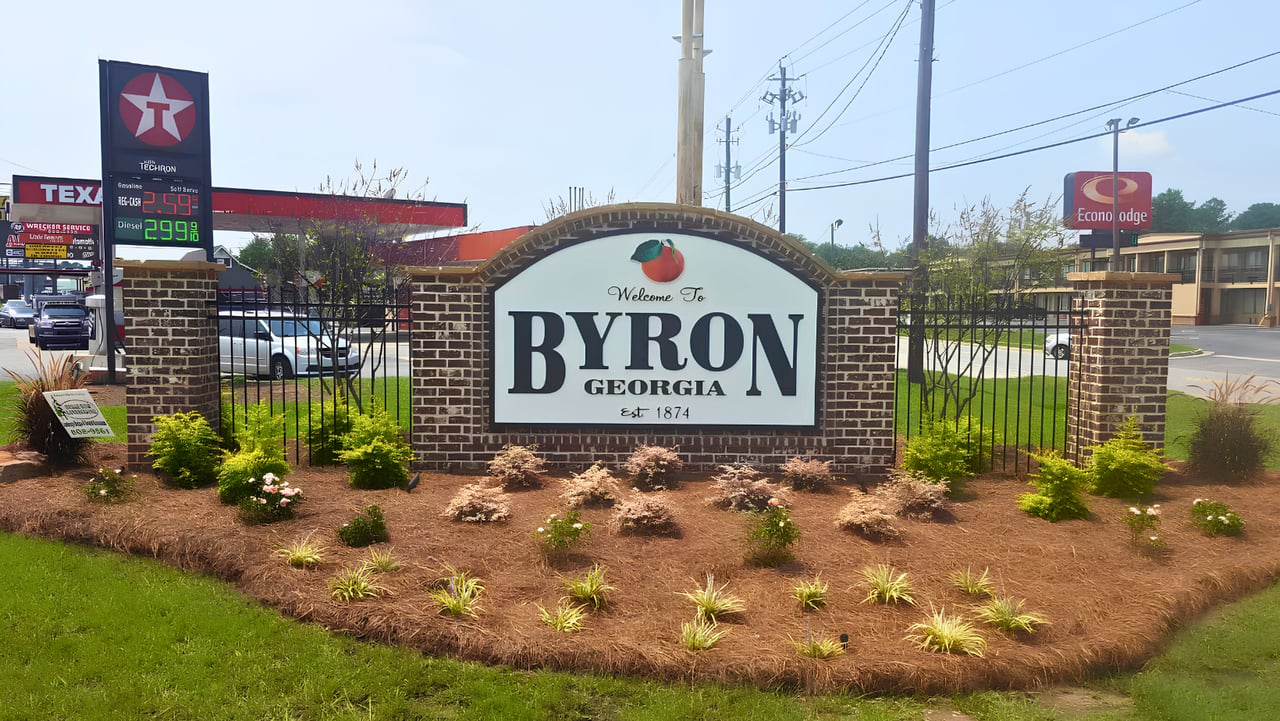
The county's regulations apply to unincorporated Houston County. Warner Robins, Perry and Centerville regulate manufactured and mobile homes inside their limits under their own zoning ordinances, which may confine them to specific districts or parks, and a buyer should confirm the city rule before purchasing a lot inside any of the three. Neighboring Byron follows City of Byron and Peach County rules. In every jurisdiction, recorded subdivision covenants can prohibit manufactured homes, impose minimum square footage, or require site-built construction, and those private restrictions apply regardless of what the zoning allows. Many subdivisions platted in Bonaire, Kathleen and Perry carry covenants of that kind, so a buyer should read them before assuming zoning is the only test.
For Sellers: How Do I Sell a Manufactured Home on Land in Houston County?
The sale is simplest when the home has been converted to real property, meaning the manufactured home's certificate of title has been retired and the home is affixed to the land and taxed with it, because then the home and land sell together on one deed and a buyer can finance both with a conventional, FHA or VA loan. A home that still has a separate title is personal property, is taxed separately with the April 1 due date, and changes hands by title transfer alongside the deed to the land, which narrows the financing options for the buyer.
Before I list a manufactured home on land in Houston County, I confirm three things with the seller: whether the title has been retired, whether the current year's mobile home tax is paid and the decal is current if it has not, and whether the home's HUD data plate and certification labels are intact, because lenders and appraisers ask for them. A seller who has not retired the title can usually do so before closing with the Clerk of Superior Court and the Tax Assessor, and it is often worth the effort, since it opens the sale to buyers using government-backed loans, who are a large share of the market near Robins Air Force Base. I also pull the zoning and any covenants, because a buyer's lender will want to know the home is a conforming use on the lot.
For Buyers: What Should I Check Before Buying Land for a Manufactured Home?
BUYER KEYWORD TARGETS: buying land for a mobile home Houston County GA / can I put a double wide on this lot Georgia / R-AG land for manufactured home Perry Kathleen / septic and well for mobile home Houston County / tiny home lot Georgia
Four things, in order: the zoning district and whether it permits the type of home you intend to place, the recorded covenants on the land, whether the lot can get water and sewer or a septic permit from the Houston County Health Department, and whether the home you are buying is a multi-section HUD-code home, a single-section mobile home, or a unit under 320 square feet that the county treats as a travel trailer. The first and last of those decide whether the plan is legal at all; the middle two decide whether it is practical.
The buyers I see get into trouble are the ones who buy the home before the land, or the land before the zoning check. An R-AG tract south of Perry or out toward Elko is the most flexible place in the county for a manufactured home, and it is also where the lot sizes, open-ditch road frontages and septic requirements are most demanding, so I walk buyers through the Section 53 frontage rules and the Health Department's septic process at the same time as the zoning. For a tiny home on wheels, I am direct: the county's definitions put it in the travel trailer category, and the regulations do not allow living in one outside a travel trailer park, so the honest path is a permanent foundation and a building permit, which changes the budget and the lot requirements. I would rather have that conversation before a buyer owns a lot they cannot use.
Frequently Asked Questions About Manufactured and Tiny Homes in Houston County
Can I put a mobile home on my property in Houston County, Georgia?
In unincorporated Houston County, an individual mobile home is a permitted use in the R-AG Agricultural Residential District and the R-MH Mobile Home Residential District under Section 71 of the county's land development regulations. It is not among the permitted uses listed for the R-1 Single-Family Residential District that covers most subdivisions. A multi-section manufactured home falls within the county's definition of a single-family dwelling, so its treatment in R-1 should be confirmed with Planning and Zoning. Covenants can prohibit manufactured homes regardless of zoning, and the cities apply their own rules inside their limits.
What is the difference between a mobile home and a manufactured home in Houston County's rules?
The county's regulations define a mobile home as a movable dwelling over 32 feet long with more than 320 square feet of floor area, towed on its own chassis and designed without a permanent foundation. A manufactured home is a dwelling built off site with a label certifying compliance with the federal standards effective June 15, 1976. The county's definition of a single-family dwelling includes a single-family manufactured dwelling, meaning a one-family manufactured home of two or more sections or a state-approved industrialized home, while its definition of a single-family detached dwelling excludes a mobile home. Multi-section HUD-code homes therefore sit on the single-family side of the line.
Are tiny homes legal in Houston County, Georgia?
A tiny home on wheels with 320 square feet or less of floor area is a travel trailer or portable recreational housing unit under the county's definitions, and Section 66.3 prohibits occupying a travel trailer, temporarily or permanently, anywhere except a travel trailer park authorized under the regulations. A tiny home on a permanent foundation is a site-built dwelling subject to the county's building codes, permit process and the zoning district's minimum lot, frontage and setback requirements. The county's regulations do not contain a separate tiny home category.
Can I live in a tiny house on wheels on my own land in Georgia's Houston County?
Not in unincorporated Houston County, under the county's regulations as posted. A unit of 320 square feet or less on a trailer is a travel trailer, and the regulations state that a travel trailer shall not be occupied while parked or stored in any area except an authorized travel trailer park, which is a permitted use in the C-2 General Commercial District and the districts that inherit its uses. A homeowner who wants to live in a small home on their land would need to place it on a permanent foundation and permit it as a dwelling, or seek relief from the Board of Zoning Appeals.
What permits do I need for a mobile home in Houston County, GA?
A building permit from Houston County Building Inspection, which charges a flat $100 for a singlewide plus a $50 electrical fee, a $35 moving fee and a $15 location fee, and prices a doublewide on the electrical fee, a $25 location fee and a building fee based on the home's cost. The county publishes a mobile home permit handout listing the required documents. The owner also needs a location permit and decal from the Houston County Tax Commissioner, which is issued only when the current year's mobile home tax has been paid.
When are mobile home taxes due in Houston County, Georgia?
April 1 of each year. The Tax Commissioner bills mobile and manufactured homes in January, and the owner of a home located in Houston County on January 1 must file a return, pay the tax by April 1 and obtain the location permit and decal. Failure to pay and obtain the permit results in a 10 percent penalty, a citation to Houston County Magistrate Court, or possible sale of the home. Real estate taxes, by contrast, are due December 20.
What zoning do I need for a mobile home in Houston County?
R-AG Agricultural Residential or R-MH Mobile Home Residential for an individual mobile home, under Section 71 of the county's land development regulations. R-AG is used only in the unincorporated county and is where most acreage south of Perry and toward Elko is zoned. R-MH is the district for mobile home parks and subdivisions. The zoning district for any parcel can be confirmed with Houston County Planning and Zoning at the county annex, and the parcel record on qPublic shows the tax district and land use class.
Can I put a second mobile home on my land for a family member in Houston County?
Only by special exception from the Board of Zoning Appeals. Additional dwellings on a single lot are allowed in the R-AG and R-1 districts only as a special exception under Section 107 of the county's regulations, and in R-AG, tenant houses and additional one-family dwellings may be allowed at one structure for each five acres beyond the minimum lot for the principal residence. The second home must also meet the district's rules for the type of dwelling, so a second mobile home is possible only where mobile homes are permitted at all.
Do subdivision covenants in Houston County prohibit manufactured homes?
Many do. Recorded covenants can prohibit manufactured or mobile homes, require site-built construction, or set minimum square footage, and those restrictions apply regardless of zoning. The covenants are recorded with the Houston County Clerk of Superior Court and indexed through the Georgia Superior Court Clerks' Cooperative Authority, and a buyer should read them before purchasing a lot in any platted subdivision in Bonaire, Kathleen, Perry or Warner Robins with the intention of placing a manufactured home.
How do I convert a manufactured home to real property in Georgia?
By retiring the home's certificate of title and recording the required certificate with the Clerk of Superior Court in the county where the land is located, after the home is permanently affixed to land the homeowner owns, so that the home and land are taxed and conveyed together. Once converted, the home is assessed as real property with the land and the December 20 real estate due date, and it can be financed and sold with the land on a single deed. The Houston County Tax Assessor and Clerk of Superior Court can provide the current forms and requirements.
Do Warner Robins, Perry and Centerville allow manufactured homes?
Each city regulates manufactured and mobile homes under its own zoning ordinance inside its city limits, and the county's R-AG and R-MH rules do not apply there. Cities may confine mobile homes to designated districts or parks and may impose design standards on manufactured homes. A buyer considering a lot inside Warner Robins, Perry or Centerville should confirm the city's rule with its planning office before buying either the lot or the home.
Does Houston County require a minimum lot size or road frontage for a mobile home?
The same lot standards that apply to any dwelling in the district apply to a mobile home. Section 53 of the county's regulations requires every lot to have at least 50 feet of frontage on a street, with a minimum of 200 feet of frontage at the right-of-way for lots in R-AG and R-1 on existing roads with open ditches and 100 feet on curb-and-gutter roads in R-1, and Sections 81 and 82 set minimum lot area, width and setbacks by district and by whether the lot has public water. A lot that cannot meet those standards, or cannot obtain a septic permit from the Health Department, cannot be used for a dwelling of any kind.
About the Author
William Walton-Dean is a licensed REALTOR® with Walton Dean Realty, operating under Real Broker LLC, serving buyers and sellers across Houston County, Georgia, including Perry, Warner Robins, Bonaire, Kathleen, Byron, and the surrounding Middle Georgia housing market. He brings a data-driven, hyper-local approach to both residential and commercial transactions, working with first-time buyers, move-up sellers, investors, and families relocating to the area, including those tied to Robins Air Force Base. Drawing on a prior career as a C-level executive, he helps buyers and sellers at every price point make clear, confident decisions backed by real market insight.
📱 478-371-7069
Walton Dean Realty | Real Broker LLC
Buying Land or a Manufactured Home in Houston County? Let's Talk.
Whether you are selling a doublewide on acreage near Perry or buying a lot for a manufactured home in Kathleen or Elko, I will check the zoning, the covenants and the title status before you commit, so the financing and the closing go the way you expect. I handle land, residential and commercial transactions across Houston County and Middle Georgia.
William Walton-Dean | Walton Dean Realty
📱 478-371-7069
A More Strategic Approach to Real Estate
This article is provided for general informational purposes about zoning, permitting and taxation of manufactured, mobile and tiny homes in Houston County, Georgia and does not constitute legal advice. The Comprehensive Land Development Regulations for Houston County, city ordinances, building codes and tax rules are adopted by the respective governments and may change, and private covenants are enforced by homeowners associations and lot owners. Confirm current rules with Houston County Planning and Zoning, Building Inspection, the Tax Commissioner or the applicable city before purchasing land or a home. William Walton-Dean is a licensed REALTOR® with Walton Dean Realty under Real Broker LLC and is not an attorney or zoning official.