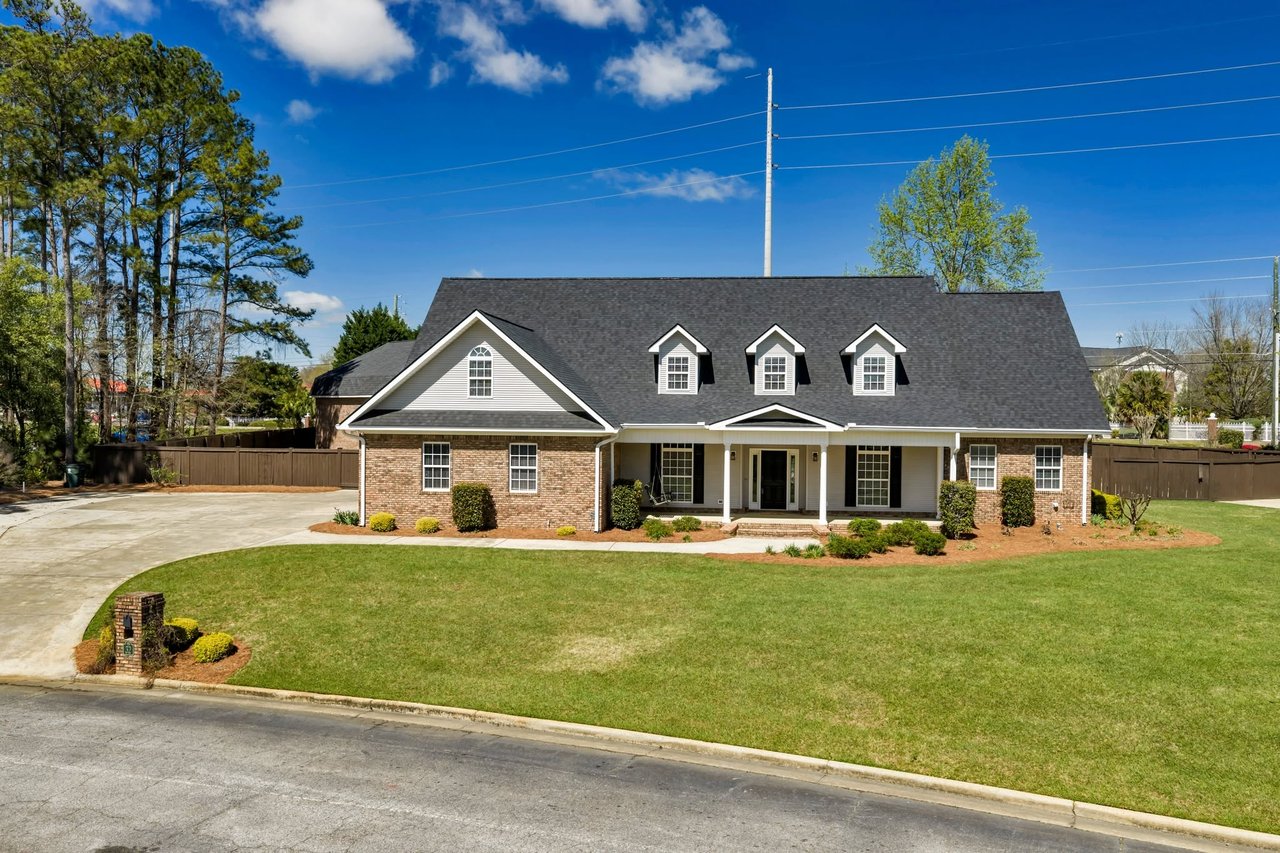

A Houston County seller can accept an offer from a buyer using down payment assistance and close on schedule, as long as the offer is judged on the same things that decide any financed offer: the strength of the buyer's preapproval, the first mortgage type behind it and the appraisal and property standards that loan carries. Down payment assistance is typically a grant or a subordinate loan from a government agency, housing finance agency, nonprofit or employer that funds at the closing table alongside the first mortgage. Fannie Mae's Selling Guide, section B5-5.1-01, lists exactly those providers for its Community Seconds program and states that a provider "must not be the property seller or other interested party in the transaction."
The question comes up often in Warner Robins, Perry, Bonaire, Kathleen and neighboring Byron because so many local buyers finance with government-backed loans. In September 2026, FHA loans financed 12 of 61 residential sales in Warner Robins, 6 of 17 in Byron and 4 of 36 in Kathleen, and VA loans financed 14 Kathleen sales, 12 in Warner Robins, 11 in Bonaire, 9 in Perry and 5 in Byron, according to the Walton Dean Realty September 2026 market updates from Central Georgia MLS Paragon data. The MLS does not report how many of those buyers also used assistance. What a seller can know is how assistance moves through a closing and which questions separate a solid assisted offer from a fragile one.
Key Takeaways
• Fannie Mae defines a Community Seconds loan as "subordinate financing that is originated under an affordable housing program" and lists federal agencies, state and local governments, housing finance agencies, 501(c)(3) nonprofits and employers as eligible providers (Fannie Mae Selling Guide B5-5.1-01).
• A Community Seconds provider "must not be the property seller or other interested party in the transaction," except as the provider of a shared equity or sweat equity program (Fannie Mae Selling Guide B5-5.1-01).
• Under the Housing and Economic Recovery Act of 2008, an FHA borrower's required minimum cash investment cannot come from "the seller or any entity that financially benefits from the transaction" or a third party reimbursed by the seller (Congressional Research Service, RS22934).
• FHA Minimum Property Requirements set "baseline standards for safety, soundness and security," and HUD opened a request for information on modernizing them on May 29, 2026 (Federal Register 2026-10766, per Orrick InfoBytes).
• On a VA loan, a VA appraiser checks the home against VA minimum property requirements and issues a Notice of Value, and the buyer can ask the lender to request a reconsideration of value if sales data supports a higher value (VA Loan Guaranty Service, Quick Reference for Real Estate Professionals).
• Prequalification and preapproval letters "are not guaranteed loan offers" (Consumer Financial Protection Bureau).
How Does Down Payment Assistance Fund at a Houston County Closing?
From the seller's side of the table, down payment assistance looks like one more source of funds on the buyer's column of the settlement statement. The buyer's first mortgage, whether FHA, VA, USDA or conventional, funds the bulk of the price. The assistance program funds its grant or second loan at the same closing, usually by sending its money to the closing attorney along with the first-mortgage lender's funds. The buyer brings whatever cash the program and the lender still require. The seller receives the same net proceeds at the same table, and the assistance does not change the seller's payoff, commission or prorations.
What makes assistance different is that it is a second set of rules layered on the first mortgage. The provider has its own eligibility tests for the buyer and sometimes for the property, its own documents and its own sign-off. Fannie Mae's Community Seconds rules show the structure: the second must be originated under an affordable housing program by an eligible provider, and the provider cannot be the seller or another interested party. Georgia's statewide program has its own rules, covered in a separate post, and local or employer programs set theirs. A seller does not need to master any of them. A seller needs to know that the buyer's lender is approved to work with the program and that the program is ready to fund on the contract closing date.
Item | What a seller should know |
What assistance is | A grant or subordinate loan from an affordable housing program, funded at closing alongside the first mortgage |
Eligible providers (Fannie Mae Community Seconds) | Federal agencies; state and local governments and housing finance agencies; 501(c)(3) nonprofits; employers |
Can the seller be the provider? | No, for Community Seconds, except shared equity or sweat equity programs; for FHA, the minimum cash investment cannot come from the seller or a party that benefits from the sale |
Effect on seller proceeds | None directly; assistance funds the buyer's side of the settlement statement |
What drives the appraisal and repairs | The first mortgage type (FHA, VA, USDA or conventional), not the assistance |
What a seller should confirm | Preapproval from a licensed lender, the lender's participation in the program, and the program's readiness for the contract closing date |
Can I Pay for the Buyer's Down Payment Assistance as the Seller?
No, not directly, and the rule has a history. The Housing and Economic Recovery Act of 2008 ended seller-funded down payment assistance for FHA loans. According to the Congressional Research Service, the law bars an FHA borrower's required minimum cash investment from coming from "the seller or any entity that financially benefits from the transaction," or from "any third party that is directly or indirectly reimbursed by the seller." Fannie Mae's Community Seconds rule reaches a similar result for conventional loans: the provider "must not be the property seller or other interested party in the transaction."
That is separate from a seller contribution toward the buyer's closing costs, which is common in Houston County contracts and is allowed within each loan program's limits. Those limits differ between FHA, VA, USDA and conventional loans, and some assistance programs have their own rules on how seller contributions interact with their funds. A seller who wants to offer closing cost help to an assisted buyer should put it in the contract as a seller contribution, let the buyer's lender confirm it fits the program limits before the contract is final, and never route money to the buyer or a third party outside the settlement statement.
What Appraisal and Inspection Requirements Come With an Assisted Offer?
Assistance rarely carries its own appraisal. The appraisal and property standards come from the first mortgage, which is why the most useful question a seller can ask about an assisted offer is which loan sits underneath it. On an FHA loan, the home must meet HUD's Minimum Property Requirements, which a June 2026 summary of HUD's own notice described as "baseline standards for safety, soundness and security." An FHA appraiser who sees a deficiency notes it, and the lender can require repairs before closing. HUD has been revising the surrounding rules: Mortgagee Letter 2025-18, issued June 27, 2025 and effective immediately, rescinded several FHA-specific appraisal protocols it called outdated, and on May 29, 2026 HUD published a request for information on modernizing the Minimum Property Requirements themselves, with comments due June 29, 2026. In that request, HUD noted stakeholder views that FHA requires repairs and reinspections more often than Fannie Mae and Freddie Mac, which may discourage sellers from accepting FHA offers. As of November 4, 2026, the request is a call for input, not a final rule.
On a VA loan, the lender orders an appraisal from a VA appraiser, who checks the home against VA's minimum property requirements and issues a Notice of Value. If the appraiser has concerns that the home will not appraise at or above the contract price, VA's Tidewater Initiative has the appraiser contact the point of contact on the appraisal order before finishing the report, which gives the agents a chance to send additional sales data. If the value still comes in low, the buyer can ask the lender to request a reconsideration of value. Conventional loans follow Fannie Mae or Freddie Mac appraisal standards. A buyer's own home inspection is separate from all of these and is the buyer's choice.
First mortgage under the assistance | Property standard | Seller takeaway |
FHA | HUD Minimum Property Requirements: baseline standards for safety, soundness and security; appraiser notes deficiencies | Expect the appraiser to note safety and soundness deficiencies the lender may require repaired; HUD is reviewing the standards in 2026 |
VA | VA minimum property requirements; VA appraiser issues a Notice of Value | Tidewater gives a chance to submit sales data before a low value is final; buyer can request reconsideration of value |
Conventional (Fannie Mae or Freddie Mac) | Agency appraisal standards | No FHA or VA property requirement; condition still affects value |
Any loan | Buyer's optional home inspection | Negotiated under the inspection terms of the contract, separate from the appraisal |
For a Houston County seller, the property standard matters more than the assistance. An older Warner Robins ranch with original windows and a tired roof is a very different candidate for an FHA appraisal than a 2018 home in a Kathleen subdivision, and that is true whether or not the buyer has assistance. A seller who knows the home has a safety or condition issue is usually better off fixing it before listing, or pricing for it, than learning about it from an appraisal three weeks before closing.
Does a Down Payment Assistance Buyer Take Longer to Close?
Sometimes, and the reason is process rather than the buyer. An assisted purchase has two approvals instead of one: the first-mortgage lender's underwriting and the assistance program's review of the file, which may include buyer eligibility checks, its own documents and, for some programs, a homebuyer education requirement the lender can confirm. Each program sets its own steps and turn times.
A seller does not have to guess. The listing agent can ask the buyer's lender three questions before the offer is accepted: whether the lender is approved to originate with the named program, whether the program must approve the file separately and how long that has been taking, and whether the buyer has already completed any required education. A closing date that allows for those steps is a closing date that holds. A closing date that ignores them is the most common reason an assisted deal slips, and a slip matters most to a seller who is buying another home on a contingent timeline.
Step | Conventional or FHA or VA offer without assistance | Same offer with assistance |
Preapproval | Licensed lender | Licensed lender, plus confirmation the lender works with the named program |
Underwriting | First-mortgage lender | First-mortgage lender, plus program review where required |
Buyer education | Set by the loan program | Ask whether the assistance program requires it and whether it is complete |
Appraisal | Set by the loan type | Same; set by the loan type |
Funding at closing | Lender funds | Lender funds and program funds, both to the closing attorney |
How Do I Evaluate a Down Payment Assistance Offer on My Home?
Start with the letter. The Consumer Financial Protection Bureau explains that prequalification and preapproval letters "specify how much the lender is willing to lend" and "are not guaranteed loan offers," and that some lenders base prequalification on information the buyer reports while reserving preapproval for information the lender has verified. A preapproval from a licensed lender that names the loan type and references the assistance program tells a seller far more than a generic prequalification.
Then judge the offer on its terms, not on the assistance. Price, closing date, the seller contribution requested, earnest money, the financing and appraisal terms and the inspection period carry the same weight in an assisted offer as in any other. Two offers at the same price can be very different: a VA buyer with a verified preapproval, a realistic closing date and no repair requests on a home that should meet VA standards may be the strongest offer a Bonaire seller sees, while an unverified prequalification asking for a fast close and a large seller contribution on an older home is fragile regardless of how it is funded.
• Is the letter a preapproval from a licensed lender, and does it name the loan type and the assistance program?
• Has the listing agent spoken with the lender and confirmed the lender originates with that program?
• Does the closing date allow for the program's review and any required buyer education?
• Does the requested seller contribution fit the loan program's limits, as confirmed by the lender?
• Will the home meet the property standard of the first mortgage, or are there known items an FHA or VA appraiser will flag?
• How does the offer compare on price, net proceeds and certainty with the other offers or the expected next offer?
Should I Accept a Down Payment Assistance Offer on My Houston County Home?
Down payment assistance funds at closing alongside the buyer's first mortgage and does not change the seller's payoff or net proceeds on the settlement statement. The appraisal and repair standards come from the first mortgage, so an assisted FHA offer carries HUD's Minimum Property Requirements and an assisted VA offer carries VA's. A seller cannot fund the buyer's assistance: Fannie Mae bars sellers and interested parties as Community Seconds providers, and HERA bars seller-funded FHA minimum investments. In September 2026, FHA financed 12 of 61 sales in Warner Robins and 6 of 17 in Byron.
In my experience, the sellers who turn down assisted offers on reflex are usually reacting to a deal that went sideways years ago, not to the buyer in front of them. The way I read an assisted offer is the way I read any financed offer: I call the lender, confirm the program and the timeline, and look hard at whether the house will meet the first mortgage's standard. In Warner Robins and Byron, where FHA buyers are a real share of the market and active listings outnumber monthly sales, refusing assisted buyers shrinks the buyer pool in exactly the price range where a seller needs it most. In Kathleen and Bonaire, where VA buyers closed at the top of the market in September, the assisted VA offer is often the strongest one on the table. The offers I advise sellers to pass on are the ones with a weak letter, an unrealistic closing date or a request that exceeds what the loan allows, and those problems have nothing to do with assistance.
How Can a Buyer Using Down Payment Assistance Make a Stronger Offer?
A buyer using assistance in Houston County is competing with buyers who are not, and sellers judge offers on certainty. The CFPB notes that preapproval letters are not guaranteed loan offers, so the buyer's job is to make the letter, the lender and the timeline as verifiable as possible. The appraisal and property standards that come with the buyer's FHA, VA, USDA or conventional loan will apply to the home regardless of the assistance.
My advice to assisted buyers is to remove the questions before the seller can ask them. Finish any homebuyer education your program requires before writing offers. Get a full preapproval that names the program, and make sure your lender will take a call from the listing agent the same day. Choose a closing date your lender says the program can meet, not the earliest one you can imagine. Look at the condition of each home through the lens of your loan's appraisal standard before you fall in love with it. And keep any seller contribution request inside the limits your lender confirms. Assisted buyers who do those five things win homes in Perry, Bonaire and Warner Robins against conventional offers regularly.
What to Watch on Down Payment Assistance and FHA Appraisals Into 2027
Three developments could change how assisted offers land with Houston County sellers. First, HUD's review of FHA Minimum Property Requirements: the May 29, 2026 request for information closed June 29, 2026, and any proposed or final change to the repair standards would change what an FHA appraisal flags on an older home. Second, the Fannie Mae Selling Guide, whose Community Seconds sections were last revised in 2023 and are updated through periodic announcements. Third, funding and rule changes in the Georgia statewide program and local programs for 2027, which the Georgia Dream post tracks. The monthly market updates will show whether FHA and VA shares of sales shift in Warner Robins, Byron, Kathleen and Bonaire as those changes arrive.
Frequently Asked Questions
What is down payment assistance in a home sale?
Down payment assistance is a grant or a subordinate loan that helps a buyer cover the down payment or closing costs, funded at closing alongside the first mortgage. Fannie Mae's Community Seconds rules list federal agencies, state and local governments, housing finance agencies, 501(c)(3) nonprofits and employers as eligible providers. For a seller in Warner Robins, Perry or anywhere in Houston County, assistance appears as another source of funds on the buyer's side of the settlement statement and does not change the seller's payoff or proceeds.
Is an offer with down payment assistance weaker than a conventional offer?
Not inherently. The strength of any financed offer depends on the preapproval, the first mortgage type, the closing timeline and whether the home meets that loan's property standard. Assistance adds a second approval and possibly a buyer education step, which can add time if the closing date does not allow for them. A verified preapproval with a realistic closing date can be stronger than a conventional offer with a weak letter, and Houston County sellers should compare offers on price, terms and certainty together.
Can a seller pay for a buyer's down payment assistance?
No. Under the Housing and Economic Recovery Act of 2008, an FHA borrower's minimum cash investment cannot come from the seller, any entity that financially benefits from the transaction, or a third party reimbursed by the seller, according to the Congressional Research Service. Fannie Mae's Community Seconds rules state that a provider must not be the property seller or other interested party, except for shared equity or sweat equity programs. A seller can still offer a contribution toward closing costs within the loan program's limits, written into the contract and shown on the settlement statement.
Does down payment assistance change the appraisal?
Generally no. The appraisal and property standards come from the first mortgage. An FHA loan carries HUD's Minimum Property Requirements, a VA loan carries VA's minimum property requirements and a Notice of Value, and a conventional loan follows Fannie Mae or Freddie Mac appraisal standards. A Houston County seller should ask which loan sits under the assistance and assess the home against that standard.
What repairs does an FHA appraisal require?
FHA requires the home to meet HUD's Minimum Property Requirements, described as baseline standards for safety, soundness and security, and an FHA appraiser notes deficiencies that the lender may require repaired before closing. HUD published a request for information on modernizing those requirements on May 29, 2026, and as of November 4, 2026 no final change has been adopted. Sellers of older homes in Warner Robins, Perry and Centerville should review condition before listing.
What is the VA Tidewater process?
Under VA's Tidewater Initiative, a VA appraiser who has concerns that a home will not appraise at or above the contract price contacts the point of contact on the appraisal order before completing the report, giving the parties a chance to provide additional sales data. The appraiser cannot discuss the anticipated value during that process. If the final Notice of Value is still low, the buyer can ask the lender to request a reconsideration of value from VA. The process applies to VA buyers across Kathleen, Bonaire, Warner Robins and the rest of Houston County.
How long does it take to close with down payment assistance?
There is no single timeline, because each program sets its own review steps and turn times, and those change with volume and funding. An assisted purchase has the first-mortgage lender's underwriting plus the program's review where required, and a program may require buyer education before closing. A Houston County seller's agent should ask the buyer's lender how long the named program has been taking and set a closing date that allows for it.
What is the difference between a prequalification and a preapproval?
The Consumer Financial Protection Bureau explains that both letters specify how much a lender is willing to lend and that neither is a guaranteed loan offer. Some lenders issue prequalification letters based on information the buyer reports and reserve preapproval for information they have verified. For a seller weighing an assisted offer on a home in Perry, Bonaire or Byron, a preapproval that names the loan type and the assistance program, from a lender the listing agent has spoken with, is the stronger document.
Should I ask for a higher price from a buyer using down payment assistance?
Price should be set by the market, not by how the buyer funds the down payment. The appraisal under the buyer's first mortgage will test the price against comparable sales, and assistance does not raise the appraised value. Houston County sellers do best pricing off recent closed sales in their own market, such as the September 2026 medians of $240,000 in Warner Robins and $300,000 in Perry.
How common are FHA and VA buyers in Houston County?
In September 2026, FHA loans financed 12 of 61 residential sales in Warner Robins, 6 of 17 in neighboring Byron and 4 of 36 in Kathleen, according to Central Georgia MLS data in the Walton Dean Realty market updates. VA loans financed 14 sales in Kathleen, 12 in Warner Robins, 11 in Bonaire, 9 in Perry and 5 in Byron, reflecting the buyer base tied to Robins Air Force Base among others. The MLS does not report how many of those buyers used down payment assistance.
About the Author
William Walton-Dean is a licensed REALTOR® with Walton Dean Realty, operating under Real Broker LLC, serving buyers and sellers across Houston County, Georgia, including Perry, Warner Robins, Bonaire, Kathleen, Byron, and the surrounding Middle Georgia housing market. He brings a data-driven, hyper-local approach to both residential and commercial transactions, working with first-time buyers, move-up sellers, investors, and families relocating to the area, including those tied to Robins Air Force Base. Drawing on a prior career as a C-level executive, he helps buyers and sellers at every price point make clear, confident decisions backed by real market insight.
📱 478-371-7069
Walton Dean Realty | Real Broker LLC
Buying or Selling in Houston County? Let's Talk
An assisted offer deserves the same hard look as any financed offer, starting with a call to the lender and an honest read of how the house will do against the loan's appraisal standard. I can show you how assisted FHA, VA and conventional offers compare on net proceeds and timing for your home in Warner Robins, Perry, Bonaire, Kathleen or Byron, and which condition items are worth addressing before the first offer arrives.
William Walton-Dean | Walton Dean Realty
📱 478-371-7069
A More Strategic Approach to Real Estate
Disclaimer: This article is provided for general informational purposes only and does not constitute real estate, legal, financial or lending advice. William Walton-Dean and Walton Dean Realty are not mortgage lenders or loan originators and do not offer loans or determine loan or program eligibility; down payment assistance programs, loan program guidelines, appraisal standards and seller contribution limits are set by program administrators, HUD, VA, USDA, Fannie Mae and Freddie Mac, change over time and should be confirmed with a licensed lender (verify licensing at nmlsconsumeraccess.org). Guidelines are summarized as published and accessed November 4, 2026. Market statistics are drawn from Central Georgia MLS reports and are deemed reliable but not guaranteed; past market activity does not predict future results. Contract terms should be reviewed with a licensed real estate professional and a Georgia closing attorney.