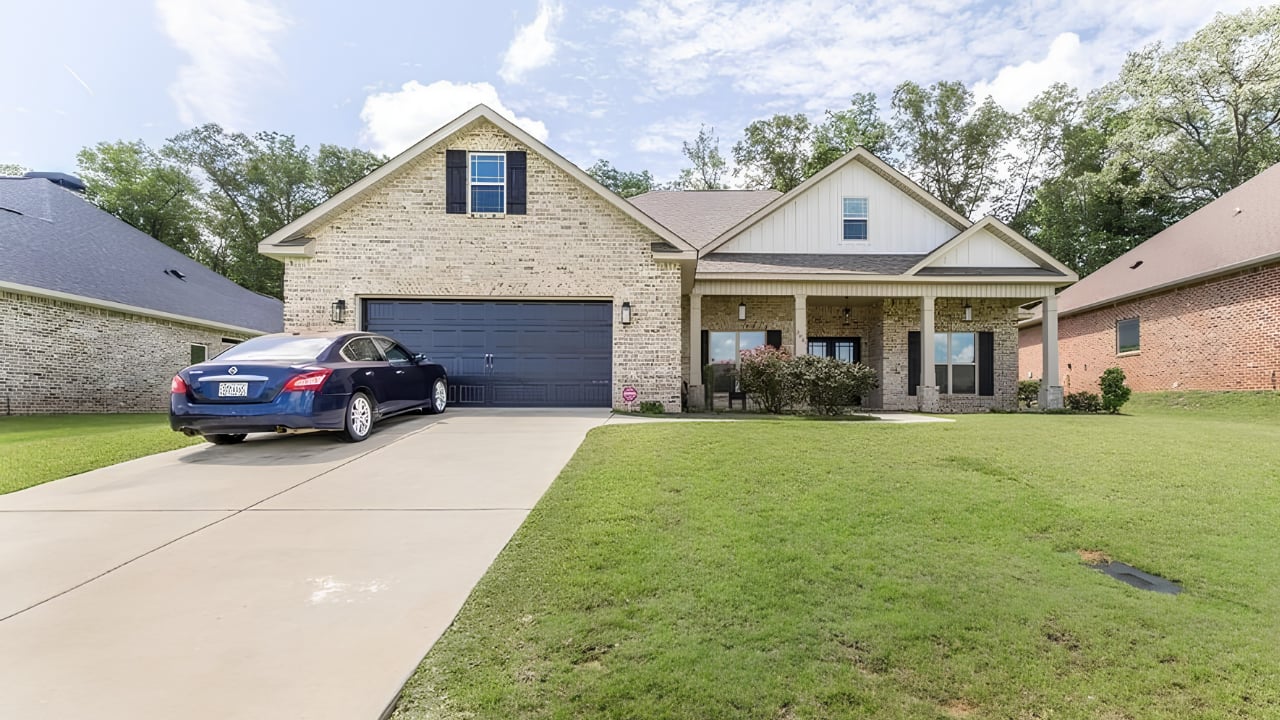
Lenders financing a Houston County home allow a debt-to-income ratio of up to 50 percent on a conventional loan underwritten through Fannie Mae's Desktop Underwriter, 36 percent on a manually underwritten conventional loan, or up to 45 percent with qualifying credit and reserves, under Fannie Mae's Selling Guide. FHA's manual limits start at 31 percent for housing and 43 percent for total debt and can reach 40 and 50 percent with compensating factors, under HUD Handbook 4000.1. VA's standard is 41 percent, paired with a residual income test, under 38 CFR 36.4340, and USDA's is 29 percent for housing and 41 percent for total debt, under 7 CFR 3555.151.
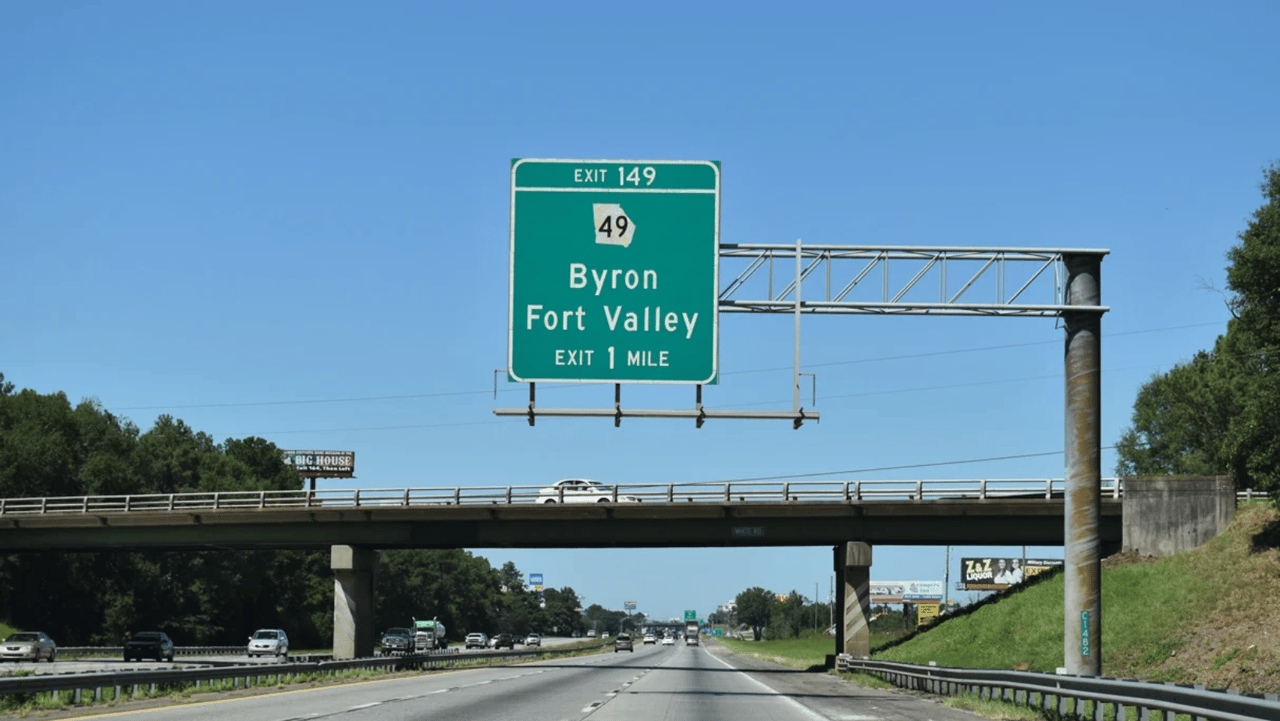
Those are published program limits, and they apply the same way in Warner Robins, Perry, Bonaire, Kathleen, Centerville and neighboring Byron. What changes from one Houston County home to the next is the housing payment that goes into the ratio, because property taxes, insurance and association dues differ by city, county and subdivision, and the price bands differ sharply: the September 2026 typical sale ran from $239,900 in Byron to $370,977 in Kathleen. As of November 4, 2026, the limits below are the current published guidelines.
Key Takeaways
• Fannie Mae's maximum total debt-to-income ratio is 36 percent for manually underwritten loans, up to 45 percent with the Eligibility Matrix credit score and reserve requirements, and 50 percent for loans underwritten through Desktop Underwriter (Fannie Mae Selling Guide B3-6-02).
• FHA's manual underwriting limits are 31/43, rising to 37/47 with one compensating factor, 40/40 with no discretionary debt, or 40/50 with two compensating factors for borrowers with scores of 580 and above; borrowers below 580 are held to 31/43 (HUD Handbook 4000.1, II.A.5.d).
• VA's debt-to-income standard is 41 percent or less; above 41 percent, residual income at least 20 percent above the guideline removes the second-level review requirement (38 CFR 36.4340).
• USDA's limits are a 29 percent PITI ratio and a 41 percent total debt ratio of repayment income, with exceptions allowed through compensating factors and written approval or automated underwriting acceptance (7 CFR 3555.151(h)).
• USDA restored its 29 percent PITI maximum effective November 4, 2025, after a temporary 34 percent maximum from August 5, 2024 to November 3, 2025; manual waivers allow up to 32 percent with all applicants at 680 or higher and a compensating factor (USDA Rural Development guidance).
• Fannie Mae counts installment debt with more than 10 payments remaining, revolving accounts, leases regardless of term, and student loans, using 5 percent of the balance for revolving accounts with no reported payment (Fannie Mae Selling Guide B3-6-05).
What Is a Debt-to-Income Ratio?
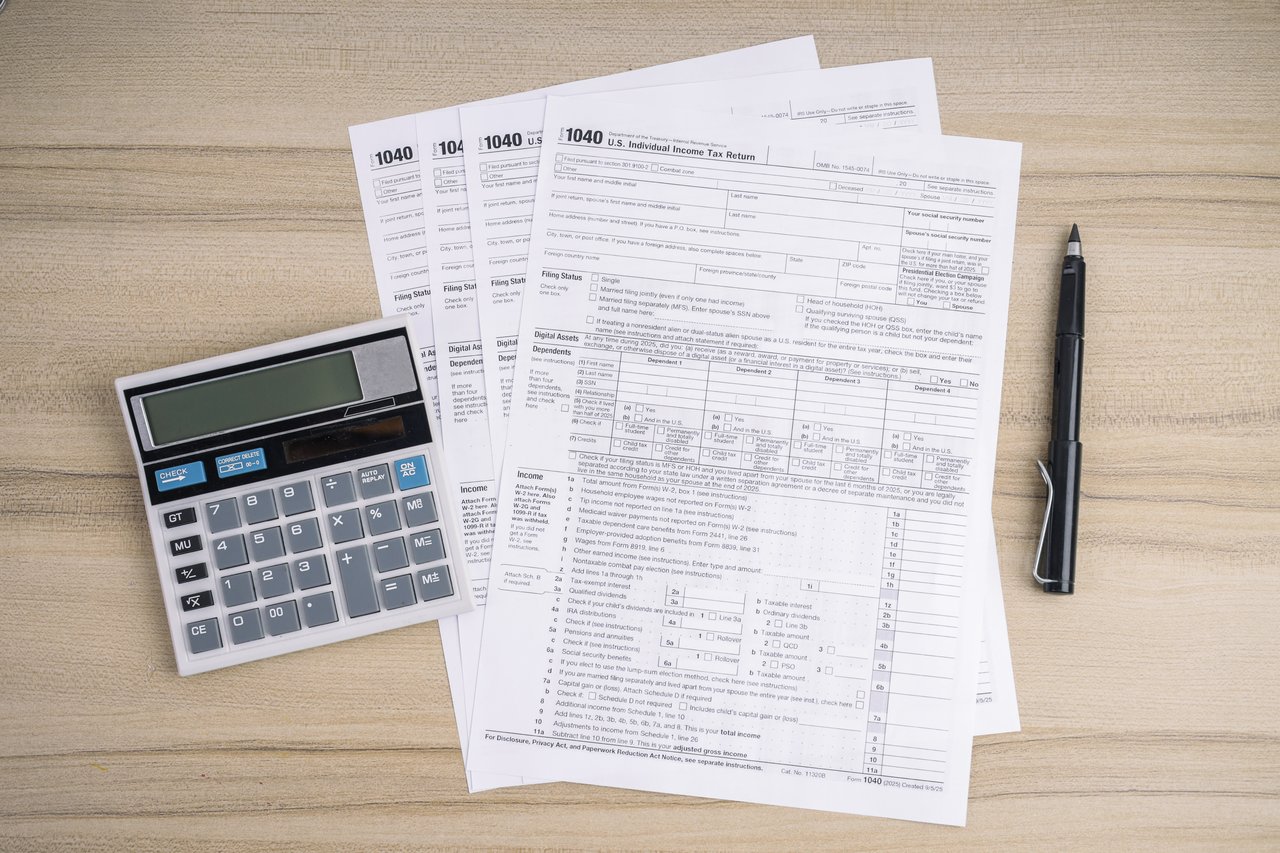
A debt-to-income ratio compares monthly obligations with monthly income. Fannie Mae's Selling Guide defines it with two components: total monthly obligations, which include the qualifying payment on the new loan and the borrower's other long-term and significant short-term monthly debts, and the total monthly income of all borrowers used to qualify. The ratio is the first divided by the second, expressed as a percentage.
Government programs add a second ratio. FHA, VA and USDA all look at the housing payment on its own, often called the front-end ratio, as well as the total debt ratio, often called the back-end ratio. FHA calls the first the total mortgage payment to effective income ratio, and USDA calls it the PITI ratio. The housing payment in each case includes principal and interest, property taxes and homeowners insurance, and for USDA also association dues, the monthly share of the annual fee and other real estate assessments.
Term | What it measures |
Front-end ratio (housing ratio) | The monthly housing payment divided by qualifying monthly income |
Back-end ratio (total debt ratio, DTI) | The monthly housing payment plus other monthly debts, divided by qualifying monthly income |
Housing payment | Principal and interest, property taxes, homeowners insurance, and depending on the program, association dues, mortgage insurance and other assessments |
Qualifying income | Stable, verifiable income of the borrowers on the loan, as defined by each program |
Residual income (VA) | Dollars left each month after taxes, the full shelter cost and other obligations; a separate test, not a ratio |
The definition matters in Houston County because the housing payment changes with the address even at the same price. A Byron home is taxed by Peach County and the City of Byron, a Perry or Warner Robins home by Houston County and the city, and an unincorporated Bonaire or Kathleen home by Houston County alone. Association dues are common in newer subdivisions and absent in many older neighborhoods. Each of those lines enters both ratios.
What Debt-to-Income Ratio Does a Conventional Loan Allow?
Fannie Mae's Selling Guide sets the conventional limits most Houston County buyers will meet. For manually underwritten loans, the maximum total debt-to-income ratio is 36 percent of stable monthly income, and it can reach 45 percent if the borrower meets the credit score and reserve requirements in Fannie Mae's Eligibility Matrix. For loans underwritten through Desktop Underwriter, Fannie Mae's automated system, the maximum is 50 percent.
In practice, most conventional loans are run through Desktop Underwriter, so the 50 percent figure is the ceiling buyers hear most. That ceiling is not a promise. Desktop Underwriter weighs the ratio together with credit history, reserves, down payment and other factors, and a file at the upper end of the range needs strength elsewhere. Lenders can also set lower limits of their own, which the industry calls overlays.
In my experience, the conventional buyer in Kathleen and Bonaire is the one most likely to run close to the upper end, because typical prices there were $370,977 and $289,900 in September and newer subdivisions carry association dues. A buyer with strong credit and reserves has room under Fannie Mae's rules; a buyer stretching on both price and debt does not, and the time to learn that is before an offer, not after.
What Debt-to-Income Ratio Does FHA Allow?
FHA's published limits apply to manually underwritten files, and HUD Handbook 4000.1 sets them by credit score and compensating factors. Files accepted through FHA's TOTAL Mortgage Scorecard are evaluated by the scorecard, and a file that is downgraded to manual underwriting falls back to these limits.
Credit score | Maximum ratios (housing/total) | Compensating factors required |
500 to 579, or no credit score | 31/43 | None allowed above 31/43 |
580 and above | 31/43 | None |
580 and above | 37/47 | One: verified cash reserves, minimal increase in housing payment, or residual income |
580 and above | 40/40 | No discretionary debt |
580 and above | 40/50 | Two: from reserves, minimal increase in housing payment, significant additional income, residual income |
The compensating factors are defined precisely. Reserves must equal or exceed three total monthly mortgage payments for one- and two-unit properties and six for three- and four-unit properties. A minimal increase in housing payment means the new payment exceeds the current one by no more than the lesser of $100 or 5 percent, with a documented 12-month payment history showing no more than one 30-day late payment. Residual income means meeting the VA Pamphlet 26-7 figures for the household size and region, which for a Houston County buyer is the South region table. Significant additional income, such as overtime or part-time income not used to qualify, counts only alongside another factor and only above 37/47.
The minimal-increase factor is the one most Houston County renters overlook. A household in Warner Robins renting at roughly the payment it would carry on a purchase, with a clean year of on-time rent, may have a compensating factor already in hand.
What Debt-to-Income Ratio Do VA and USDA Loans Allow?
VA's regulation at 38 CFR 36.4340 states that the debt-to-income standard is 41 percent or less. A ratio above 41 percent triggers approval steps that include a second-level review and written justification, unless residual income exceeds the guideline by at least 20 percent, in which case those steps are not required. Residual income is measured against VA's regional table; for Georgia, in the South region, a family of 4 with a loan of $80,000 or more needs $1,003 a month, and the figures are reduced by at least 5 percent for active duty members and retirees who will continue to use nearby base facilities such as Robins Air Force Base.
USDA's regulation at 7 CFR 3555.151(h) sets a PITI ratio of 29 percent and a total debt ratio of 41 percent of repayment income. PITI includes principal and interest, taxes, insurance, association dues, the monthly share of the annual fee and other real estate assessments. The ratios may be exceeded when compensating factors exist, including a credit score of 680 or higher, a minimal increase in housing expense, demonstrated savings and continuous employment, and an exception requires written Rural Development approval or acceptance by USDA's automated underwriting system. USDA guidance posted in December 2025 confirms that the 29 percent PITI maximum returned effective November 4, 2025, after a temporary 34 percent maximum, and that a manual PITI waiver is available up to 32 percent when every applicant has a score of 680 or higher and at least one compensating factor is documented.
Item | VA | USDA Guaranteed |
Housing ratio | No separate published housing ratio | 29 percent of repayment income (PITI) |
Total debt ratio | 41 percent standard | 41 percent of repayment income |
Above the standard | Allowed with second-level review and justification, or without them if residual income is at least 20 percent above the guideline | Allowed with compensating factors and written RD approval or automated underwriting acceptance |
Second test | Residual income by region, family size and loan amount | Household income limit (a ceiling, not a qualifying test) |
Manual waiver detail | Not applicable | PITI up to 32 percent, all applicants 680 or higher, at least one compensating factor |
Excluded from total debt | Program rules apply | Personal income tax, retirement contributions and loans from them, savings, commuting costs, union dues, child care and other voluntary obligations |
Which Loan Program Allows the Highest Debt-to-Income Ratio?
On published ceilings alone, a conventional loan underwritten through Desktop Underwriter and an FHA loan with two compensating factors both reach 50 percent, VA sets a 41 percent standard that strong residual income can carry past, and USDA starts lowest at 29 and 41 percent. The table puts the published figures side by side.
Program | Housing ratio | Total debt ratio | How a file goes higher |
Conventional, Fannie Mae DU | Not separately published | Up to 50 percent | Desktop Underwriter risk assessment |
Conventional, Fannie Mae manual | Not separately published | 36 percent; up to 45 percent | Eligibility Matrix credit score and reserves |
FHA, manual | 31 percent; up to 40 percent | 43 percent; up to 50 percent | Compensating factors, score 580 and above |
VA | Not separately published | 41 percent standard | Residual income; second-level review and justification |
USDA Guaranteed | 29 percent; manual waiver to 32 percent | 41 percent | Compensating factors with RD approval or GUS acceptance |
The highest ceiling is not always the best fit. The way I read these rules, the program that fits a Houston County buyer is the one whose second test the buyer passes most easily: reserves and credit for conventional, compensating factors for FHA, residual income for VA, and the income ceiling and address eligibility for USDA. A buyer with modest reserves but a large family may find VA's residual income test harder than its 41 percent standard; a buyer with excellent credit may find Desktop Underwriter the most forgiving.
What Counts as Debt in a Mortgage Debt-to-Income Ratio?
Fannie Mae's Selling Guide topic B3-6-05 lists the monthly obligations a lender includes. FHA, VA and USDA have their own versions, and the details differ, but the conventional list is the clearest published reference and the one most buyers will meet first.
Obligation | Counted? | Fannie Mae rule |
Installment debt with more than 10 payments left (auto, personal, student, timeshare) | Yes | Counted; shorter-term debt can count if it significantly affects ability to pay |
Installment debt with 10 or fewer payments left | Usually no | Excluded unless it significantly affects ability to pay |
Credit cards and other revolving accounts | Yes | Reported payment; if none, 5 percent of the balance (greater of $10 or 5 percent for DU) |
Student loans with a reported payment | Yes | Reported or statement payment |
Student loans deferred or in forbearance | Yes | 1 percent of the balance, or a fully amortizing payment from documented terms |
Student loans on an income-driven plan with a documented $0 payment | At $0 | May qualify at $0 with documentation |
Auto and other lease payments | Yes | Counted regardless of months remaining |
Alimony, child support, separate maintenance over 10 months | Yes | Counted, or deducted from income |
Garnishments over 10 months | Yes | Counted |
HELOC requiring a payment | Yes | Counted; no payment required means no obligation |
30-day charge accounts | No | Paid in full monthly; not included |
Debts paid by others with 12 months of documented payments | No | Excluded with documentation |
Two lines on that list catch Houston County buyers most often. Deferred student loans are counted even when no payment is due today, at 1 percent of the balance or a fully amortizing payment, which can add a meaningful monthly figure for a recent graduate or a military spouse finishing a degree. And lease payments count regardless of how many months remain, so a car lease with 6 months left is treated differently from a car loan with 6 payments left. Utilities, phone bills and insurance premiums other than the homeowners policy do not appear on the topic's list of monthly debt obligations.
How Does DTI Play Out Across Houston County Price Bands?
No payment or ratio is calculated here, because each depends on the buyer's income, debts, down payment and the specific home. What the September 2026 Central Georgia MLS figures show is where each market's price band sits, which tells a buyer how much room the ratios need to cover.
September 2026 | Byron (Peach) | Warner Robins | Bonaire | Perry | Kathleen |
Typical (median) sale price | $239,900 | $240,000 | $289,900 | $300,000 | $370,977 |
Typical VA sale price | $275,000 | $277,445 | $428,000 | $306,500 | $396,500 |
Single-family sales above $400,000 | 2 | 10 | 9 | 2 | 11 |
Active single-family listings | 70 | 199 | 71 | 149 | 119 |
Average days on market, sold | 34 | 62 | 45 | 45 under $400,000 | 39 |
The lower band, Byron and Warner Robins at about $240,000, is where the housing payment is smallest for a given down payment, so the ratios leave the most room, and where the FHA minimal-increase compensating factor can help renters. The middle band, Bonaire and Perry at $289,900 and $300,000, along with Byron's new construction at $280,000 to $330,000, is where association dues and property tax differences start to move the ratio. The upper band, Kathleen at $370,977 and the VA typical sales of $396,500 in Kathleen and $428,000 in Bonaire, is where buyers near a program ceiling most often depend on Desktop Underwriter's higher limit or on VA residual income to carry past 41 percent.
Does a Buyer's Debt-to-Income Ratio Matter When I Sell My Houston County Home?
Every financed buyer for a Houston County home is approved under one of these published limits: up to 50 percent through Fannie Mae's Desktop Underwriter, FHA's 31/43 to 40/50 manual range, VA's 41 percent standard with residual income, or USDA's 29/41. The housing payment in each ratio includes the home's property taxes, insurance and any association dues, so those costs affect how many buyers can qualify at a given price.
In my experience, sellers think of the buyer's ratio as the buyer's problem until a contract falls apart over it. A seller can reduce that risk in two ways. The first is transparency: having the tax bill, association dues and insurance history ready lets each buyer's lender run the ratio on real numbers early. The second is reviewing the pre-approval with care before accepting an offer, especially in Kathleen and Bonaire, where buyers at the upper end of the market are most likely to sit near a program ceiling. A strong pre-approval based on the actual home's taxes and dues is worth more than a slightly higher offer based on a generic estimate.
How Should I Use DTI Limits to Plan a Houston County Home Purchase?
Published debt-to-income limits for a Houston County home range from USDA's 29 percent housing and 41 percent total debt ratios to 50 percent through Fannie Mae's Desktop Underwriter and FHA's 40/50 with two compensating factors, with VA's 41 percent standard extended by residual income. Fannie Mae counts installment debts with more than 10 payments left, revolving accounts, leases of any length and student loans, including deferred loans at 1 percent of the balance or a fully amortizing payment.
My advice to a buyer is to list every monthly obligation the way a lender will, including deferred student loans and any lease, before setting a price range, and then ask a licensed lender to run the ratios on two or three real homes rather than a round number. In Warner Robins and Byron, the ratios usually leave room, and the decision turns on the house. In Bonaire and Perry, association dues and tax differences between nearby homes can change which one qualifies. In Kathleen and at the top of Bonaire, a buyer near a program ceiling should know which compensating factor or second test is doing the work in the file, because that is what has to hold up through closing. Paying down a revolving balance or a short installment loan before applying can change the ratio, and a lender can say which payoff matters most.
What to Watch on Debt-to-Income Limits
Four triggers would change this post. First, any Fannie Mae Selling Guide update to B3-6-02 or B3-6-05; the debt obligations topic was last dated August 5, 2026. Second, any USDA change to its PITI ratio policy, which moved twice between August 2024 and November 2025. Third, FHA's January 1, 2027 adoption of VantageScore 4.0 and FICO 10T under Mortgagee Letter 2026-11, which does not change the ratio table but can change which credit score row a borrower falls in. Fourth, Houston County and Peach County millage decisions and 2027 assessments, which change the property tax line in every housing ratio.
Frequently Asked Questions
What is the maximum debt-to-income ratio for a conventional loan?
Under Fannie Mae Selling Guide B3-6-02, the maximum total debt-to-income ratio is 50 percent for loans underwritten through Desktop Underwriter. For manually underwritten loans, the maximum is 36 percent, rising to 45 percent if the borrower meets the credit score and reserve requirements in Fannie Mae's Eligibility Matrix. Individual lenders can set lower limits. The same rules apply to conventional buyers in Warner Robins, Perry, Bonaire, Kathleen, Centerville and Byron.
What debt-to-income ratio does FHA allow in 2026?
HUD Handbook 4000.1 sets manual underwriting limits of 31 percent for the housing payment and 43 percent for total debt. Borrowers with credit scores of 580 and above can reach 37/47 with one compensating factor, 40/40 with no discretionary debt, or 40/50 with two compensating factors. Borrowers below 580 or with no score are held to 31/43. Files accepted through FHA's TOTAL Mortgage Scorecard are evaluated by the scorecard rather than the manual table.
What is the VA loan debt-to-income limit?
VA's regulation at 38 CFR 36.4340 states that the debt-to-income standard is 41 percent or less. A higher ratio can be approved with a second-level review and written justification, and those steps are not required when residual income exceeds VA's guideline by at least 20 percent. For Houston County, which is in VA's South region, a family of 4 with a loan of $80,000 or more needs $1,003 a month in residual income. Active duty and retired borrowers who use nearby base facilities at Robins Air Force Base can have that figure reduced by at least 5 percent.
What are the USDA debt ratio limits?
Under 7 CFR 3555.151(h), the USDA Guaranteed program sets a PITI ratio of 29 percent and a total debt ratio of 41 percent of repayment income. Exceptions require compensating factors, such as a credit score of 680 or higher, and written Rural Development approval or acceptance by USDA's automated underwriting system. USDA guidance confirms that the 29 percent maximum returned on November 4, 2025, after a temporary 34 percent maximum, and that manual waivers allow up to 32 percent with all applicants at 680 or higher and a compensating factor.
Do student loans count in my debt-to-income ratio?
Yes. Under Fannie Mae Selling Guide B3-6-05, a student loan payment shown on the credit report or a recent statement is counted. A loan on an income-driven plan with a documented $0 payment may be counted at $0. A loan in deferment or forbearance is counted at 1 percent of the outstanding balance or at a fully amortizing payment based on documented terms. FHA, VA and USDA apply their own student loan rules, which a licensed lender can explain for a Houston County purchase.
Do credit cards count if I pay them off every month?
Revolving accounts such as credit cards are counted using the payment on the credit report, and if no payment is reported, Fannie Mae requires 5 percent of the outstanding balance, or for Desktop Underwriter files the greater of $10 or 5 percent. A 30-day charge account that must be paid in full each month is not included in the ratio. Paying down a revolving balance before applying lowers the reported payment, which a lender can confirm with an updated credit report.
What debts are not counted in a mortgage DTI?
Fannie Mae excludes installment debts with 10 or fewer payments remaining unless they significantly affect the ability to pay, 30-day charge accounts, voluntary support payments, debts assigned to another party by court order, and debts paid by others with 12 months of documented on-time payments. Utilities, phone bills and most insurance premiums do not appear on the Selling Guide's list of monthly debt obligations. USDA excludes items such as personal income tax, retirement contributions, commuting costs, union dues and child care from its total debt ratio.
Does a car lease count differently from a car loan?
Yes. Fannie Mae counts lease payments regardless of the number of months remaining on the lease, while installment loans with 10 or fewer payments left are generally excluded unless they significantly affect the borrower's ability to pay. A buyer in Warner Robins or Kathleen with a car lease ending in a few months still has the full lease payment counted. A buyer near a program ceiling should review the lease and loan terms with a licensed lender before applying.
Do property taxes affect my debt-to-income ratio in Houston County?
Yes. Property taxes are part of the housing payment in every program's ratio, along with principal and interest, homeowners insurance and, where applicable, association dues and mortgage insurance. Taxes differ by jurisdiction: a Byron home is taxed by Peach County and the City of Byron, Perry and Warner Robins homes by Houston County and the city, and unincorporated Bonaire and Kathleen homes by Houston County alone. Two homes at the same price can therefore produce different ratios for the same buyer.
What is a compensating factor for FHA?
HUD Handbook 4000.1 lists four compensating factors for manually underwritten FHA files: verified cash reserves of at least three monthly payments for one- and two-unit homes and six for three- and four-unit homes; a minimal increase in housing payment of no more than the lesser of $100 or 5 percent with a documented 12-month history; residual income meeting VA's regional figures; and significant additional income not used to qualify, which counts only alongside another factor. One factor allows 37/47 and two allow 40/50 for borrowers at 580 and above.
About the Author
William Walton-Dean is a licensed REALTOR® with Walton Dean Realty, operating under Real Broker LLC, serving buyers and sellers across Houston County, Georgia, including Perry, Warner Robins, Bonaire, Kathleen, Byron, and the surrounding Middle Georgia housing market. He brings a data-driven, hyper-local approach to both residential and commercial transactions, working with first-time buyers, move-up sellers, investors, and families relocating to the area, including those tied to Robins Air Force Base. Drawing on a prior career as a C-level executive, he helps buyers and sellers at every price point make clear, confident decisions backed by real market insight.
📱 478-371-7069
Walton Dean Realty | Real Broker LLC
Buying or Selling in Houston County? Let's Talk
Debt-to-income limits are published, but the housing payment that goes into them changes from one Houston County address to the next. I can pull the property tax, association dues and insurance details on the homes you are considering in Warner Robins, Perry, Bonaire, Kathleen, Centerville or neighboring Byron, so a licensed lender can run your ratios on real numbers before you choose a price range or write an offer.
William Walton-Dean | Walton Dean Realty
📱 478-371-7069
A More Strategic Approach to Real Estate
Disclaimer: This article is provided for general informational purposes only and does not constitute real estate, financial, lending or legal advice. William Walton-Dean and Walton Dean Realty are not mortgage lenders or loan originators and do not make loan decisions. Debt-to-income limits and debt calculation rules are published by Fannie Mae, HUD, the Department of Veterans Affairs and USDA Rural Development and can change; individual lenders may apply stricter standards. Figures are drawn from those sources as current on November 4, 2026. Loan approval depends on the lender's underwriting and the borrower's credit, income, debts and assets; consult a licensed lender for a Loan Estimate. Market statistics are drawn from Central Georgia MLS reports and are deemed reliable but not guaranteed.