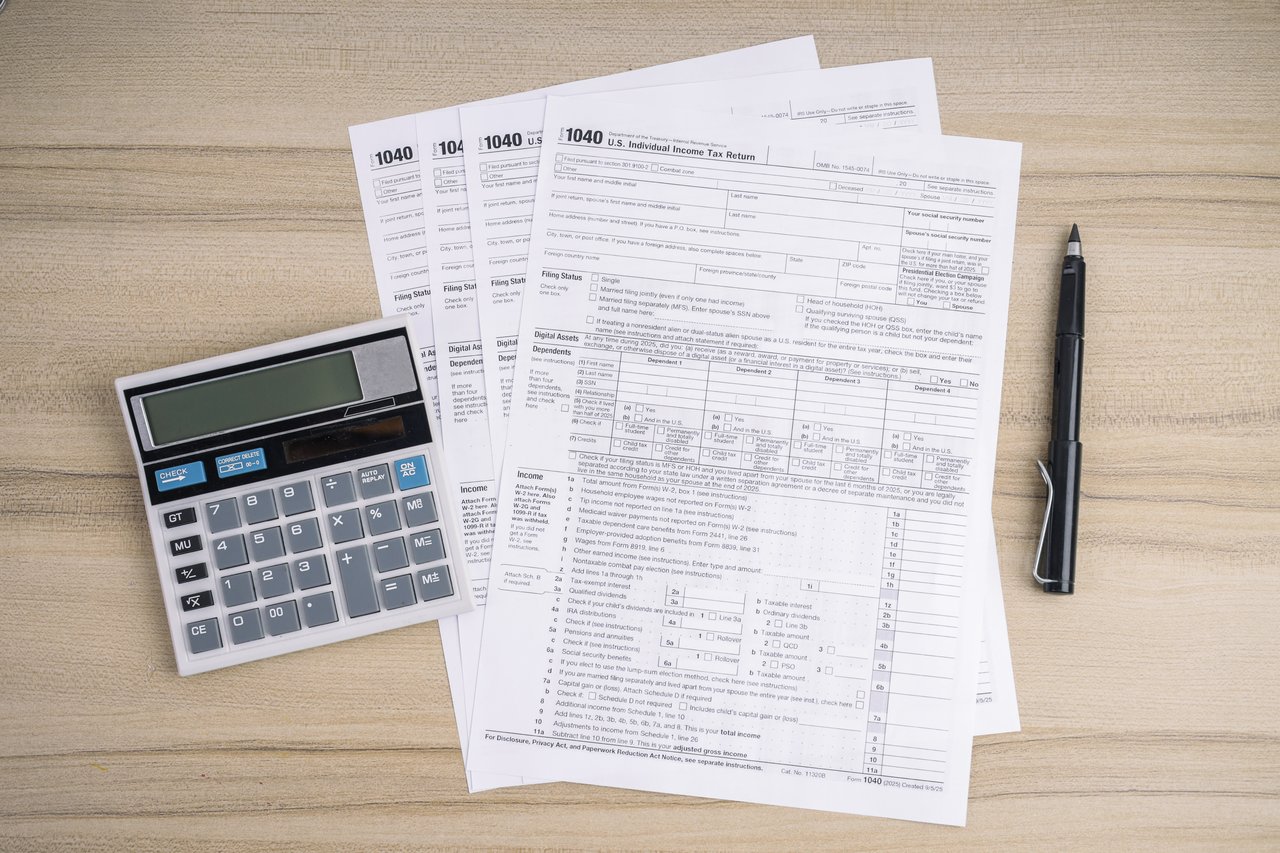
Whether refinancing is worth it for a Houston County homeowner in 2026 depends on whether the savings from the new loan recover its costs within the time the owner expects to keep it, and for VA streamline refinances federal law builds that test in: the fees and costs of a VA Interest Rate Reduction Refinance Loan must be scheduled to be recouped through lower monthly payments within 36 months, under 38 U.S.C. 3709. FHA streamline refinances carry a similar net tangible benefit requirement set by HUD, and conventional and cash-out refinances follow Fannie Mae, Freddie Mac, FHA or VA rules on loan-to-value and seasoning. In Georgia, a new security deed can also carry the state's intangible recording tax of $1.50 per $500 of the note, capped at $25,000, according to the Georgia Department of Revenue.
For context only, Freddie Mac's Primary Mortgage Market Survey released October 29, 2026 put the national average 30-year fixed rate at 7.24 percent and the 15-year fixed at 6.60 percent, compared with 6.17 and 5.41 percent a year earlier. Those are national averages, not offers, and they say nothing about where rates go next. Whether a refinance makes sense for a homeowner in Warner Robins, Perry, Kathleen, Bonaire, Centerville or neighboring Byron turns on the rate and costs on that homeowner's own Loan Estimate compared with the loan they have now.
Key Takeaways
• A VA IRRRL cannot be guaranteed until the later of six consecutive monthly payments on the existing loan or 210 days after its first payment due date, and its fees and costs must be scheduled to be recouped within 36 months through lower monthly payments (38 U.S.C. 3709).
• On a VA IRRRL, a fixed-to-fixed refinance must lower the rate by at least 50 basis points and a fixed-to-adjustable refinance by at least 200 basis points (38 U.S.C. 3709); the VA funding fee on an IRRRL is 0.5 percent (VA).
• An FHA streamline refinance requires a net tangible benefit, at least six payments and 210 days since closing on the existing FHA loan, allows no cash out and requires no appraisal (FDIC Affordable Mortgage Lending Guide, summarizing HUD Handbook 4000.1).
• Maximum loan-to-value on a cash-out refinance of a one-unit principal residence is 80 percent for Fannie Mae loans (Eligibility Matrix, April 1, 2026) and 80 percent of adjusted value for FHA loans (HUD Mortgagee Letter 2019-11).
• Georgia's intangible recording tax is $1.50 per $500 of a long-term note secured by real estate, capped at $25,000 per note (Georgia Department of Revenue); a refinance by the original lender is exempt on the refinanced unpaid principal, and new money is taxed (O.C.G.A. 48-6-65).
• The 30-year fixed average was 7.24 percent in the Freddie Mac PMMS released October 29, 2026, compared with 6.17 percent a year earlier (Freddie Mac).
What Kinds of Refinances Are Available to Houston County Homeowners?
A refinance replaces an existing mortgage with a new one, and the rules depend on the type of loan being replaced and the purpose of the new one. Four types cover most Houston County situations: the VA streamline, the FHA streamline, the conventional rate-and-term refinance (Fannie Mae calls it a limited cash-out refinance), and the cash-out refinance, which can be conventional, FHA or VA.
Refinance type | Who it is for | Key published rules |
VA IRRRL (VA streamline) | Homeowners with an existing VA-backed loan | Seasoning: later of 6 payments or 210 days after first payment due; fees recouped within 36 months; rate reduction of 50 bps fixed-to-fixed or 200 bps fixed-to-ARM; 0.5% funding fee; borrower certifies current or prior occupancy |
FHA streamline | Homeowners with an existing FHA loan | Net tangible benefit per HUD Handbook 4000.1; 6 payments, 6 months since first payment due and 210 days since closing; no cash out; no appraisal; maximum based on existing FHA balance |
Conventional rate-and-term (Fannie Mae limited cash-out) | Homeowners refinancing a balance without taking equity out | Maximum LTV up to 97% for DU fixed-rate, 95% for ARM, on a one-unit principal residence, subject to Selling Guide conditions |
Conventional cash-out | Homeowners taking equity as cash | Maximum 80% LTV, one-unit principal residence; existing first mortgage at least 12 months old; a borrower on title at least 6 months |
FHA cash-out | Owner-occupants refinancing into FHA with cash out | Maximum 80% of adjusted value |
VA cash-out | Eligible VA borrowers, including those refinancing a non-VA loan | Appraisal required; must live in the home; VA and lender credit and income standards; funding fee 2.15% first use, 3.3% after |
Sources: 38 U.S.C. 3709; va.gov IRRRL, cash-out and funding fee pages; FDIC Affordable Mortgage Lending Guide (FHA streamline, summarizing HUD Handbook 4000.1); HUD Mortgagee Letter 2019-11; Fannie Mae Selling Guide B2-1.3-03 (December 10, 2025) and Eligibility Matrix (April 1, 2026).
The table shows why there is no single answer to whether refinancing is worth it. The streamlines are built to be lower-friction for borrowers already in a VA or FHA loan, with no appraisal requirement on the FHA side and federal tests that the new loan must benefit the borrower. Rate-and-term and cash-out refinances require new qualification and, for cash-out, an appraisal, and they cap how much of the home's value can be borrowed.
What Are the VA IRRRL Rules for Robins Air Force Base Homeowners?
VA homeowners are a large group in Houston County. In September 2026 alone, VA loans financed 14 sales in Kathleen, 12 in Warner Robins, 11 in Bonaire, 9 in Perry and 5 in neighboring Byron, according to the Walton Dean Realty September 2026 market updates. For those owners, the VA Interest Rate Reduction Refinance Loan is the refinance most directly shaped by federal law.
Under 38 U.S.C. 3709, the IRRRL has four tests. Seasoning: the loan cannot be guaranteed until the later of six consecutive monthly payments on the existing loan or 210 days after its first payment due date. Recoupment: all fees and incurred costs, other than taxes, escrow amounts and VA fees, must be scheduled to be recouped through lower regular monthly payments within 36 months of the loan date, and the lender must certify that to VA. Rate reduction: a fixed-to-fixed refinance must lower the rate by at least 50 basis points, and a fixed-to-adjustable refinance by at least 200 basis points. Points: the lower rate cannot come solely from discount points unless the points are paid at closing and not financed, and the loan-to-value stays at or below 100 percent for up to one point or 90 percent for more than one point.
VA's own pages add the practical terms. The borrower must certify that they currently live in, or used to live in, the home. Closing costs can be included in the new loan, or a higher rate can let the lender cover them, according to va.gov. The VA funding fee on an IRRRL is 0.5 percent, with exemptions for veterans receiving VA compensation for a service-connected disability and certain other borrowers.
How Does an FHA Streamline Refinance Work?
An FHA streamline refinance replaces an existing FHA loan with a new FHA loan under reduced documentation. The FDIC's Affordable Mortgage Lending Guide, summarizing HUD Handbook 4000.1, lists the core rules: the refinance must give the borrower a net tangible benefit through a reduction in rate, term or both, with the required reduction depending on whether the old and new loans are fixed or adjustable; the borrower must have made at least six payments, at least six months must have passed since the first payment due date, and at least 210 days since closing; no cash may be taken out; no appraisal is required; and the maximum mortgage is based on the principal balance of the existing FHA loan.
There are two versions. A credit-qualifying streamline requires income and credit documentation and is required when a borrower is being removed from the loan. A non-credit-qualifying streamline does not include a credit check, though the lender must verify FHA payment history, and the borrower must have no more than one 30-day late payment in the prior six months with all mortgages paid within the month due. For FHA homeowners in Warner Robins and Byron, where FHA financed 12 of 61 and 6 of 17 sales in September 2026, the streamline is the most direct refinance path, and it keeps the loan in FHA, with FHA's annual mortgage insurance.
What Are the Limits on a Cash-Out Refinance?
A cash-out refinance replaces the existing mortgage with a larger one and pays the difference to the homeowner, minus costs. Every program caps how much of the home's value can be borrowed. For a conventional Fannie Mae loan on a one-unit principal residence, the maximum loan-to-value is 80 percent under the Eligibility Matrix dated April 1, 2026, the existing first mortgage must be at least 12 months old, and at least one borrower must have been on title for at least six months, under Selling Guide B2-1.3-03. For an FHA cash-out refinance, HUD Mortgagee Letter 2019-11 set the maximum at 80 percent of adjusted value. A VA cash-out refinance requires an appraisal, occupancy and VA and lender credit and income standards, can refinance a non-VA loan into a VA loan, and carries a funding fee of 2.15 percent on first use or 3.3 percent after first use, according to va.gov.
Cash-out loans also change the Georgia tax picture. The intangible recording tax exemption in O.C.G.A. 48-6-65 covers only refinanced unpaid principal on a refinance by the original lender, and the statute states that the tax is due on any portion of the instrument that is an additional advance. New money taken out in a cash-out refinance is therefore taxable, and a refinance with a different lender does not qualify for the original-lender exemption. The federal recoupment and rate-reduction tests in 38 U.S.C. 3709 do not apply to a VA cash-out loan larger than the payoff, though the statute directs VA to set its own rules for those loans.
How Do I Figure the Break-Even Point on a Refinance?
The break-even point is the time it takes for a refinance's savings to repay its costs. The Federal Reserve Board's Consumer's Guide to Mortgage Refinancings frames it as estimating how long it will take to recover the refinancing costs and comparing that with how long the homeowner plans to stay; if the owner expects to move before the costs are recovered, the refinance may not pay. In words, the calculation is the total cost of the refinance divided by the monthly savings it produces, which gives the number of months to break even. VA's 36-month recoupment rule on the IRRRL is the same idea written into law for that loan type.
The costs side of that formula comes from the Loan Estimate: origination charges and points in Section A, appraisal and other required services in Sections B and C, government fees and taxes in Section E, including the Georgia intangible recording tax where it applies, and any title charges. Prepaid interest and escrow deposits in Sections F and G are funded at closing but are not costs of the refinance in the same way, because escrow from the old loan is typically refunded by the old servicer after payoff. The savings side is the difference between the old and new monthly principal and interest payments, plus any change in mortgage insurance. A new 30-year term can lower the payment and still raise total interest, which the Total Interest Percentage on page 3 shows.
Break-even input | Where to find it | What to watch |
Refinance costs | Loan Estimate Sections A, B, C, E and H | Points in Section A lower the rate but raise the cost; Georgia intangible recording tax in Section E |
Monthly savings | Old principal and interest versus page 1 of the new Loan Estimate | Include mortgage insurance changes; exclude escrow, which is not a savings |
Time to recover costs | Total costs divided by monthly savings, in months | Compare with how long you expect to own the home |
Long-run interest | Total Interest Percentage and In 5 Years on page 3 | A new 30-year term can lower the payment and raise total interest |
VA IRRRL test | Lender certification under 38 U.S.C. 3709 | Fees must be scheduled to be recouped within 36 months |
How Does Georgia's Intangible Recording Tax Affect a Refinance?
Georgia charges an intangible recording tax on long-term notes secured by real estate at $1.50 for each $500 of the note's face amount or fraction of $500, with a maximum of $25,000 on any single note, according to the Georgia Department of Revenue. It is collected by the Clerk of Superior Court when the security deed is recorded: the Houston County Clerk of Superior Court for homes in Warner Robins, Perry, Kathleen, Bonaire, Centerville and unincorporated Houston County, and the Peach County Clerk of Superior Court for neighboring Byron. Effective July 1, 2025, House Bill 586 redefined a long-term note as one with part of the principal due more than 62 months after the note date, according to a June 2025 client alert from the law firm Troutman; 15-year and 30-year mortgages fall within that definition.
The refinance exemption is narrow. Under O.C.G.A. 48-6-65(b), no tax is collected on the part of a new instrument that refinances unpaid principal on a previous instrument when the refinancing is by the original lender, the tax on the previous instrument was paid or it was exempt, and the new instrument states the refinanced amount or the holder files an affidavit. Any additional advance is taxed. A refinance with a new lender does not meet the original-lender condition in subsection (b). In practice, that makes the lender choice part of the cost comparison for a Houston County refinance.
Refinance situation | Intangible recording tax under Georgia law | Source |
Same original lender, no new money, conditions met | No tax on the refinanced unpaid principal | O.C.G.A. 48-6-65(b) |
Same original lender, with cash out | Tax on the additional advance; refinanced principal exempt if conditions met | O.C.G.A. 48-6-65(a)(1), (b) |
New lender, rate-and-term | Original-lender exemption in subsection (b) does not apply; confirm treatment with the closing attorney | O.C.G.A. 48-6-65(b) |
New lender, cash out | Taxable; confirm amount with the closing attorney | O.C.G.A. 48-6-61, 48-6-65 |
Rate and cap | $1.50 per $500 or fraction of the note; $25,000 maximum per note | Georgia Department of Revenue |
What Else Changes When a Houston County Homeowner Refinances?
A refinance resets more than the rate. The new lender sets up a new escrow account, and the escrow deposit at closing is built on the property tax and insurance estimates it uses. For a 2026 refinance in Houston County, that matters because the 2026 tax bills carried a one-time state credit that will not appear in 2027; an escrow built on a credited 2026 bill can come up short when the 2027 bill arrives. A refinance into a new term also restarts the amortization schedule, and on a conventional loan with PMI, the Homeowners Protection Act defines original value for a refinanced loan as the appraised value at the time of the refinance, according to the CFPB.
Should I Refinance or Sell My Houston County Home?
Refinancing and selling answer different questions: a refinance changes the cost of keeping the home, and a sale ends it. Either decision depends on the homeowner's timeline, equity and goals. In September 2026, the typical sale price was $370,977 in Kathleen, $300,000 in Perry, $289,900 in Bonaire, $240,000 in Warner Robins and $239,900 in neighboring Byron, with average days on market from 34 in Byron to 62 in Warner Robins, according to the Walton Dean Realty September 2026 market updates.
In my experience, the homeowners who weigh this well start with how long they plan to stay, because that one number decides whether refinance costs can be recovered and whether a sale is on the horizon anyway. An owner who expects to list in the next year or two should know what the home would sell for before paying to refinance it, and in Kathleen and Byron, where September homes sold in 39 and 34 days, that answer comes quickly. An owner planning to stay for years has more room to let a refinance's savings accumulate, if the Loan Estimate supports it. I do not advise anyone on whether to refinance; that is a lending decision for a licensed lender. What I can provide is the other half of the picture: what the home is worth in today's market and what selling it would net, so the comparison is made on real numbers rather than on a guess about either one.
Should I Buy Now and Plan to Refinance Later in Houston County?
A buyer can purchase a home with the possibility of refinancing later, but a future refinance is not guaranteed and carries its own costs and qualification. For VA buyers, an IRRRL cannot be guaranteed until the later of six consecutive payments or 210 days after the first payment due date, and its costs must be recouped within 36 months under 38 U.S.C. 3709; FHA streamlines require six payments and 210 days since closing; and in Georgia a new security deed can carry the intangible recording tax of $1.50 per $500, capped at $25,000, unless the original-lender exemption applies.
My advice to buyers is to treat a future refinance as a possibility, not a plan. Buy a home whose payment works at the rate on your Loan Estimate today, in Warner Robins, Perry, Kathleen, Bonaire or Byron, and if a refinance later makes sense, it becomes an improvement on a purchase that already worked. The buyers who get caught are the ones who stretched to a payment they could only afford if a refinance happened on schedule. Know before you buy that no streamline refinance is available for at least 210 days, and that the lender you refinance with can affect the Georgia intangible tax.
What to Watch Before Deciding on a Refinance
Four dated items bear on a refinance decision over the next quarter. First, the weekly Freddie Mac PMMS, released every Thursday, which gives the national average for context but not the homeowner's own rate. Second, the 2027 Houston County and Peach County property tax bills, which will be calculated without the one-time 2026 credit and will reset escrow on new and existing loans. Third, any amendment to the Georgia Department of Revenue's intangible recording tax rules following House Bill 586. Fourth, any change to VA's funding fee table or HUD's streamline guidance, either of which would change the cost side of a VA or FHA refinance.
Frequently Asked Questions
How soon can I refinance a VA loan with an IRRRL?
Under 38 U.S.C. 3709, a VA Interest Rate Reduction Refinance Loan cannot be guaranteed until the later of two dates: after six consecutive monthly payments on the loan being refinanced, or 210 days after that loan's first payment due date. The fees and costs must also be scheduled to be recouped within 36 months. VA homeowners in Warner Robins, Kathleen, Bonaire and around Robins Air Force Base can count from their first payment due date to see when the seasoning rule is met.
What is the 36-month recoupment rule on a VA refinance?
The rule in 38 U.S.C. 3709 requires that all fees and incurred costs of a VA IRRRL, other than taxes, amounts held in escrow and VA fees, be scheduled to be recouped through lower regular monthly payments on or before 36 months from the loan date. The lender must certify the recoupment period to VA. The rule does not apply to a VA cash-out loan whose principal is larger than the payoff of the loan being refinanced.
Does an FHA streamline refinance require an appraisal?
No. According to the FDIC Affordable Mortgage Lending Guide, which summarizes HUD Handbook 4000.1, an FHA streamline refinance requires no appraisal and has no loan-to-value limit; the maximum mortgage is based on the principal balance of the existing FHA loan. The refinance must provide a net tangible benefit, and no cash may be taken out.
How much equity can I take out with a cash-out refinance in Georgia?
Maximum loan-to-value on a cash-out refinance of a one-unit principal residence is 80 percent for a Fannie Mae conventional loan under the Eligibility Matrix dated April 1, 2026, and 80 percent of adjusted value for an FHA loan under HUD Mortgagee Letter 2019-11. Fannie Mae also requires the existing first mortgage to be at least 12 months old and a borrower to have been on title for at least six months. VA cash-out loans follow VA and lender standards and require an appraisal.
Do I pay Georgia intangible recording tax when I refinance?
It depends on the lender and the loan amount. Georgia's intangible recording tax is $1.50 per $500 of a long-term note, capped at $25,000, according to the Georgia Department of Revenue. Under O.C.G.A. 48-6-65(b), a refinance by the original lender is exempt on the refinanced unpaid principal if the statute's conditions are met, and any additional advance is taxed; the exemption in subsection (b) does not cover a refinance by a different lender. Houston County homeowners should confirm the figure with the closing attorney.
What is the break-even point on a refinance?
The break-even point is the number of months it takes for a refinance's monthly savings to repay its costs, found by dividing the total refinance costs by the monthly savings. The Federal Reserve Board's consumer guide advises comparing that period with how long the homeowner plans to keep the home.
What is the VA funding fee on a refinance?
According to va.gov, the VA funding fee is 0.5 percent of the loan amount on an IRRRL and, on a cash-out refinance, 2.15 percent for first use or 3.3 percent after first use, with rates effective April 7, 2023. Veterans receiving VA compensation for a service-connected disability, eligible surviving spouses receiving Dependency and Indemnity Compensation, and certain other borrowers are exempt. VA homeowners in Houston County should confirm their exemption status with their lender.
Can I refinance my FHA loan to get rid of mortgage insurance?
An FHA streamline refinance keeps the loan in FHA, so FHA annual mortgage insurance continues. Ending FHA mortgage insurance on a loan that carries it for the life of the loan generally means refinancing into a different loan type, such as a conventional loan, which requires new qualification and, if the loan-to-value is above 80 percent, may involve private mortgage insurance with its own cancellation rules.
Will refinancing change my property taxes or escrow in Houston County?
A refinance does not change the property tax itself, which is set by the Houston County or Peach County assessment and local millage rates. It does create a new escrow account with the new lender, funded at closing based on the lender's tax and insurance estimates, and the old servicer typically refunds the old escrow balance after payoff. Because 2026 bills carried a one-time state credit, homeowners refinancing in late 2026 should ask that escrow be built on the full, uncredited tax amount.
Are mortgage rates low enough to refinance in 2026?
No published source can say whether a refinance makes sense for a specific homeowner or where rates are headed. The Freddie Mac PMMS released October 29, 2026 reported a national average of 7.24 percent for a 30-year fixed loan and 6.60 percent for a 15-year fixed, compared with 6.17 and 5.41 percent a year earlier. Whether a refinance is worth it for a homeowner in Warner Robins, Perry, Kathleen, Bonaire or Byron depends on comparing the current loan against a Loan Estimate from a licensed lender and calculating the break-even period.
About the Author
William Walton-Dean is a licensed REALTOR® with Walton Dean Realty, operating under Real Broker LLC, serving buyers and sellers across Houston County, Georgia, including Perry, Warner Robins, Bonaire, Kathleen, Byron, and the surrounding Middle Georgia housing market. He brings a data-driven, hyper-local approach to both residential and commercial transactions, working with first-time buyers, move-up sellers, investors, and families relocating to the area, including those tied to Robins Air Force Base. Drawing on a prior career as a C-level executive, he helps buyers and sellers at every price point make clear, confident decisions backed by real market insight.
📱 478-371-7069
Walton Dean Realty | Real Broker LLC
Buying or Selling in Houston County? Let's Talk
Whether a refinance pays depends on how long you plan to stay, and that question usually leads to what your home is worth and what it would net if you sold. I can show you where your home sits in today's Warner Robins, Perry, Kathleen, Bonaire or Byron market, so the decision you make with your lender is built on a current value rather than an estimate.
William Walton-Dean | Walton Dean Realty
📱 478-371-7069
A More Strategic Approach to Real Estate
Disclaimer: William Walton-Dean and Walton Dean Realty are not mortgage lenders or loan originators and do not offer loans, set rates or give lending advice. Rates cited are published averages, not quotes; your rate depends on your credit, loan type, down payment and lender. Get a Loan Estimate from a licensed lender (verify licensing at nmlsconsumeraccess.org) before making decisions. This article is provided for general informational purposes only and does not constitute real estate, financial, lending, legal or tax advice, and it does not recommend refinancing. Refinance program rules are summarized from federal statute, VA, HUD, FDIC and Fannie Mae publications current as of November 4, 2026 and can change; lenders may apply additional requirements. Georgia intangible recording tax provisions are summarized from the Georgia Department of Revenue and the Official Code of Georgia; the tax treatment of a specific refinance should be confirmed with a closing attorney and the Clerk of Superior Court. Mortgage rates cited are national averages from the Freddie Mac Primary Mortgage Market Survey for the week stated; no forecast is made or implied. Market statistics are drawn from Central Georgia MLS reports and are deemed reliable but not guaranteed. Refinance decisions should be made with a licensed lender and, where relevant, a tax professional.